The Trap of “Asian Market” Rhetoric
Investor presentations, policy documents, market research reports, news articles—the term “Asian market” appears everywhere. Companies speak of “Asia strategies,” governments tout “partnerships with Asian countries,” and think tanks analyze “growth opportunities in Asia.”
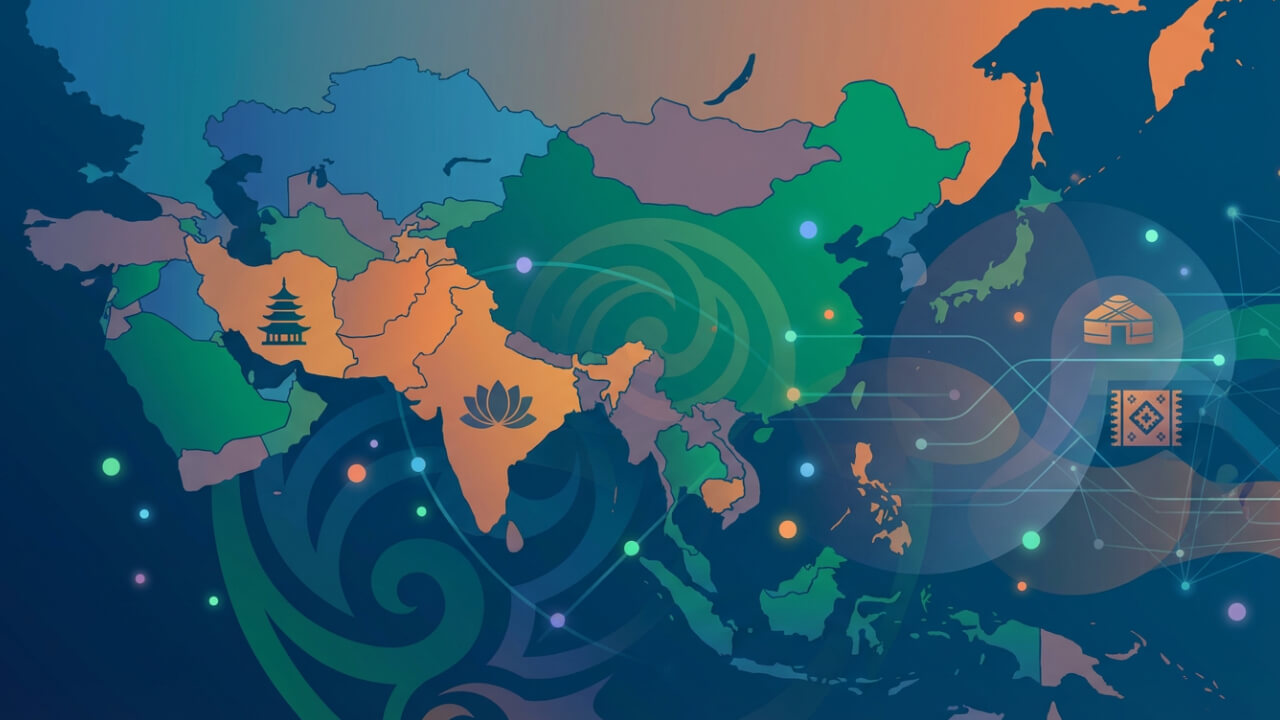
But here’s an inconvenient truth: Asia cannot be lumped together. It’s a region spanning 44.6 million square kilometers across 48 countries, home to 4.8 billion people—60% of humanity.
Let’s put this in perspective. Europe’s entire population of 750 million could fit into just one Asian country—India or China. In terms of GDP per capita, the gap ranges from approximately $87,500 to around $1,600—a disparity of over 50 times. Hundreds of languages are spoken, religions are diverse, political systems vary widely, and industrialization levels span from pre-industrial to hyper-advanced. Yet in business, we habitually compress this staggering diversity into a single category: “APAC” or “Asia-Pacific.”As an additive manufacturing media platform based in Asia, AM Insight Asia aims to correct this low-resolution view. Before we can have meaningful discussions about AM markets in Asia, we need to understand what we’re actually talking about. This article provides the fundamental geography, demographics, and industrial background necessary to seriously discuss manufacturing in Asia—and AM opportunities within it.
Understanding Diversity Through Numbers: Key Countries
Let’s examine data from 10 key countries among Asia’s 48 nations—those most relevant to the AM industry.
| Country | Population (million, 2024) | Area (10,000 km²) | GDP (2024, trillion USD) | GDP per capita (PPP, USD) |
|---|---|---|---|---|
| China | 1,420 | 960 | 18.5 | 25,000 |
| India | 1,430 | 329 | 14.0 | 10,000 |
| Japan | 123 | 38 | 4.2 | 56,000 |
| Korea | 52 | 10 | 1.7 | 59,000 |
| Indonesia | 280 | 191 | 1.4 | 16,000 |
| Thailand | 72 | 51 | 0.5 | 21,000 |
| Shingapore | 6 | 0.07 | 0.5 | 133,000 |
| Israel | 9.6 | 2.2 | 0.5 | 58,000 |
| Philippines | 117 | 30 | 0.5 | 11,000 |
| Vietnam | 100 | 33 | 0.4 | 16,000 |
*Note: GDP figures rounded to one decimal place
What does this table reveal?
In population, the gap between China and India’s 1.4 billion and Singapore’s 6 million is over 200-fold. In economic prosperity, Singapore’s GDP per capita of $133,000 is more than 8 times that of Vietnam or Indonesia.
Even in land area, China’s 9.6 million km² dwarfs Singapore’s 730 km² by over 10,000 times. Countries with vast territories can develop industrial parks in their hinterlands, while Singapore is essentially one city-state.This is the reality hidden beneath the single phrase “Asian market.”
Differences in Industrial Structure Across Key Countries
How do the industrial structures that the AM industry should focus on differ across countries? Let’s examine all 10 countries in detail.
China: Beyond the World’s Factory
China’s manufacturing sector has outgrown the label “world’s factory.” Manufacturing accounts for approximately 25-27% of GDP (2023-24), representing about 30% of global manufacturing output—nearly three times that of the United States, the world’s second-largest manufacturer.
What’s remarkable is the diversity. From low-end mass-produced goods to high-end rockets, China possesses the capability to manufacture virtually every industrial product domestically. DJI controls approximately 70% of the global drone market, and BYD has emerged as a top global electric vehicle manufacturer.
Furthermore, the massive domestic market accelerates technological innovation. With 1.4 billion consumers, everything from proof-of-concept testing to mass production can be completed domestically. This is an advantage no other Asian country possesses.
The depth of the supply chain is overwhelming. Electronic components, mechanical parts, materials—all can be sourced domestically with delivery times measured in days. This environment underpins the development speed of Chinese companies.
India: Powerhouse of Pharmaceuticals and IT Services
India’s industrial structure is unique. Manufacturing accounts for only about 13% of GDP, while services comprise approximately 55%—closer to an advanced economy’s structure.
Pharmaceuticals and IT services are particularly strong. India is the world’s largest generic drug supplier, providing approximately 20% of global generics. Pharmaceutical exports reached approximately $27-30 billion in FY2024. About 60% of vaccines procured by the WHO are manufactured in India.
In IT services, global companies like TCS, Infosys, and Wipro handle system development and operations for companies worldwide. It’s no coincidence that many Silicon Valley CEOs are of Indian origin.
Manufacturing is also growing. Under the government’s “Make in India” policy, production of automobiles and electronics is expanding. Particularly in smartphone assembly, Apple and Samsung have established large-scale production facilities.
However, infrastructure and regulations pose challenges. Unstable power supply, complex tax systems, and regulations that vary by state hinder manufacturing growth.
Japan: Kingdom of Precision Technology and Materials
Japan’s manufacturing sector competes on quality rather than quantity. While manufacturing accounts for about 20% of GDP, the content is fundamentally different.
Japanese companies lead global markets in semiconductor manufacturing equipment, industrial robots, carbon fiber composites, and precision chemicals. Toray is the industry’s top manufacturer of carbon fiber, used across fields from aircraft to automobiles. FANUC’s industrial robots operate in factories worldwide, and without semiconductor manufacturing equipment from Tokyo Electron and SCREEN Holdings, cutting-edge chips couldn’t be produced.
Japan also has the most Nobel Prize winners in Asia. The depth of technical expertise extends from basic research to application.
However, challenges exist. Population decline and aging make it increasingly difficult to secure young engineers year after year. While factory floor automation is advancing, the shortage of personnel for design and development is severe.
Korea: Semiconductor and Display Giant
Korea is a medium-sized nation with approximately 52 million people, yet its manufacturing competitiveness is world-class.
Particularly in semiconductor memory, Samsung and SK Hynix control over 60% of the global market. In DRAM alone, these two companies command approximately 77% of world share. In the cutting-edge HBM (High Bandwidth Memory) market, SK Hynix holds about 62% and Samsung about 17%, competing for dominance in the AI era.
Additionally, LG Display and Samsung Display have established near-monopolistic positions in the OLED panel market. The majority of premium displays worldwide, from smartphones to TVs, are made in Korea.
Korea’s strength lies in “selection and concentration.” Limited resources have been concentrated in strategic sectors like semiconductors, displays, shipbuilding, and automobiles. Industry-academia-government collaboration, uniting government, chaebols, and universities, is also a source of competitiveness.
Indonesia: Leveraging Resources and Population
With approximately 280 million people, Indonesia has Southeast Asia’s largest economy.
Its strength lies in abundant natural resources. Coal, nickel, palm oil, natural rubber—resource exports have supported the economy. Nickel in particular, as a raw material for electric vehicle batteries, is experiencing surging demand, and Indonesia is the world’s largest producer.
In manufacturing, automobile, motorcycle, and electronics assembly dominate. Japanese manufacturers like Honda and Yamaha mass-produce motorcycles for both the domestic market and export throughout Southeast Asia.
The government aims to increase value addition. Nickel ore exports have been banned, with policies promoting domestic battery production. This has led companies like Korea’s LG and China’s CATL to build battery plants in Indonesia.
Challenges include the logistics costs inherent to an archipelago nation and inadequate infrastructure. Outside Java and Sumatra islands, many areas have insufficient power supply and road development.
Thailand: Southeast Asia’s Automotive Hub
Thailand is called “Southeast Asia’s Detroit.” With approximately 1.84 million vehicles produced in 2023, it’s Southeast Asia’s largest automotive producer. Japanese manufacturers like Toyota, Honda, and Isuzu maintain large production facilities, manufacturing everything from pickup trucks to passenger cars.
Manufacturing accounts for about 24% of GDP, with a supply chain centered on the automotive industry spreading throughout the country. Thousands of parts manufacturers supporting the automotive industry produce tires, seats, and electrical components.
In recent years, there’s also increased focus on electric vehicle production. Chinese manufacturers led by BYD are entering one after another, making Thailand an emerging EV hub in Southeast Asia.
Food processing is also a significant industry. Frozen shrimp, canned goods, seasonings—as the “world’s kitchen,” food exports are thriving.
Political stability and a favorable business environment have attracted foreign companies. However, recent wage increases have begun driving low-value-added manufacturing to neighboring countries.
Singapore: High-Tech Hub
Despite being a city-state of merely 730 km² with approximately 6 million people, Singapore’s economic power cannot be underestimated. GDP per capita of $133,000 (PPP) ranks among the world’s highest.
In manufacturing, it specializes in semiconductors, biopharmaceuticals, and precision machinery. With semiconductor plants from UMC, Micron, and GlobalFoundries, it has established itself as Southeast Asia’s high-tech manufacturing base.
Moreover, as a regional headquarters hub for the Asia-Pacific region, many global companies base their regional operations here. It functions as a hub not just for manufacturing but for R&D, finance, and logistics.
Singapore’s strengths are robust legal systems, intellectual property protection, absence of corruption, and abundant highly skilled talent. It consistently ranks high in the World Bank’s “Ease of Doing Business” rankings.
Limitations are the small land area and high labor costs. Mass production manufacturing isn’t viable; specialization in high-value-added products is inevitable.
Israel: Middle East’s Technology Powerhouse
While geographically classified in Asia, Israel, with approximately 9.6 million people, possesses world-class technological capabilities.
Defense technology and cybersecurity are particularly strong. Defense-related exports exceed approximately $10 billion annually, with leadership in drones, missile defense systems, and surveillance technology. The “Iron Dome” missile defense system is its iconic symbol.
Furthermore, with the world’s highest per capita startup density, it’s known as the “Startup Nation.” Major IT companies like Intel, Google, and Microsoft maintain R&D facilities there, positioning it at the forefront of technological innovation.
Israel’s strengths are advanced education, technical training in the military, government R&D support, and the entrepreneurial spirit called “chutzpah.”
While geographically located in the Middle East, its industrial structure resembles Western economies. With improving relations with Arab nations, it’s also expected to serve as a gateway to Middle Eastern markets.
Philippines: BPO and Electronics
With approximately 117 million people, the Philippines has a unique industrial structure.
Its greatest strength is BPO (Business Process Outsourcing). Leveraging the advantage of English as an official language, the country handles massive volumes of call center, data entry, and accounting operations for Western companies. BPO industry employment exceeds 1 million, accounting for about 7% of GDP.
In manufacturing, electronics is central. Semiconductor packaging and testing, hard disk drives, electronic components—specialization in precision assembly.
Challenges include weak manufacturing foundations and inadequate infrastructure. The automotive industry hasn’t developed, and basic industries like steel and chemicals remain limited. Outside Metro Manila, many areas have insufficient power supply and roads.
Vietnam: Rapidly Growing Assembly Base
Vietnam is the greatest beneficiary of “China Plus One.” Receiving production relocations from China, electronics assembly and textile manufacturing are expanding rapidly.
Samsung, Apple, Intel, and others have established large-scale production facilities in Vietnam, mass-producing smartphones and PC components. Manufacturing accounts for about 25% of GDP, with electronics assembly reportedly comprising about 40% of all manufacturing. Textile product exports rank third globally in volume.
Vietnam’s strengths are young, affordable labor and political stability. Paradoxically, the one-party Communist rule provides policy consistency and aggressive foreign investment attraction.
However, Vietnam’s strength is “assembly,” not “design and development.” Most components depend on imports, and value-added remains limited. Engineer training and infrastructure development are the next challenges.
Six Implications for the AM Industry
What do these diversities mean for the AM industry?
Implication 1: Segment Markets
The umbrella term “Asian market” is meaningless. High-end metal AM for Korea’s semiconductor industry and low-end polymer AM for Vietnam’s consumer goods are completely different markets.Strategies must be developed by country, by industry, and by price point. A business model that succeeds in China won’t necessarily work as-is in India.
Implication 2: Localization Is Essential
Language, business practices, regulations, customer preferences—everything differs. Particularly in B2B markets, building trust is essential. This takes time.
Technical support, training, maintenance—if these cannot be provided in local languages and adapted to local business practices, market entry becomes difficult.
Here lies a common mistake by global companies: global strategies managed centrally from headquarters.
What’s often seen is companies simply translating global websites into local languages and calling it “localization complete.” However, the information required by factories in each country is fundamentally different.
For example, Japan’s manufacturing industry has established exceptionally high quality standards throughout its long history. Dimensional tolerances, surface roughness, material traceability—the standards Japanese factories consider normal are extremely stringent from a global perspective. Conversely, in countries with shorter manufacturing histories, such high quality often isn’t required. Cost and delivery time are top priorities.
In other words, for the Japanese market, quality assurance, certifications, precise technical data, and comprehensive after-sales support systems are crucial. For emerging markets, price competitiveness, ease of implementation, simple operability, and clear functional advantages take priority. Even when selling the same AM equipment, the selling points are completely different.
Without providing content tailored to Asia’s diversity, you won’t reach customers. Companies unable to execute marketing strategies adapted to each country cannot compete with local companies. This is precisely one reason Chinese AM equipment manufacturers are growing rapidly—they’ve built products, pricing, and support systems specifically for the Chinese market from the start.Centralized management from headquarters may seem efficient, but it doesn’t function in the face of Asian diversity.
Implication 3: Understand Supply Chains
Chinese AM equipment manufacturers are growing rapidly because they have massive domestic supply chains. Parts procurement, maintenance, technical support—everything can be completed domestically.Conversely, in countries dependent on imported components, after-sales service becomes a challenge. If repairs take several weeks, the equipment can’t be used in production lines.
Implication 4: Pay Attention to Regulatory and Certification Differences
Taking AM parts for medical devices as an example, Japan, China, India, and Singapore each have different certification processes. Getting certified in one country often means starting from scratch in another.The aerospace sector is similar. Even with FAA (US) and EASA (Europe) certifications, Asian aviation authorities often impose their own requirements.
Implication 5: Talent Acquisition Is Key to Success
AM technicians are in short supply in every country. However, the difficulty of securing them varies greatly by country.
In Japan, aging is reducing young engineers. In China, talent is abundant but competition is fierce, and poaching is routine. In India, talented engineers get recruited by Western companies.Local talent development, university partnerships, providing attractive work environments—these determine long-term success.
Implication 6: Enter with an Ecosystem, Not Just Equipment Sales
AM is not about buying a 3D printer. Too many companies fail to understand this.
To utilize AM equipment, design must come first. Design philosophies fundamentally different from traditional subtractive manufacturing—topology optimization, lattice structures, consolidated parts—without designers who understand and can implement these, the equipment becomes a white elephant.
Furthermore, the know-how to determine where AM should be applied is essential. Prototyping or mass production? Jigs or final products? Material selection, post-processing, quality assurance—only by understanding all of these does AM create value.
In other words, you cannot simply try to sell machines.
What’s needed here is collaboration with AM implementation consulting, educational services, design software companies, material manufacturers, and post-processing equipment makers. The approach of “let each handle their own part” won’t develop the market.
Particularly in Asia’s emerging markets, customers often have almost no AM knowledge. Without consulting to support decisions like “which parts should be AM-ified,” “which technology to choose,” and “what’s the ROI,” adoption won’t progress.
Joint promotions, training programs, pilot projects—a system where the entire ecosystem supports customers is necessary. Without building comprehensive support systems that include not just machinery but also design services, training, material supply, post-processing, and implementation consulting, customers won’t act.Customers aren’t “buying AM equipment”—they’re “buying AM solutions.”
Conclusion: Look at Individual Countries, Not “Asia”
“Growth in Asian markets is expected”—this sentence contains zero information.
Is it China’s aerospace AM market? India’s medical device AM market? Vietnam’s consumer goods AM market? Market size, growth rate, competitive landscape, entry strategy—everything changes depending on the answer.
48 countries, 4.8 billion people, countless languages, religions, cultures—you cannot discuss “Asia strategy” while ignoring this diversity.
If the AM industry seeks its next growth phase, it should start by abandoning the illusion of “Asia.” Then look carefully at each country, each industry, each customer. Only this accumulation brings true success.Understanding, respecting, and leveraging diversity—this is the only path to business success in “Asia.”