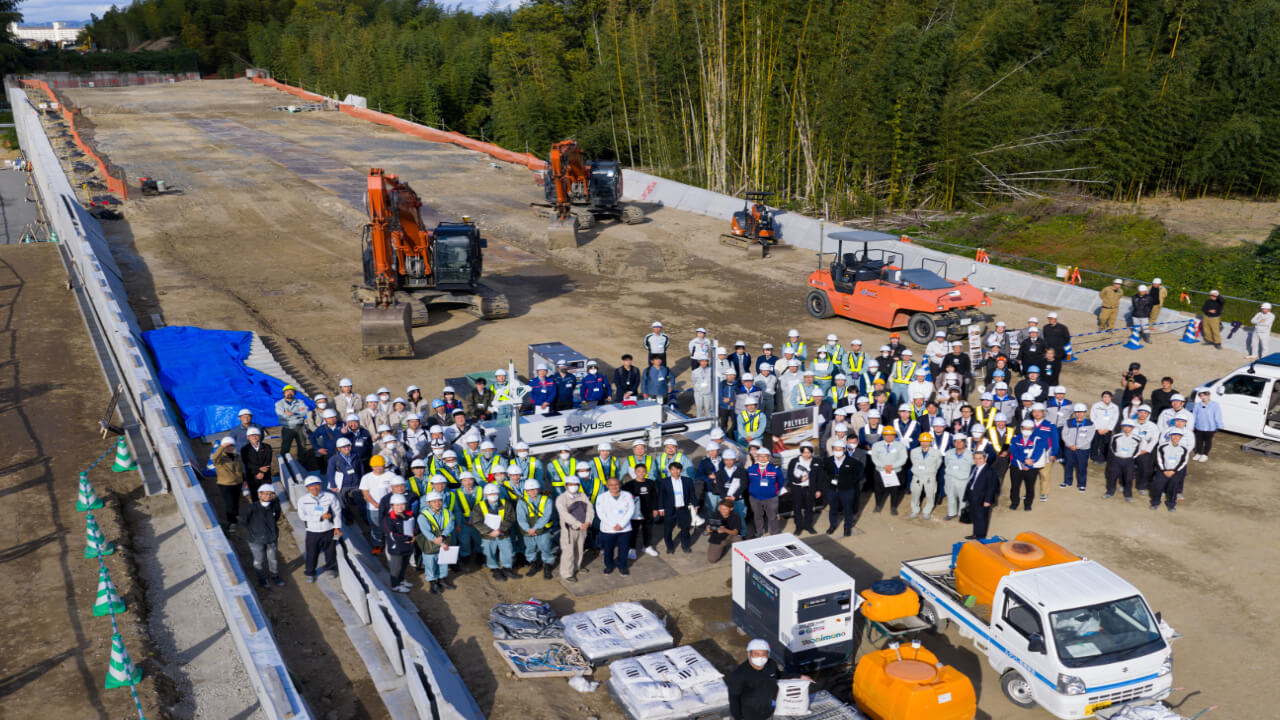
Construction 3D printing realized in a road reconstruction project in Nishikyo Ward, Kyoto. Under earthquake-prone nation’s strict quality standards, a team with an average age of 24 demonstrates a shift from the skilled worker training model.
Japan’s Infrastructure Labor Shortage: The Formwork Carpenter Crisis
When most people hear about construction 3D printers, they think of 3D printed houses that have made headlines overseas. However, the real crisis facing Japan’s construction industry lies elsewhere—it is the severe labor shortage in infrastructure development.
The decline in formwork carpenters is particularly severe, with industry insiders saying “there may be almost none left in 10 years.” Structures supporting social infrastructure such as road retaining walls and drainage facilities have relied on the skills of experienced formwork carpenters. There is no longer time to pass on these skills.
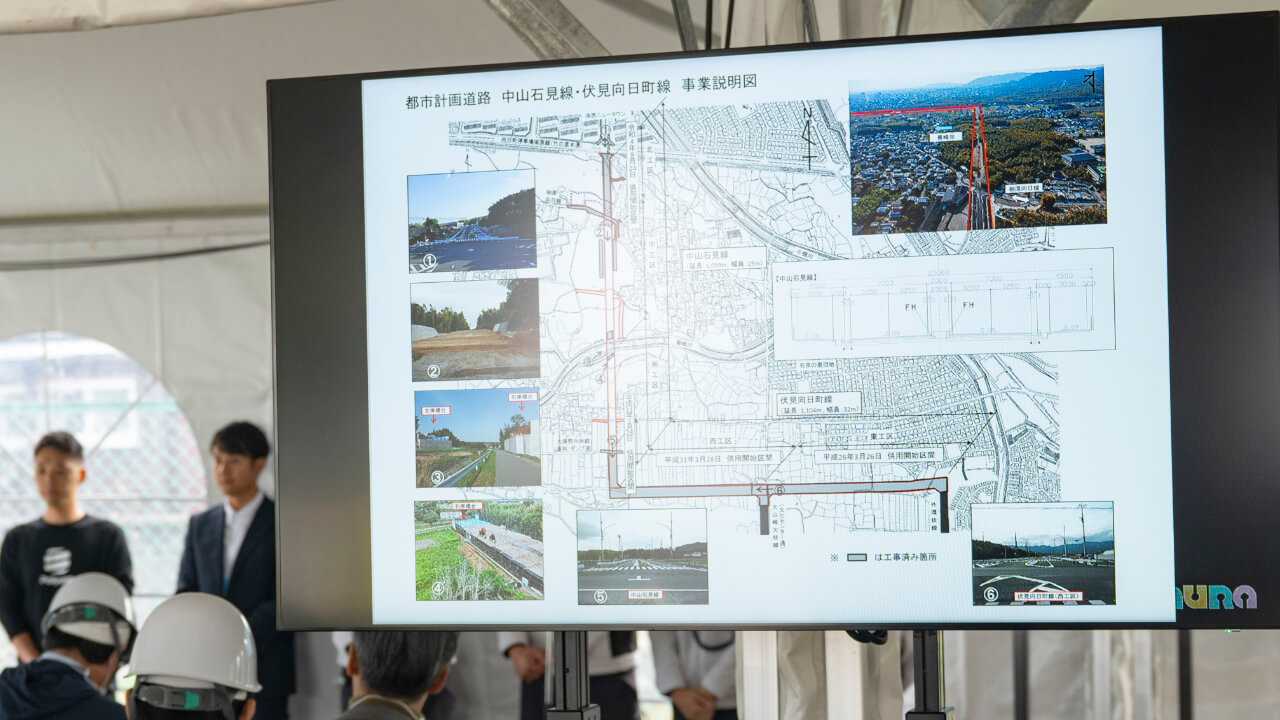
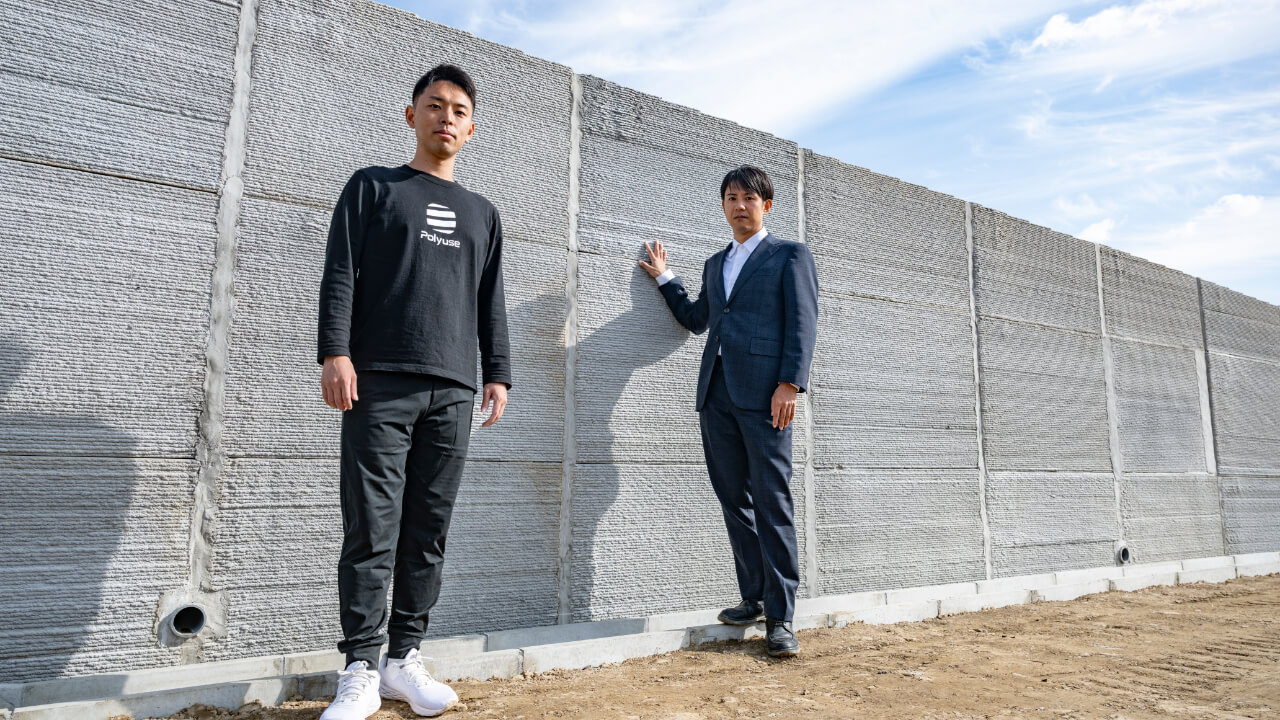
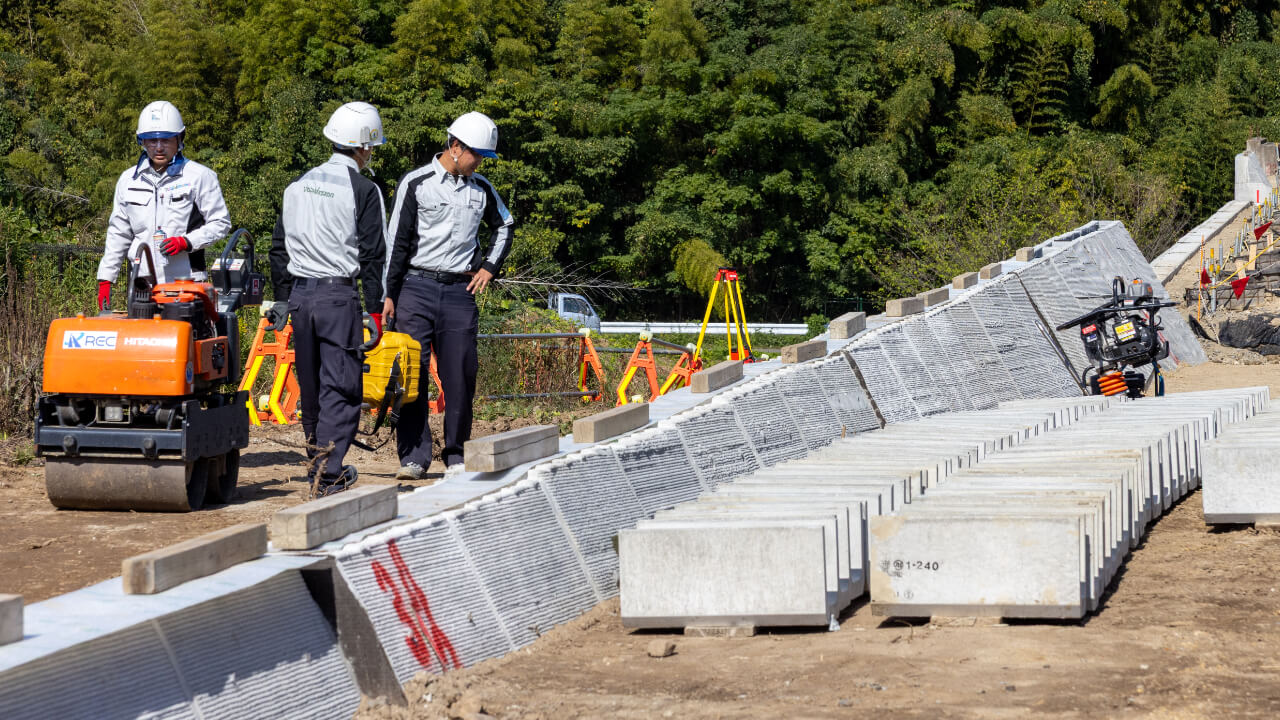
On November 6-7, 2025, the initiative by Yoshimura Construction Industry showcased at a road reconstruction construction site in Oharano Iwami-cho, Nishikyo Ward, Kyoto City presents one answer to this crisis. It is Japan’s largest-scale case of manufacturing and constructing concrete structures with a total length of 273m using construction 3D printers.
Construction 3D Printing Meets Japan’s Strict Quality Standards
Japan’s infrastructure construction is highly reliable by global standards. This is because the fate of being an earthquake-prone nation has created strict management and standards by the Ministry of Land, Infrastructure, Transport and Tourism. The hurdles for introducing new construction methods and technologies are extremely high.
The “Technical Guidelines (Draft) for Concrete Structures Using Construction 3D Print Embedded Formwork” published by the Japan Society of Civil Engineers in August 2025 gave official positioning to 3D printing technology for the first time within the framework of Japan’s strict quality standards. The Polyuse technology used was registered in the Ministry of Land, Infrastructure, Transport and Tourism’s NETIS (New Technology Information System). NETIS is a government database that evaluates and promotes innovative construction technologies. In NETIS, the evaluation has been progressively upgraded from “Registration” in 2023, to “Technology for Promotion of Utilization” in 2024, and to “Recommended Technology” in 2025.
Project Overview
- Project Name: (Comprehensive Evaluation) 3・3・5 Nakayama-Iwami Line Road Reconstruction (Part 22) Construction
- Client: Kyoto City Construction Bureau Road Construction Department Road Construction Division
- Contractor: Yoshimura Construction Industry Co., Ltd.
- Construction Period: August 21, 2024 to February 21, 2026
3D Printer Application Areas:
- Gravity retaining wall: 106.7m + 9.2m = 115.9m
- Capping concrete: 157.3m
- Catch basins: Multiple units Total: Over 273m
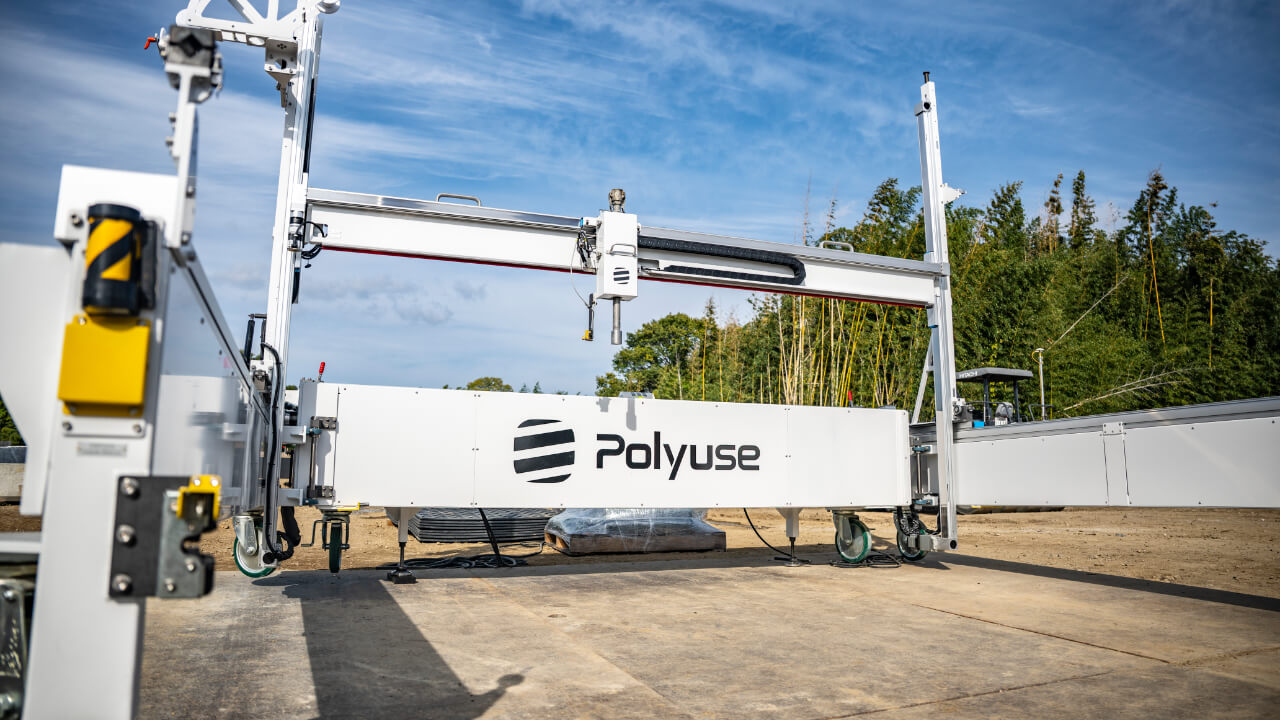
Polyuse Construction 3D Printing: 1000+ Projects Worldwide
Polyuse, which manufactures the 3D printers used in this project, has achieved remarkable growth in less than 6 years since its establishment. Currently with about 50 employees, they deliver machines at a pace of one per week, with reservations filled until fall 2026.
What is particularly noteworthy is that high construction quality and reliable construction effects in public works projects are beginning to be recognized, and combining completed, ongoing, and under-negotiation projects, over 1000 projects are already in progress. This is not mere experimental introduction, but evidence that the technology has entered the practical stage. The company’s strategy of focusing on infrastructure and civil engineering rather than the easily understood entry point of housing provides solutions that Japan’s construction industry truly needs.
Industry Collaboration: Pioneering Construction 3D Printing Adoption
For innovative technology to be put into practical use, developing excellent machines alone is insufficient. The existence of those willing to accept it is indispensable. No matter how excellent the technology, it will not spread if users hesitate.
Yoshimura Construction Industry: A Partner in Lockstep
Yoshimura Construction Industry has worked in lockstep with Polyuse on technology development since the company’s founding:
- July 2020: Catch basin demonstration (first in Japan)
- September 2021: Perforated block production – Kyoto Katsura Omiya Jujo (first use in ordered construction in Japan)
- July 2022: On-site printing of pedestrian-vehicle boundary blocks on National Route 24 (first in public works in Japan). Completed construction that conventionally takes 4 days in 1 day, eliminated the need for access restrictions during curing period, leading to improved traffic regulation
- November 2022: Testing of hollow formwork and embedded formwork for gravity retaining walls in Fushimi West District 5
- November 2023: Perforated block production – Kusatsu City, Shiga Prefecture
- March 2025: Expansion to architectural exterior materials (Kyoto Chuo Shinkin Bank Sanjo Branch)
The accumulation of systematically verifying technology over 5 years, identifying problems, and making improvements enabled this 273m large-scale demonstration.
Digital Transformation in Construction: CIM, AR, and ICT Integration
Yoshimura Construction Industry’s innovation extends beyond 3D printers. The company is promoting digital transformation of construction sites by combining multiple advanced technologies.
CIM Integrated Workflow
This project utilized integrated CIM software including SiTE-STRUCTURE, SiTECH 3D, SiTE-Scope, and SiTE-NEXUS. Converting 2D drawings to 3D, performing interference detection, and generating 3D printer STL data directly from CIM models. Response to design changes becomes rapid, and rework is greatly reduced.
AR (Augmented Reality) Construction Management
Through tablets and AR glasses, 3D models are overlaid on the actual site. Pre-confirmation of installation positions, real-time checking of construction accuracy, and sharing of completion images become possible, enabling high-precision construction even for young workers.
ICT Unmanned Construction Using ICT Construction Equipment
Using ICT construction equipment linked with 3D design data to achieve high-precision excavation and embankment. Conventional temporary survey markers (scaffolding) become unnecessary, improving work efficiency.
Starlink Satellite Communication Introduction
At remote sites, they initially used mobile line service for construction sites (150GB for 80,000 yen monthly), but faced capacity shortages with cloud software and CIM data transfer. Switching to Starlink reduced costs to 15,600 yen monthly while improving communication speed approximately 9 times (download 14.2Mbps→125Mbps). Can also be expected as a communication means during disasters.
Sat-Office Lite: Work Style Reform in Practice
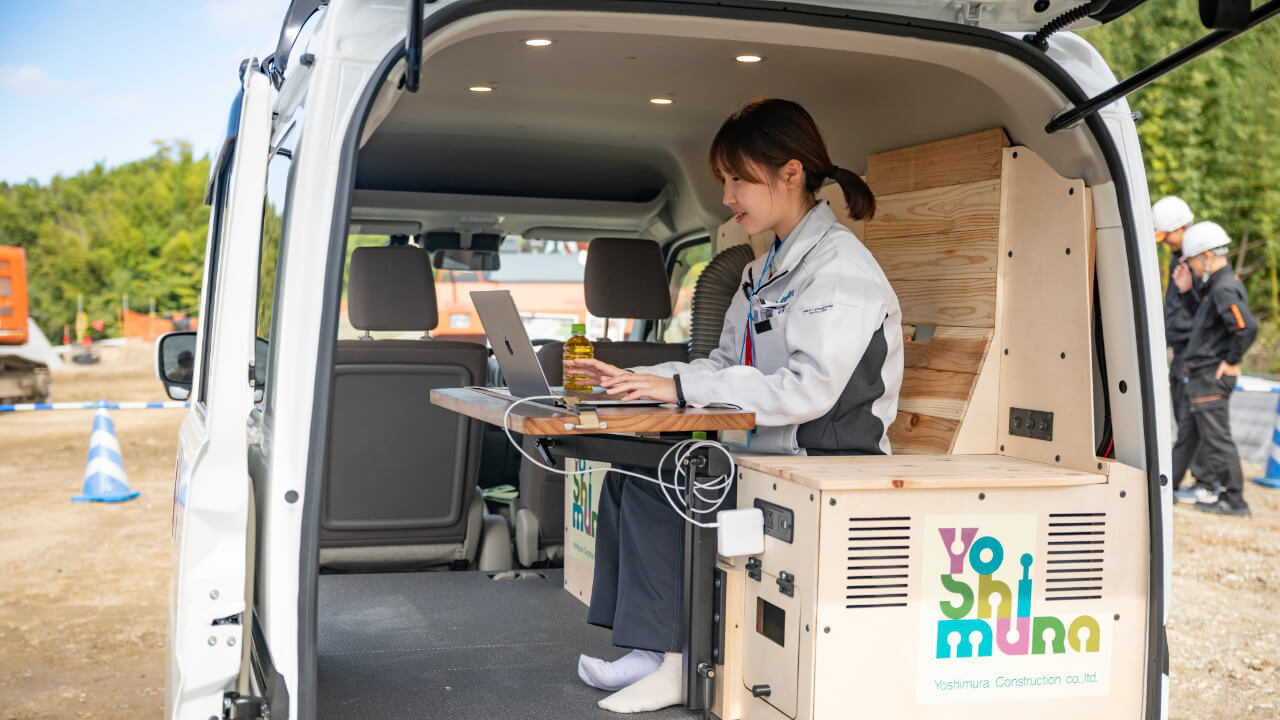
For the issue of being unable to set up site offices for small-scale construction, jointly developed a mobile office vehicle with HAKUSAN WORKS. Equipped with folding desk, semi-solid state battery (3,072Wh), solar panel (300W), Starlink Mini, portable air conditioner, and refrigerator. Office work becomes possible in the vehicle immediately after site work, reducing round-trip time to headquarters by 1-2 hours daily.
These technology introductions are not mere trend-following. They are the result of sincere efforts to address site challenges—labor shortage, work efficiency, communication environment, and work style reform. The flexibility to accept new technologies and the execution capability to master them on site are the sources of the company’s competitiveness.
The Courage of Clients
Kyoto City’s recognition of 3D printer utilization as an evaluation item in this project (comprehensive evaluation method), and the Ministry of Land, Infrastructure, Transport and Tourism Kinki Regional Development Bureau’s approval of utilization in the 2022 Kawaramachi-Jujo District Joint Utility Duct Construction—these are expressions of the administrative side’s “challenge.”
Adopting new technology with limited track record in public works carries potential risks for clients. Poor quality, construction delays, budget overruns—any could directly become administrative responsibility issues.
All Stakeholders as First Penguins
This technological innovation could not have been realized by a single player:
- Polyuse: Technology developer operating 1000+ projects domestically and internationally in 6 years since founding
- Yoshimura Construction Industry: Practitioner who built up track record systematically over 5 years and integrated advanced technologies including CIM, ICT, and satellite communication
- Ministry of Land, Infrastructure, Transport and Tourism and Kyoto City: Clients who had the courage to adopt new technology in public works
- Japan Society of Civil Engineers: Standardization promoter who gave official positioning to new technology
Even with excellent machines developed, they won’t be used if the receiving side hesitates. This interaction determines the speed of innovation in Japan’s construction industry.
Young Workforce: Construction 3D Printing Enables Rapid Skill Development
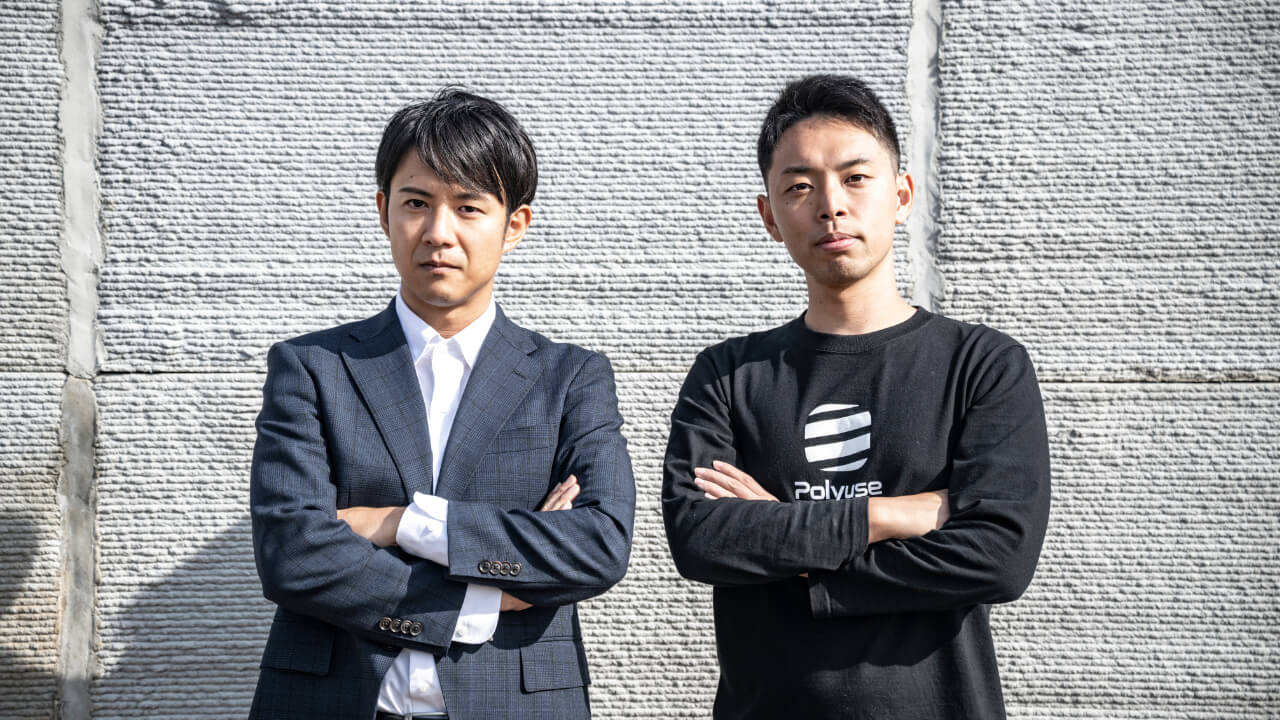
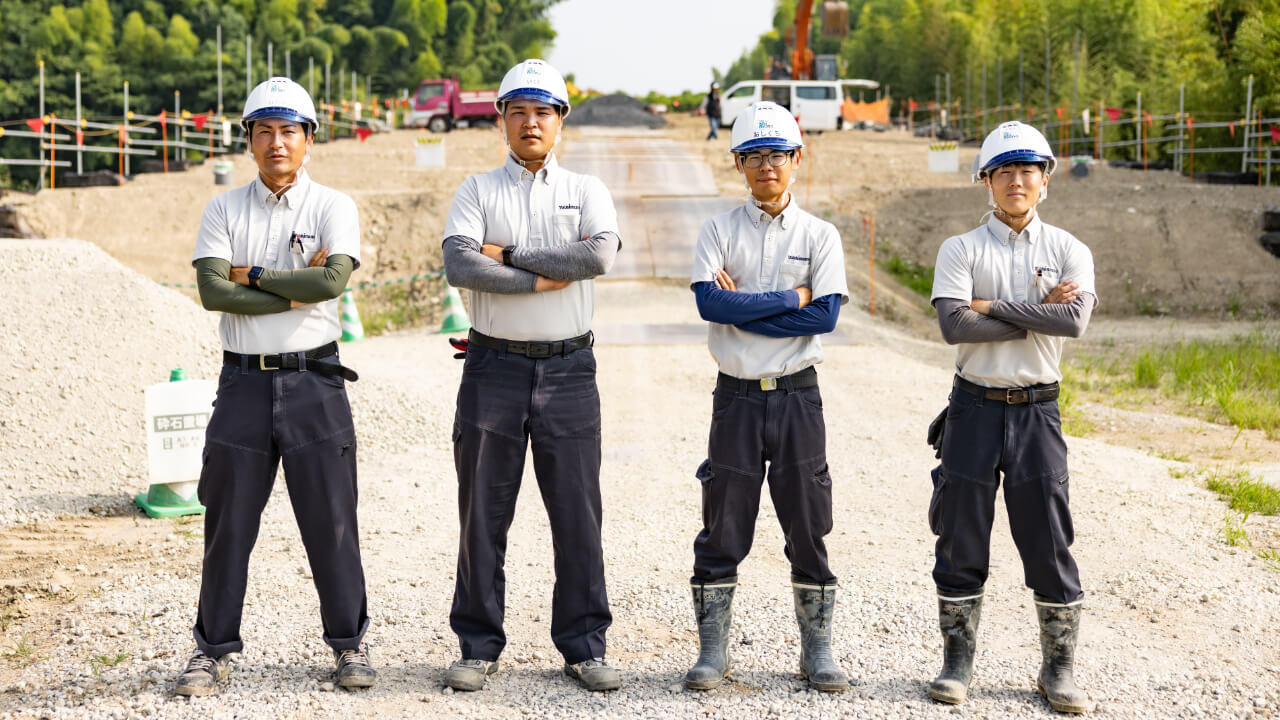
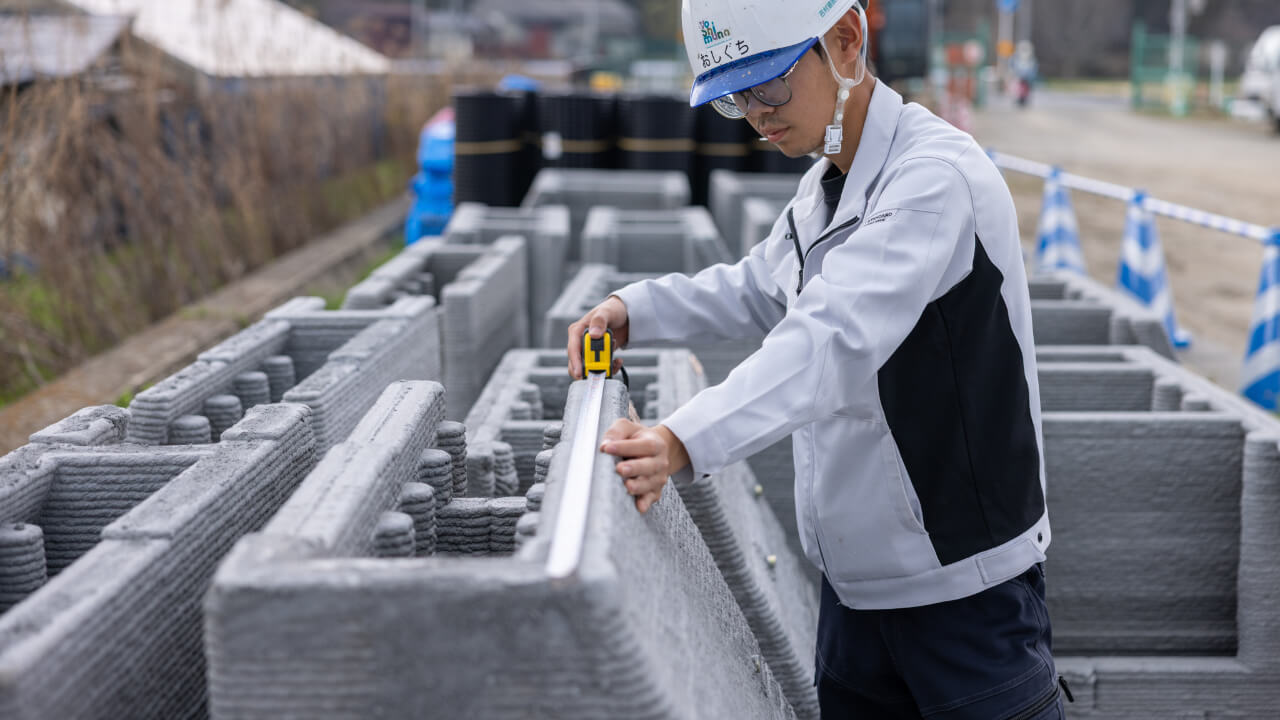
The average age of Yoshimura Construction Industry’s team actually performing work on site is 24.
Conventional formwork carpenters required over 10 years of training to become proficient. Assembling complex-shaped formwork required understanding wood material properties, acquiring a sense of structural mechanics, and the long time needed to watch and steal from senior craftsmen.
The 3D printing construction method fundamentally changes this structure. Workers can become active on the frontlines within a few years after university graduation. CAD data creation, slicing software operation, printer control, mortar filling—these are different skill sets from traditional craftsman skills, and are actually easier for the digital native generation to acquire.
The meaning of requiring almost no conventional training costs is revolutionary for the construction industry facing labor shortages.
Construction 3D Printing vs Traditional Methods: Labor and Time Reduction
This project adopted a near-site (near-site manufacturing) approach. Components were 3D printed in a hollow state, then mortar was filled after installation from the safe interior side of embankment, completely eliminating scaffolding and formwork.
Summary of Reduction Effects
| Structure | Conventional (man-days) | 3DP (Man-days) | Reduction Rate |
|---|---|---|---|
| Gravity retaining wall 106.7m | 161 | 75 | 53% |
| Culvert upper wall 9.2m | 19.2 | 7 | 64% |
| Capping concrete 157.3m | 204 | 71 | 65% |
| Structure | Conventional (Days) | 3DP (Days) | Reduction Rate |
|---|---|---|---|
| Gravity retaining wall 106.7m | 68.25 | 18.75 | 73% |
| Culvert upper wall 9.2m | 11.8 | 1.75 | 85% |
| Capping concrete 157.3m | 58 | 17.75 | 69% |
Overall, labor was reduced by an average of 60%, and construction period by an average of 75%.
Most notably, formwork carpenters became completely zero. While conventional methods required 47.6 man-days for gravity retaining walls, 36.5 man-days for capping concrete, totaling 84.1 man-days of formwork carpenters, the 3D printing method achieved 0 man-days. A construction system that no longer depends on formwork carpenters, who are said will be almost gone in 10 years, has been realized.
Scaffolding workers similarly became completely unnecessary, meaning the occupations most difficult to secure personnel can be eliminated.
Material Limitations: Mortar vs Concrete in Construction 3D Printing
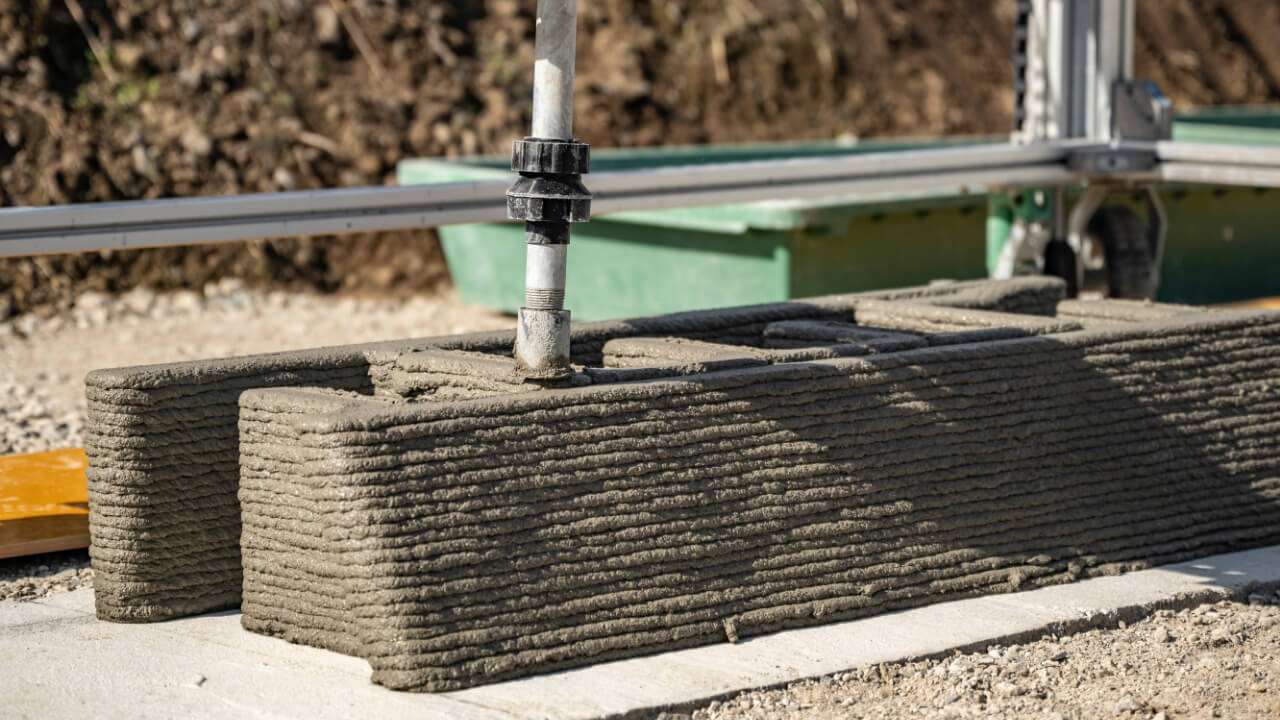
Strictly speaking, what is used is not concrete but mortar. Gravel (aggregate) that goes into making concrete generally cannot be used because it clogs current 3D printer nozzles, which is common internationally.
This is a technical constraint, but the Japan Society of Civil Engineers’ adoption of performance-based standards in their technical guidelines leaves room for technological development toward optimizing material mix.
Construction 3D Printing’s Impact on Japan’s Infrastructure Industry
Standardization and Institutionalization
The technical guidelines of the Japan Society of Civil Engineers (August 2025) unified quality standards that differed by site, creating a foundation for clients to prepare design standards and cost estimation standards. The Ministry of Land, Infrastructure, Transport and Tourism also added “3D Printing Technology for Concrete Structures” to its FY2025 New Technology Introduction Promotion Plan.
Positioning as a Third Option
Yoshimura Construction Industry positions 3D printing as a technology that “fills the middle ground” between precast and cast-in-place:
- Precast: Large volume × simple shapes
- Cast-in-place: Small volume × simple shapes
- 3D printing: Small volume × complex shapes
Applications are expected for uses requiring “non-standard × short time × high precision”—for example, railway and highway proximity construction that can only be constructed at night.
The Future of Construction 3D Printing in Japan’s Infrastructure
If the prediction that formwork carpenters will be almost gone in 10 years becomes reality, Japan’s infrastructure development will face a serious crisis. Relying on conventional technology transfer models leaves no time.
Yoshimura Construction Industry’s 273m demonstration project showed that 3D printing technology can contribute to infrastructure development at a practical scale. A team with an average age of 24 active on the frontlines, reducing labor by 60%, reducing construction period by 75%, formwork carpenters completely to zero—these numbers demonstrate dramatic reduction in training costs and early mobilization of young personnel.
The company’s advanced nature extends beyond 3D printers. By integrating technologies including CIM, AR construction management, ICT construction equipment, Starlink satellite communication, and mobile office, they are realizing digital transformation of construction sites. Creating an environment where the digital native generation can thrive becomes a fundamental solution to labor shortages.
Polyuse’s situation also tells the story of urgent market needs. Over 1000 projects in progress 6 years after founding, Polyuse One model reserved until fall 2026—evidence that technology is being accepted by the market and expanding rapidly.
However, technology alone does not cause transformation. Polyuse developing excellent machines, Yoshimura Construction Industry accumulating practical verification, clients deciding to adopt, and academic societies promoting standardization—this interaction accelerates innovation in Japan’s construction industry.
Even with excellent machines developed, they won’t be used if the receiving side hesitates. Technology development and market acceptance are two wheels of a vehicle. Only when all stakeholders function as first penguins does innovation spread throughout the industry.
In 2035, when formwork carpenters are almost gone, what will Japan’s infrastructure development look like? Yoshimura Construction Industry’s demonstration project shows that attempts to redefine craftsmanship through digital technology are a realistic option for protecting Japan’s infrastructure.
However, this is not completion. Project personnel state, “There are still many challenges. There are various sites, and each time brings new discoveries and learnings. Technology is evolving daily, but trial and error to master its use continues.”
The technological foundation is established. The soil to accept it is also being formed. But the real battle is from here. Accumulating on-site practice, overcoming challenges one by one, accumulating knowledge—this steady process supports the true spread of technology. What is needed now is continued practice and learning, and sharing knowledge across the industry.