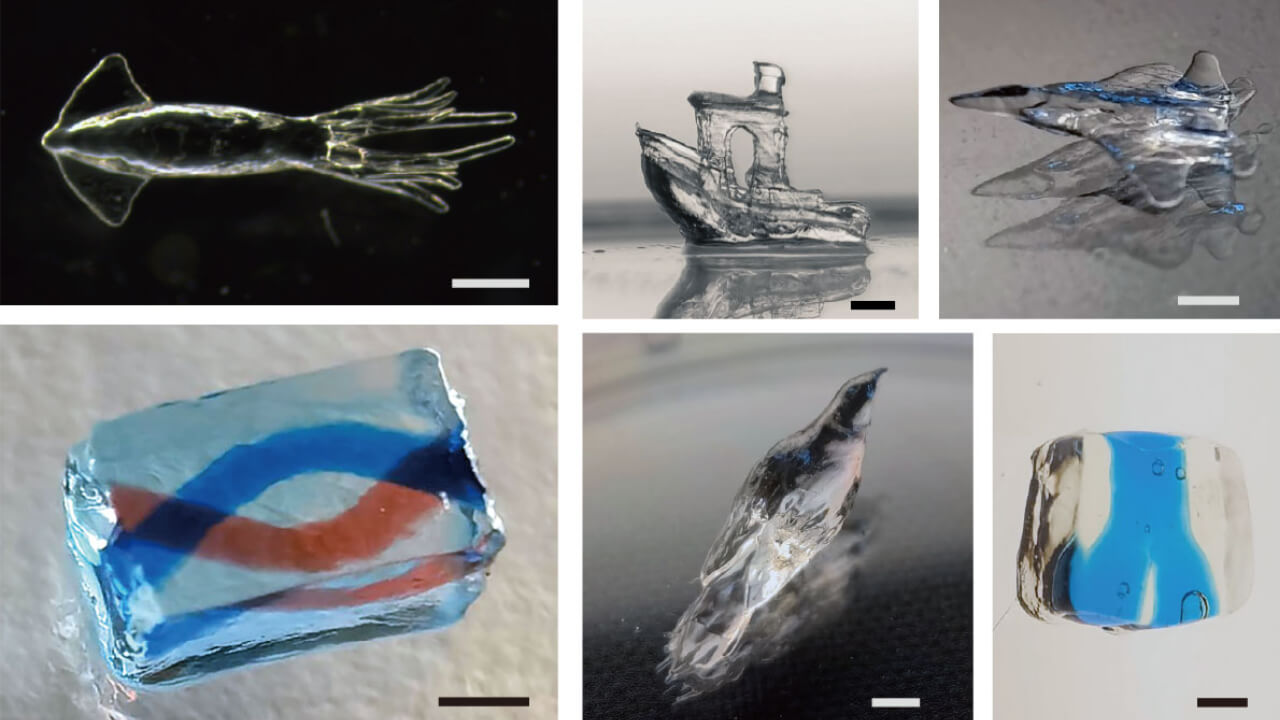
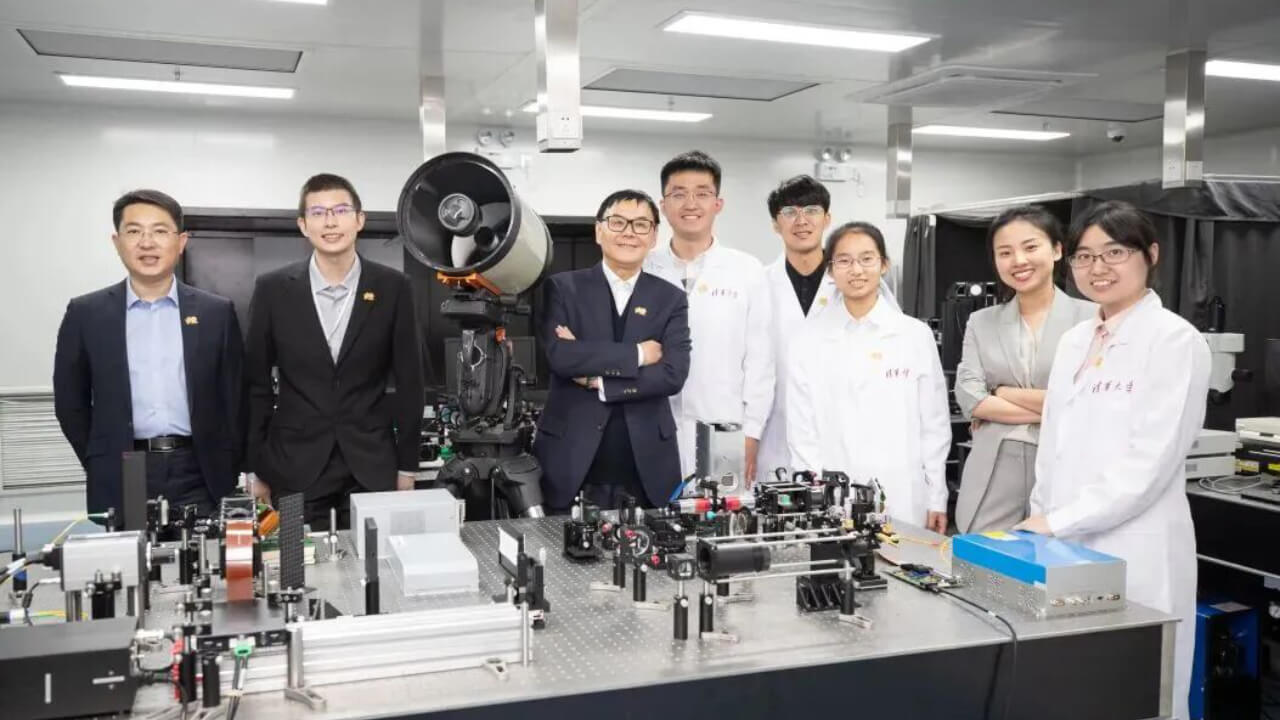
A research team led by Dai Qionghai, academician of the Chinese Academy of Engineering, at the Imaging and Intelligent Technology Laboratory of Tsinghua University has set a new world record in 3D printing speed using DISH 3D printing technology based on holographic light fields, fabricating millimeter-scale complex structures in just 0.6 seconds. The paper lists Dai Qionghai, Associate Professor Wu Jiamin, and Professor Fang Lu of the Department of Electronic Engineering as co-corresponding authors, with postdoctoral researchers Xukang Wang and Ma Yuanzhu, and doctoral student Niu Yihan as co-first authors. The achievement, the result of five years of research and development, was published in Nature on February 13, 2026.
Why Traditional 3D Printing Has Struggled to Balance Speed and Precision
Vat photopolymerization technologies such as SLA and DLP cure liquid photopolymer resin by exposing it to light. However, curing occurs one two-dimensional cross-section at a time, with layers stacked to build a three-dimensional object. This is why even millimeter-scale precision objects typically require tens of minutes to several hours to complete.
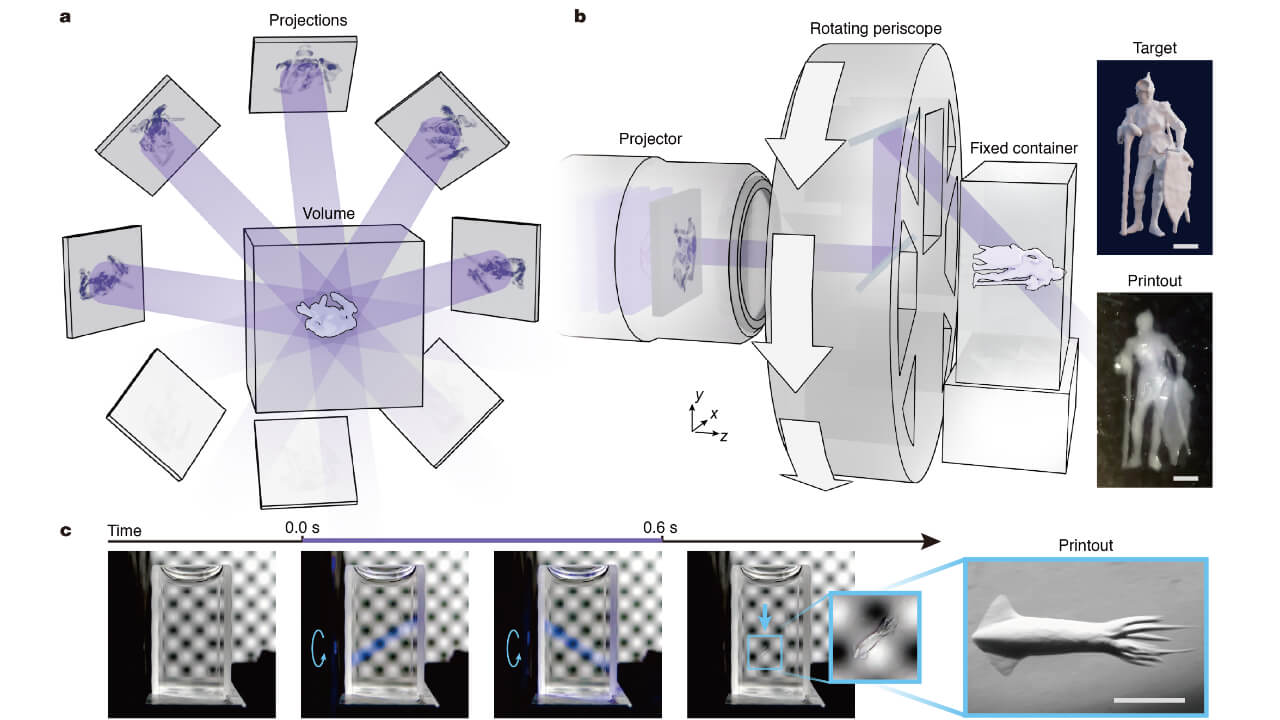
Volumetric Additive Manufacturing (VAM) emerged to overcome this limitation. By projecting light from multiple angles simultaneously, VAM directly generates a three-dimensional light intensity distribution within the resin, curing the entire volume at once. Eliminating the layer-by-layer process makes dramatic speed improvements theoretically possible.
However, conventional VAM faced a critical challenge. To project light from multiple angles, the resin container had to be rotated at high speed. Increasing rotation speed caused the resin to vibrate and wobble, degrading print quality. To prevent this, high-viscosity resins were required, placing a ceiling on achievable speeds.
How DISH 3D Printing Works: Rotating Light, Not Resin
The DISH (Digital Incoherent Synthesis of Holographic Light Fields) technology developed by the Tsinghua University team solves this fundamental problem. Where conventional VAM rotated the resin, DISH keeps the resin container stationary and instead uses a high-speed rotating periscope to project light from multiple angles. Light pattern control is achieved through a Digital Micromirror Device (DMD) capable of switching patterns 17,000 times per second, instantly projecting complex three-dimensional light intensity distributions. The result: structures as small as 12 micrometers fabricated in just 0.6 seconds, with 19-micrometer resolution maintained across a 1-centimeter range. Printing speed reaches 333 cubic millimeters per second — a new world record.
Material compatibility is another significant advantage. Where conventional VAM required high-viscosity resins to prevent wobbling during rotation, DISH works with resins as low as approximately 4.7 cP in viscosity because the resin remains stationary. Standard photopolymer resins used in SLA and DLP can be applied directly, and the system also supports bio-based hydrogels such as gelatin methacrylate and silk fibroin methacrylate, substantially expanding the range of usable materials.
From Biomedical Applications to Mass Production: The Potential of DISH Technology
The application potential of DISH is broad. Using biocompatible materials, the technology enables fabrication of vascular models including helical and branching tubes, as well as in situ printing directly on petri dishes and biological tissue, opening new pathways for tissue engineering and high-throughput drug screening. The technology is also suited to mass production of micro-components such as photonic computing devices and smartphone camera modules, as well as parts requiring sharp angles and complex curved surfaces. Further expansion into flexible electronics and micro-robotics is also anticipated.
AM Insight Asia Perspective
Five years of sustained Chinese investment in computational optics for additive manufacturing has now produced a world record — a result that reflects a consistent pattern in China’s approach to AM: academic research institutions driving breakthrough technology that is then positioned for industrial adoption. DISH represents yet another example of Asia’s AM sector shaping global technological direction, not merely serving as a manufacturing base.
From an industrial application standpoint, DISH has the potential to deliver immediate impact in the mass production of precision small-scale components such as connectors and smartphone camera modules. While the current limitation to centimeter-scale objects remains a constraint, this falls well within practical range for the precision small-parts sector. As a volumetric process without discrete layers, DISH also offers the prospect of reduced inter-layer delamination risk compared to SLA and DLP — a potential advantage in Z-direction mechanical performance that could prove significant for part reliability. Systematic verification of actual mechanical property data, however, remains a task for future research.
Questions around equipment cost, calibration complexity, and maintenance accessibility remain unanswered, and no commercialization roadmap or product development timeline has yet been announced. Nevertheless, given the sub-second fabrication speed, compatibility with low-viscosity resins, and suitability for flow-based production, DISH has a credible path to moving VAM technology from the research stage into practical deployment. The industry will be watching closely for signs of commercial development and partnership with manufacturing sectors.