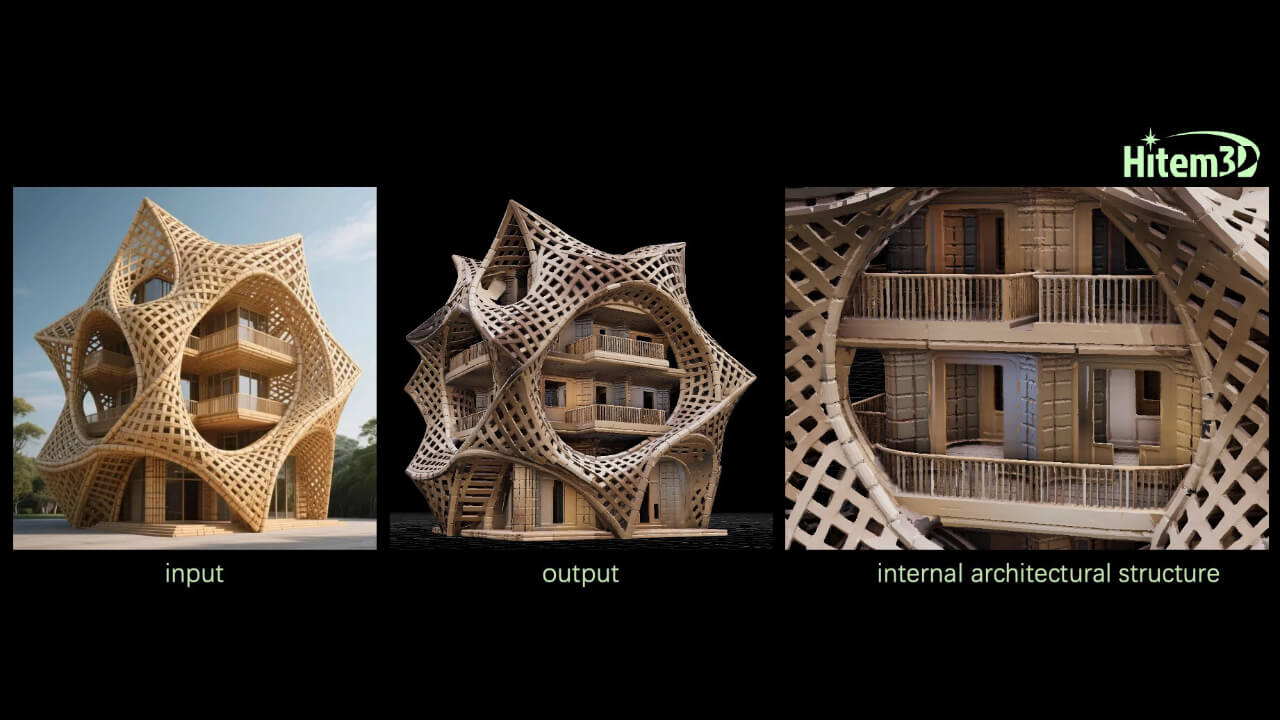
Hitem3D has announced its production-oriented image-to-3D AI platform specialized for 3D printing workflows. As additive manufacturing expands into customized production and short-run manufacturing, demand is growing for tools that convert photographs into reliably printable geometry. The Singapore-based company emphasizes mesh reliability and print-aware reconstruction, addressing geometric issues that frequently cause failures during slicing processes.
Shift from Visual Quality to Manufacturing Reliability
In 2026, image-to-3D AI evaluation criteria are shifting from purely visual appeal to practical manufacturing performance. As additive manufacturing deepens its integration into customized production and short-run manufacturing, the industry increasingly demands tools capable of converting photographs into printable geometric forms with structural reliability.
Rather than positioning itself as a general-purpose creative platform, Hitem3D adopts an approach aligned with fabrication demands, where mesh consistency, resolution, and downstream behavior serve as critical evaluation criteria. The company focuses specifically on production-oriented requirements rather than purely aesthetic output.
Addressing Geometry Reliability Challenges
A recurring challenge in photo-based 3D printing lies in geometry reliability. Models that appear visually complete may still fail during slicing due to surface discontinuities, ambiguous internal structures, or fragile topology. These issues introduce manual repair steps that erode the efficiency gains promised by AI automation.
Users increasingly evaluate the value of image-to-3D tools by their ability to reduce—rather than merely relocate—this burden. Recent advances in this category reflect a growing emphasis on print-aware reconstruction, with higher mesh density and improved inference of occluded or incomplete regions.
Print-Aware Reconstruction Technology
While perfect watertightness remains difficult to guarantee from limited visual input, the 2026 goal has shifted toward generating models that behave predictably during scaling, support generation, and material preparation.
Internal validation tests were conducted across common FDM setups to establish performance benchmarks. In tested miniature-scale outputs, wall thickness after scaling met common FDM printing requirements and could be adjusted to suit typical resin printing workflows.
The platform’s models are compatible with standard auto-support generation in widely-used slicing software. Optimized for slicer stability and speed, the models feature file sizes ranging from 15-40 MB. In internal tests, a majority of Hitem3D-generated models passed common slicing validation checks with minimal manual repair, significantly reducing preparation time.
The platform strengthens high-resolution geometry generation and prioritizes structural coherence over purely aesthetic output, positioning AI-generated models as viable starting assets for physical production rather than experimental prototypes.
Platform Adoption and Market Position
Hitem3D, pioneered by MathMagic (founded 2024), has empowered over a million users across 150 countries since its launch. These solutions are now integrated into the production pipelines of multiple Fortune 500 companies, establishing spatial AI as a new industrial standard, according to the company.
The platform specializes in converting single or multi-view images into production-ready 3D models, with particular strength in 3D printing, industrial design, and game asset creation. The company reports adoption by major manufacturers in the 3D printing and fabrication equipment sectors.
Hitem3D secured the #1 spot on the Hugging Face Space Trending list within a week of its model upload and maintained a top 3 position across all model categories for three consecutive weeks.
Pricing and Free Trial Offer
Hitem3D offers free 100 credits on signup, with no credit card required. Professional users can access 1,000 credits and standard queue priority at an initial $9.9 per month.
The platform generates manufacturing-ready 3D models from single or multi-view images. Sample outputs and print success rates can be viewed at hitem3d.ai/3dprinting/use-case.
AM Insight Asia Perspective
In recent years, image-to-3D AI technology has rapidly gained popularity, yet what “manufacturing-level” or “industrial applications” specifically entails remains largely unclear. While Hitem3D claims adoption by multiple Fortune 500 companies, concrete use cases—such as reverse engineering of mechanical parts, rapid fabrication of jigs and fixtures, or specific requirements and precision levels in custom product short-run manufacturing—would provide clearer decision-making criteria for manufacturing users if demonstrated through actual examples.
Particularly in reverse engineering applications, industrial 3D scanners are already widely utilized, capable of obtaining accurate dimensional 3D models from high-precision scan data. While photo-based image-to-3D AI offers lower barriers to entry and easier implementation, the practical boundaries remain unclear: how it differentiates from 3D scanners in terms of dimensional accuracy and shape fidelity, or for which applications photo-based quality proves sufficient.
Currently verifiable major usage examples center on relatively small-scale manufacturing applications, such as miniature figure production and custom product sales. While improvements in print-aware reconstruction technology certainly contribute to enhanced practicality, compatibility with specific quality requirements and validation processes in large-scale manufacturing awaits further case accumulation. For companies in Asia integrating 3D printing into manufacturing processes, the practicality of such tools will likely be judged not by generic “manufacturing-ready” claims, but by the presence of validated case studies for specific applications and clearly stated precision levels.