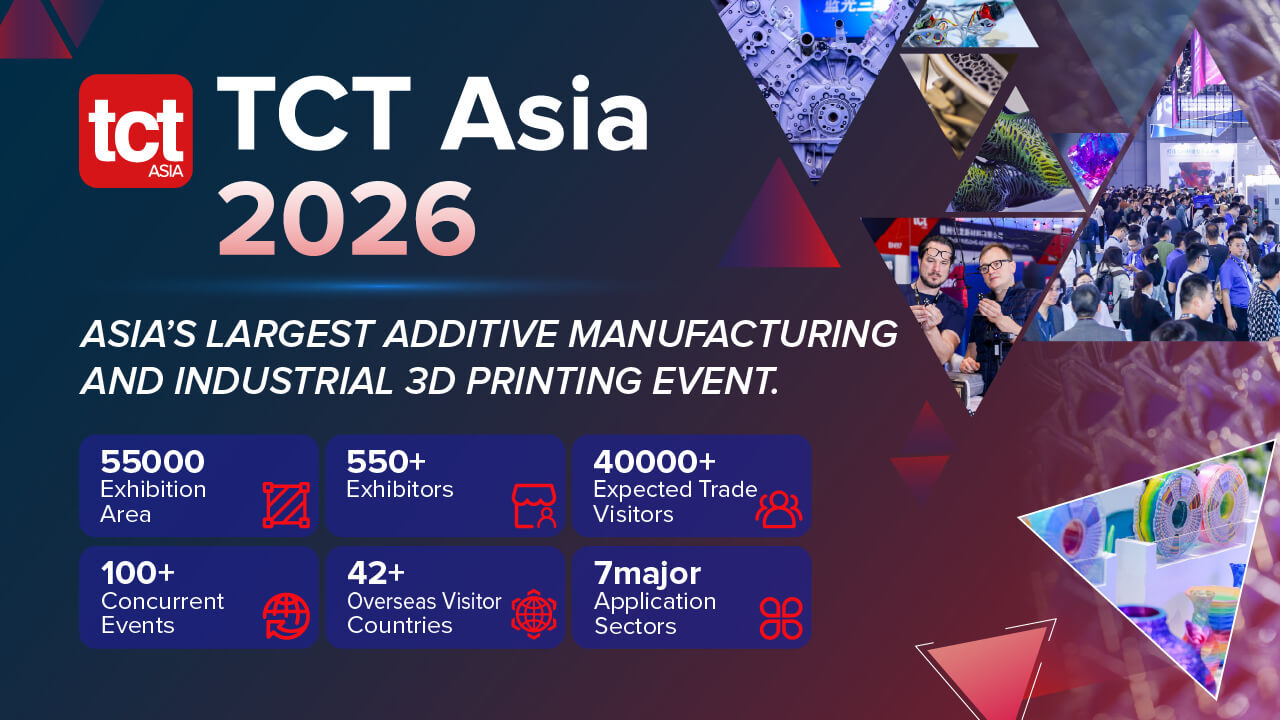
In Part 1, we covered the overall landscape of TCT Asia 2026. In Part 2, we highlighted the sessions worth attending. Now, in Part 3, we turn to the exhibition floor itself — where more than 550 TCT Asia 2026 exhibitors will fill Hall 7.1 and Hall 8.1 with machinery, materials, software, and scanning technology. Navigating a show of this scale requires a plan. Miss the wrong booth, and you may miss the year’s biggest story. This guide identifies the companies AMIA considers essential to visit — and explains why. But treat this as a starting point. Somewhere among those 550 exhibitors, there are stories no one has found yet. That is part of what makes this show worth attending. Established Western brands and Chinese innovators standing on the same floor — this is one of the best opportunities in the industry to read the global AM landscape directly.
Hall 7.1 — Metal AM: TCT Asia 2026 Exhibitors to Watch and Why Direct Comparison Matters
Hall 7.1 is the main arena for metal AM. Chinese manufacturers dominate in both number and presence, while Western software and digital companies also exhibit. The chance to speak directly with both sides — on the same floor — is rare.
Printer Manufacturers (Priority Booths)
BLT (Xi’an Bright Laser Technologies / 铂力特) China’s flagship metal AM company. Listed on the Shanghai Stock Exchange (688333.SH) with more than 2,800 customers, BLT leads the industry in large-format multi-laser technology — including the 26-laser BLT-S1500 and the BLT-S1000 with up to 12 lasers (build volume: 1200×600×1500mm). Annual production capacity exceeds 50,000 parts. The company supplies components to aerospace customers including Airbus and continuously invests more than 15% of revenue in R&D. A Phase IV factory (163,200㎡) is currently under construction. BLT is scheduled to present at TCT Introducing on March 18, 10:00–10:20.
Farsoon (华曙高科) One of the few manufacturers offering a full lineup covering both SLS and SLM. Farsoon is exhibiting in Hall 7.1 this year. For buyers evaluating both polymer and metal solutions under one roof, this booth is worth the stop.
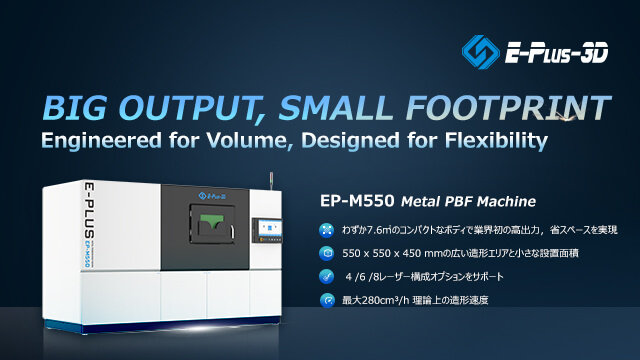
Eplus3D (易加增材) The EP-M2050 system is expandable to 64 lasers, with a build volume of 2050×2050×1100mm — placing it among the world’s largest metal 3D printers. The company has demonstrated this capability through the production of titanium alloy shaft covers for Honor Magic V2 foldable smartphones, and has delivered more than 100 “super-meter class” systems to the aerospace sector. Eplus3D is scheduled to present at TCT Introducing on March 17, 13:20–13:40.
UnionTech (联泰科技) Founded in 2000, UnionTech is one of China’s longest-standing industrial SLA manufacturers, with cumulative global sales exceeding 10,000 units. The company’s core strength is tire mold manufacturing: its RA600 SLA printer achieves surface roughness Ra < 4µm, roundness deviation < 0.05mm, and dimensional accuracy ±0.1mm — precision that tire manufacturers require for grip, wear resistance, and safety. More than 130 tire mold printers have been installed worldwide. UnionTech is a returning exhibitor at TCT Asia and will be in Hall 7.1.
Enigma (南京英尼格玛) A WAAM (Wire Arc Additive Manufacturing) specialist in a hall dominated by LPBF. For large-format, cost-efficient metal part production, WAAM represents a fundamentally different approach — and Enigma is one of the few companies making that case on this floor.
Addireen Technologies (希禾增材) Founded in 2023, Addireen developed China’s first green laser metal 3D printing solution. Green lasers achieve approximately 10 times the absorption rate of conventional infrared lasers when processing copper and other high-reflectivity materials. Their 4-laser synchronized system, the ADDIREEN 400G, delivers pure copper parts with density above 99.8%, electrical conductivity of 101% IACS, thermal conductivity of 390 W/(m·K), and a minimum wall thickness of 0.08mm. With demand for copper components rising in EV, data center, and aerospace applications, Addireen is attracting serious attention. The company is scheduled to present at TCT Introducing on March 17, 15:40–16:00.
Software and Digital (Reference)
Materialise and Siemens are both exhibiting in Hall 7.1 — bringing the CO-AM software ecosystem and AM-integrated digital manufacturing solutions respectively. The fact that Western software and digital players share a floor with Chinese hardware manufacturers is itself a reflection of where the industry stands. How Materialise’s engineers position CO-AM in relation to Chinese hardware partners, and what Siemens’ digital manufacturing vision looks like alongside local machine builders, are questions worth asking on the floor.
Materials (Reference)
Notable metal AM material suppliers in Hall 7.1 include Jinsanwei (金石三维), Vilory (威拉里), Zhongyuan New Materials (中体新材), Ningbo Zhongyuan (宁波众远), and AVIC Maite (中航迈特). For procurement teams evaluating powder supply chains, these booths offer direct access to Chinese suppliers that rarely appear at Western shows.
Hall 8.1 — Polymers, AI Tools, and an Emerging Scanner Segment
Hall 8.1 is a more diverse floor — printers, AI tools, 3D scanners, and materials side by side. Global brands and Chinese companies are once again neighbors.
Printer Manufacturers (Priority Booths)
Bambu Lab (拓竹科技) The brand that reset consumer expectations for desktop FDM speed and quality. New product announcements are expected at TCT Asia 2026. Bambu Lab has also announced a joint development agreement with SCANTECH for a consumer-facing 3D scanner (announced January 30, 2026), signaling a move toward a more integrated hardware ecosystem.
BMF (摩方精密) The specialist in micro-scale 3D printing at single-digit micron precision. BMF occupies a corner of the market that most AM companies do not touch — medical devices, optics, and microelectronics — and is one of the clearest examples of Chinese AM moving up the precision ladder.
PollyPolymer (博理科技) Combining HALS (Hindered Amine Light Stabilizer) technology with applications in footwear and robotics, PollyPolymer is an unusual exhibitor. The intersection of advanced polymer chemistry and wearable/robotic end-use is a niche that is easy to overlook and worth understanding.
Raise3D (复志科技) A trusted name in industrial FDM with documented deployments in EV production lines. In 2025, Raise3D launched its first SLS system, the RMS220, at RAPID+TCT Detroit and showcased it at TCT Asia 2025. The RMS220 offers a build volume of 220×220×350mm and output of up to 5kg of parts per day using PA12. The company has now committed to a multi-technology strategy spanning FFF, DLP, and SLS.
TPM3D (盈普三維) Founded in 1999, TPM3D is one of China’s longest-established SLS specialists, offering two product lines — the S Series and P Series — along with more than 20 proprietary polymer materials including PA12, PA11, TPU, and PEEK. The company holds 90+ patents and carries TÜV CE certification. At TCT Asia 2026, TPM3D is expected to showcase the CF200+PPS200, a compact professional SLS system launched at Formnext 2025. For buyers evaluating SLS options, TPM3D offers a depth of industrial track record that few Chinese SLS manufacturers can match.
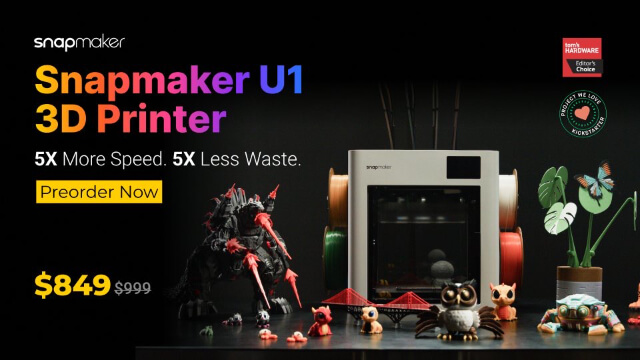
Snapmaker Snapmaker built its reputation on 3-in-1 machines combining 3D printing, laser engraving, and CNC — but the U1, launched in 2025, marks a significant shift in direction. A dedicated FFF machine with four independent toolheads, the U1 uses the SnapSwap™ system to swap between heads in approximately five seconds, reducing filament purge waste by up to 80%. The Kickstarter campaign raised more than $20 million from over 20,000 backers, making it the most funded 3D printer campaign in history. At TCT Asia 2026, how Snapmaker positions this new generation of machines will be one of the floor’s storylines to watch.
AI Tools — 3D Model Generation Enters the AM Floor
One of the most significant developments at TCT Asia 2026 is the presence of AI-powered 3D model generation platforms on the exhibition floor. Two companies in Hall 8.1 represent this shift: Meshy AI and Tripo AI.
Meshy AI is a Silicon Valley-based platform that converts text and image inputs into high-quality 3D models in minutes. The company has surpassed 6 million users and has generated more than 40 million models to date. Founded by CEO Ethan Hu, an MIT-trained Ph.D. known for creating the Taichi GPU programming language, Meshy unveiled the AI Creative Lab at CES 2026 — an end-to-end platform that converts AI-generated 3D designs into ready-to-print files with a single click. The 3D printing community has become Meshy’s largest user group, and the company has stated that physical manufacturing is now a “core pillar” of its strategy, not a secondary use case. Meshy AI is also scheduled to present at Tech Stage on March 19.
Tripo AI was founded in 2023 and is headquartered in Hong Kong. Its platform, Tripo Studio, integrates text-to-3D and image-to-3D generation, AI texturing, and auto-rigging into a single workflow. Since the rollout of Tripo 3.0, the platform has grown to serve more than 4 million creators, 35,000 developers, and over 700 enterprise customers. Users include Bambu Lab, Tencent, HTC, and Replit. Tripo has also released more than 18 open-source projects, including TripoSR, developed in collaboration with Stability AI.
The presence of these two companies at TCT Asia 2026 signals something the industry should pay attention to: the upstream entry point for additive manufacturing workflows is changing. The assumption that AM users begin with CAD expertise is being challenged. When anyone can generate a 3D model from a text prompt or photograph, the question of who uses AM — and for what — becomes much broader.
3D Scanners — A Segment Finding Its Identity at TCT Asia
3D scanning is establishing itself as a distinct category at TCT Asia 2026. Growing demand for reverse engineering, quality inspection, and digital archiving across Asian manufacturing is the driver.
Shining3D (先临三维) is China’s leading industrial 3D scanner brand, exhibiting in Hall 8.1 with a broad lineup covering industrial and professional applications.
SCANTECH (思看科技 / Hangzhou) signed a joint development agreement with Bambu Lab on January 30, 2026, to co-develop a consumer-facing 3D scanner. The company brings established industrial scanning expertise to a partnership that could significantly expand the user base for scanning technology.
Revopoint (知象光電) is a China-based 3D scanner brand with dual headquarters in Xi’an and Shenzhen, serving users in more than 150 countries. The company launched five products in 2025, including the MetroY and MetroY Pro (multi-line blue laser, up to 0.01mm precision) and the Trackit optical tracking scanner, which eliminates the need for markers in fine-detail industrial scanning. Revopoint is a returning TCT Asia exhibitor and will be at Booth 8F50.
Materials (Reference)
Polymaker remains the benchmark for engineering-grade filament at the global level. Arkema, the French specialty polymer major, brings a European materials perspective to a largely Chinese hall — a direct comparison opportunity that does not exist at most regional shows. eSUN (易生) and Wanhua Chemical (万华化学), China’s largest chemical materials company, round out a materials section that covers the full range from commodity to specialty polymers.
AM Insight Asia Perspective
What makes TCT Asia 2026’s floor remarkable is not the scale — it is the configuration. Western global companies and Chinese manufacturers are standing on the same floor, side by side. You can put the same question to BLT and Eplus3D and compare the answers directly. You can ask Materialise’s engineers how CO-AM integrates with Chinese hardware partners, then walk to those partners’ booths. You can hear from Polymaker and Wanhua Chemical in the same day.
The deeper question the floor raises is one we find genuinely compelling: in a market as competitive and densely populated as China’s, what value can global companies actually offer? And on the other side — how are Chinese companies planning to take on the global players who got there first? These are not questions that can be answered by reading a press release or watching a product video. They can only be answered through direct conversation, on the floor, with the people who are making those decisions. That is what makes TCT Asia 2026 worth attending — and frankly, just thinking about it is exciting enough.
Related: