60% Weight Reduction. But the Real Story Is a Fundamental Shift in Materials and Design.
South Korean Meltio partner AM Solutions has successfully reduced the weight of a snow pad for the K2 Black Panther main battle tank by 60% using metal 3D printing. On the surface, it reads like a component improvement story. But read through the lens of military 3D printing, this case points to something larger: a shift in material efficiency, design optimization, and manufacturing process that carries far broader implications.
What Happened with the K2 Black Panther Snow Pad
AM Solutions is a South Korean Meltio partner that delivers modular additive manufacturing systems and solutions for aerospace, energy, shipbuilding, and defense. This project was carried out as part of an R&D initiative in collaboration with military logistics units, with the goal of significantly improving the operational efficiency, ergonomics, and sustainability of a critical tank component.
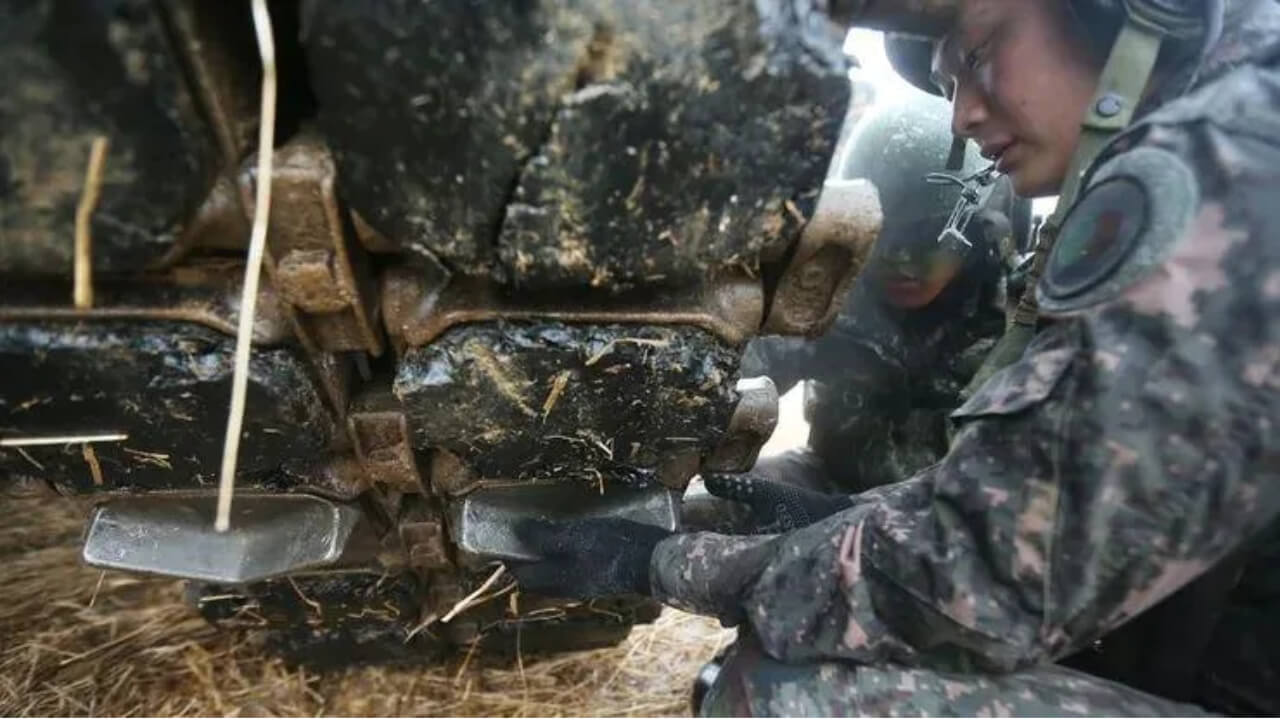
The K2 Black Panther is South Korea’s flagship main battle tank. During winter tactical operations, the standard rubber track pads must be replaced with metal snow pads to maintain grip on frozen terrain.
The problem was weight. Each conventional snow pad weighed approximately 12 kg. With 30 to 50 pads required per vehicle, the physical burden on soldiers tasked with swapping them under tight time constraints was substantial. The excessive weight also affected the overall operational efficiency of the tank.
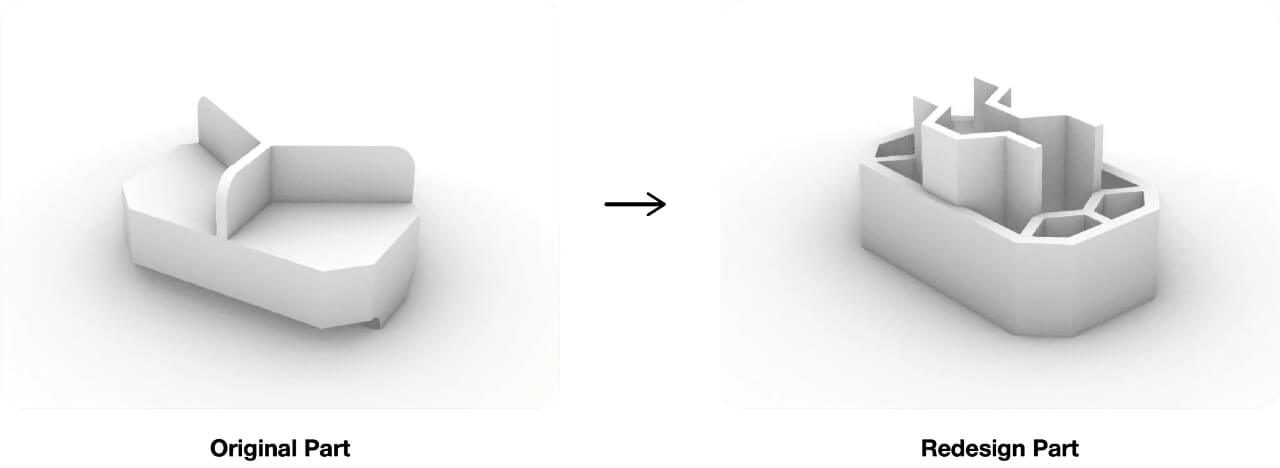
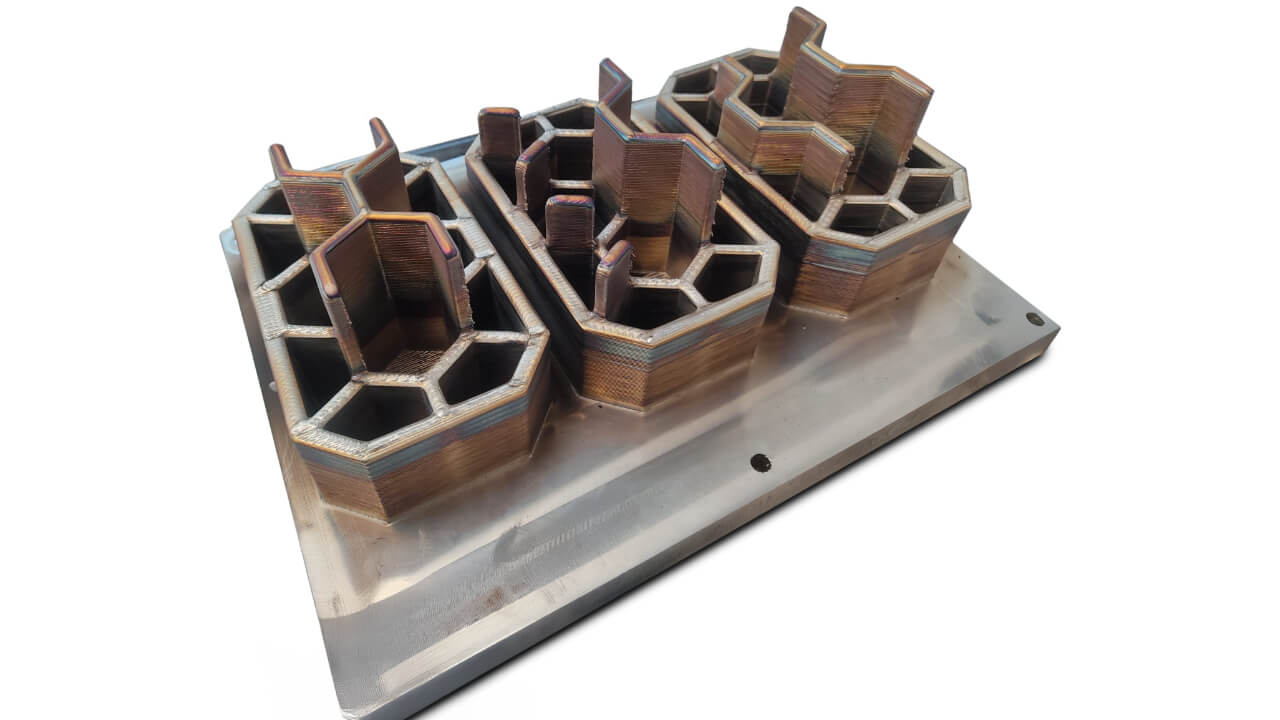
AM Solutions used the Meltio M600 system (LW-DED: Laser Wire Directed Energy Deposition) to manufacture a redesigned snow pad with a honeycomb structure optimized for additive manufacturing. The result: weight reduced from 10.74 kg to 4.26 kg — a 60% reduction. Material: stainless steel 316L. Mechanical properties met or exceeded those of the original part, with no tooling, molds, or post-processing required. Three pads can be produced simultaneously in a single print cycle. Field trials also confirmed approximately 0.64% improvement in fuel efficiency.
The redesign also incorporated terrain-specific performance enhancements, drawing on tread patterns and case studies from around the world — structural improvements optimized for operation on frozen terrain.
What Military 3D Printing Changes About Material Efficiency and Design
One of the most important aspects of this case study tends to go unnoticed: material efficiency. Manufacturing a complex geometry like a snow pad through conventional machining means cutting it from a large block of raw material. The more complex the shape — as with a honeycomb structure — the greater the volume of scrap. In some cases, the majority of the raw material ends up as waste.
LW-DED achieves material utilization rates of up to 99%. Because material is deposited only where it is needed, waste is reduced to near zero. On top of that, the design optimization in this project reduced the weight of the part itself — meaning less material is consumed to begin with. Lightweighting and high material efficiency compound each other.
The elimination of tooling is equally significant. Conventional manufacturing requires molds that take time and money to produce, and must be remade every time a design changes. Because LW-DED requires no tooling, the design iteration and optimization cycle becomes dramatically faster. Lead times from prototype to production-ready part are shortened, and design improvements driven by field needs become practically feasible.
There is one more point worth noting: damaged component repair. The conventional approach to a broken part is full replacement — discarding components that still have usable life. LW-DED allows material to be deposited selectively onto the damaged area, restoring the original form without replacing the entire part. Less material, lower cost, less time.
AM Insight Asia Perspective
What deserves attention in this case is that LW-DED can function both as a standalone tool for producing finished components and as the starting point in a broader manufacturing process. For applications where tight tolerances are not required, DED alone can complete the job. Where military-grade dimensional accuracy and surface quality are needed, DED can be used to build the part to near net shape, with subsequent machining used to achieve the final finish. The flexibility to choose how it is used depending on the application is one of LW-DED’s most fundamental strengths.
That said, parts produced by DED carry layer lines and face inherent limits in dimensional accuracy. Post-processing will be required for applications that demand tight tolerances — and many military components fall into exactly that category. The knowledge needed to determine when DED alone suffices and when post-processing is necessary is itself expertise that takes time to build. In the years ahead, hybrid approaches combining DED with subtractive processes may become increasingly common in military manufacturing.
There is another perspective that often goes overlooked. Repair does not always mean full restoration. In field conditions, the goal is sometimes simply to buy time until proper parts arrive — to get a disabled vehicle moving far enough to reach the rear. For that kind of temporary repair, a rough DED deposit may be all that is needed. Where speed matters more than precision, DED may be the most responsive tool available.
This means a single DED system can shift roles depending on the situation: temporary field repair to buy time, permanent component restoration, and on-demand part production. The ability for the people on the ground to make that call — based on what the situation requires — may be the most fundamental value DED brings to military logistics. Reducing dependence on supply chains means raising the operational responsiveness of the field.
This K2 tank snow pad case is only the beginning. The K2 is already being exported to Poland, Peru, Morocco, and other countries, and as more nations adopt it, the demand for local maintenance and repair support will grow with it. DED-based repair expertise and training know-how could become a significant form of added value for those export markets. Beyond tanks, the accumulated DED repair and manufacturing know-how can extend to armored vehicles, transport vehicles, and field installation components — and the range of applicable materials defines the range of possible targets. That know-how can transfer from land to sea and air. Whatever the platform, whatever the branch, the DED infrastructure and the repair expertise built around it will endure.
For the full picture of Meltio’s deployment with the Korean Marine Corps, see our companion article.