After Belarus and India, Russia’s third AM export deal brings its all-in-one model to Southeast Asia, a market contested by Western and Chinese suppliers
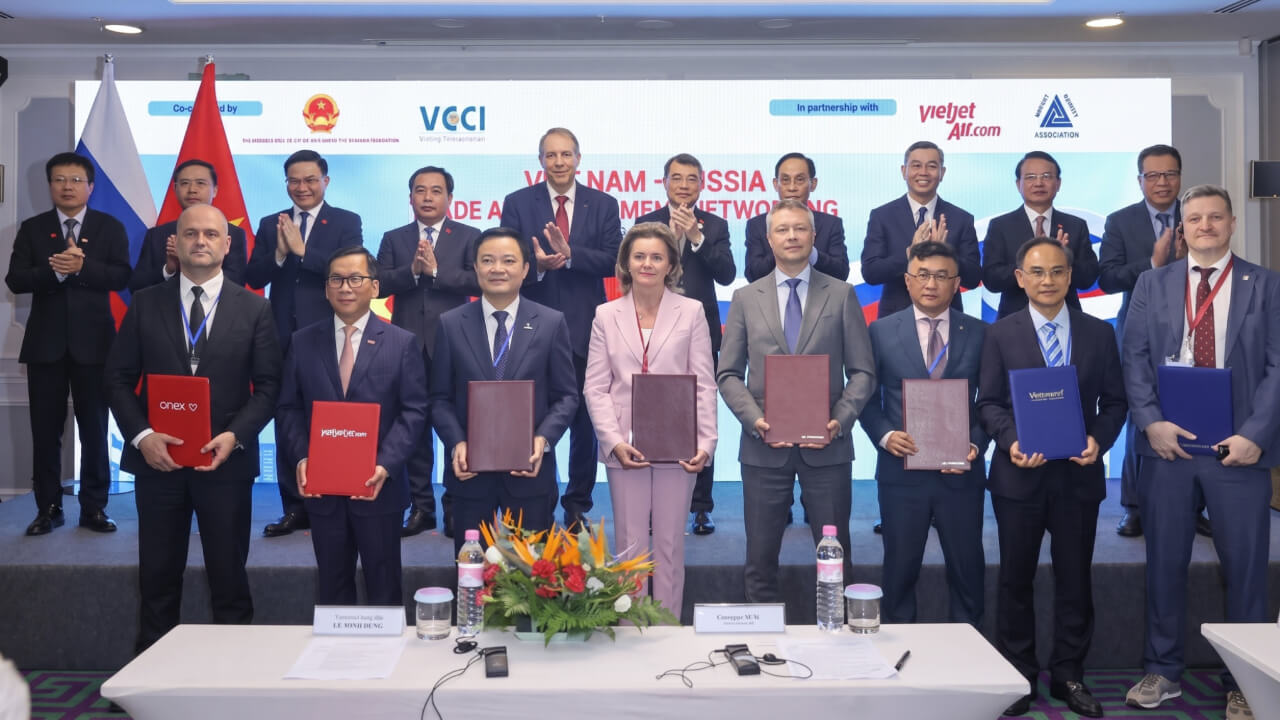
The fuel division of Russia’s state nuclear corporation Rosatom and Petrovietnam, Vietnam’s state-owned oil and gas group, signed a memorandum of understanding on additive manufacturing (AM) cooperation on June 30. At its core is the establishment of an additive technology center in Vietnam. The entry point is spare parts production for oil and gas equipment, but Rosatom has made clear that it also has localized 3D printer assembly in Vietnam and expansion across Southeast Asia in view, giving the deal implications beyond a single export project.
Producing drilling and pumping equipment parts locally with AM
Under the memorandum, the center will use industrial 3D printing to manufacture complex components for drilling and pumping equipment. The aim is to reduce equipment downtime through rapid prototyping, cut dependence on imported spare parts, and speed up the repair and refurbishment of large-scale equipment.
The project will proceed in stages. Russian specialists will first conduct a technical audit of Petrovietnam’s production processes. Based on the results, the two companies will finalize the center’s configuration and the list of AM equipment to be installed, and then open the facility. According to Petrovietnam Deputy General Director Phan Tu Giang, a survey of candidate sites begins in July, and the center could open as early as 2027.
What has been signed at this stage is a memorandum of understanding. Neither the start of construction nor the introduction of specific equipment has been decided.
Rosatom’s vertically integrated AM operation
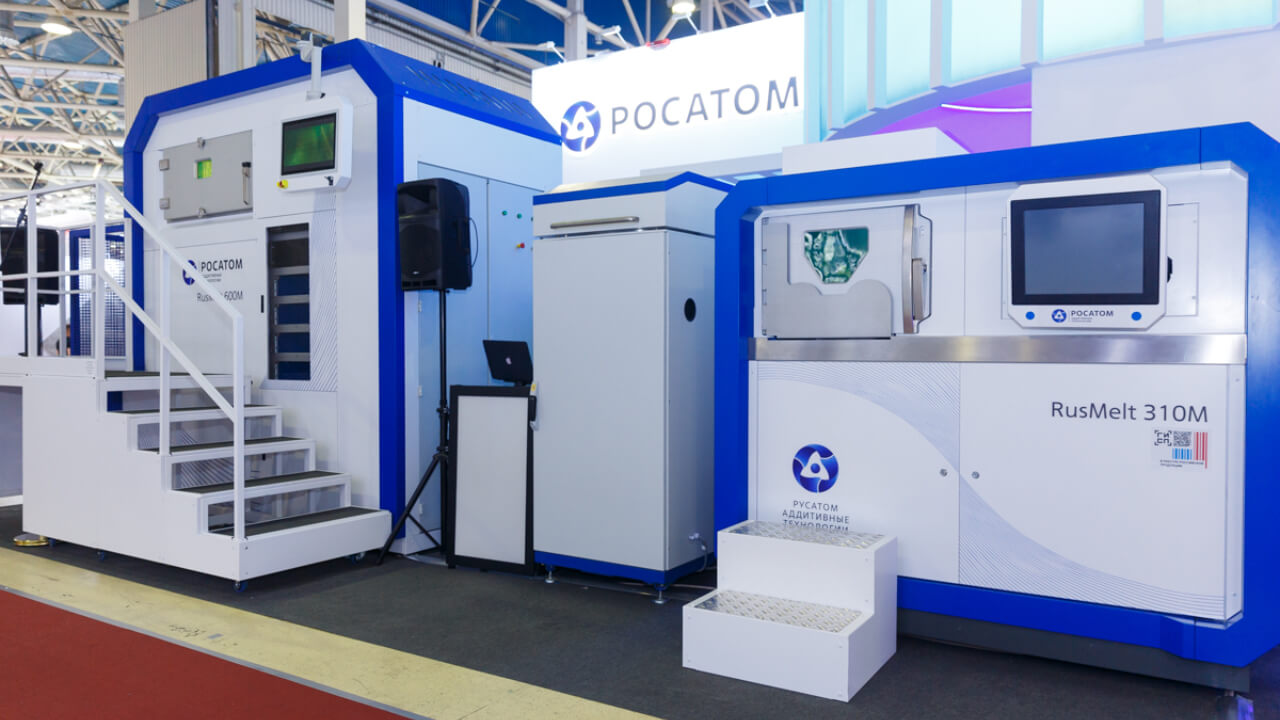
Rosatom is a nuclear company, but it has built AM into one of the pillars of its non-nuclear business. Under its fuel division TVEL, the dedicated subsidiary Rusatom Additive Technologies (RusAT) covers everything from developing and manufacturing metal 3D printers to metal powders, software, and printing services, all inside Russia. Its flagship machines are the RusMelt series of metal 3D printers based on selective laser melting (SLM), including the RusMelt 300M and 600M.
At the end of 2020, Rosatom opened its first additive technology center in Moscow, bringing machine assembly, printing, post-processing, and a testing laboratory together at a single site. Its first overseas center, established in Minsk, Belarus, is also equipped with the RusMelt 300M and 600M. In AMIA’s view, what is being proposed to Vietnam is a transplant of this center operating model refined inside Russia.
The third overseas deal, after Belarus and India
This is not Rosatom’s first AM export. Ilya Kavelashvili, director of the Additive Technologies Business Unit at Rosatom’s fuel division, cited the company’s first overseas additive technology center in Belarus, equipped with Russian machines, and the delivery of a large industrial 3D printer for the aerospace sector to India, calling them proof that Russian equipment, materials, and software are competitive in the global market.
What deserves attention is the shape of the business. Rosatom is not selling standalone machines. It offers a single package that starts with a technical audit and extends to material supply, scientific and technical support, and engineer training. Kavelashvili also mentioned the possibility of localizing 3D printer assembly in Vietnam in the future as a route into other Southeast Asian markets. Vietnam is positioned both as a customer and as a foothold for the markets beyond it.
AM Insight Asia Perspective
The industrial AM market in Southeast Asia has so far been described as a contest between Western and Chinese manufacturers. In AMIA’s view, this deal marks the arrival of a third kind of seller, one of a different nature.
The Russian side is not competing on price or machine performance in a commercial arena. A state-owned company, backed by government-to-government relations, sells an entire ecosystem to a state-owned company in the partner country. For the buyer, the appeal is that adoption comes as part of intergovernmental cooperation rather than as a simple procurement. The rules of the game differ from those of established players who compete through trade shows and distributor networks.
The countries where this model works next will be those with deep government ties to Russia and large state-owned industrial sectors. In Southeast Asia, Vietnam met exactly those conditions. For Western and Chinese AM equipment makers, AMIA believes the immediate issue is not the size of any lost market share but the risk that Russia locks in first access to state-owned enterprises, a customer segment close to government procurement.
About the companies
Rosatom Russia’s state nuclear corporation. Its core business is building and operating nuclear power plants and manufacturing nuclear fuel, and it runs an additive technology business under its fuel division (TVEL). The company develops its own equipment, materials, and software, including the RusMelt series of metal 3D printers.
Website: https://www.rosatom.ru/en/
Petrovietnam Vietnam’s state-owned energy group, established in 1975. Officially named the Vietnam National Industry – Energy Group, it operates across oil and gas exploration and production, refining, and power generation. It has also been designated as the investor for the Ninh Thuan 2 nuclear power plant, giving it ties with Russia in the nuclear field as well.
Website: https://www.pvn.vn
Source:
- TASS: Rosatom to help establish 3D printing technology center in Vietnam (June 30, 2026)
- Vietnam Investment Review: Rosatom, Petrovietnam to build additive tech centre in Vietnam