The Limits of Color and Texture Are Reshaping How AM Makes Things
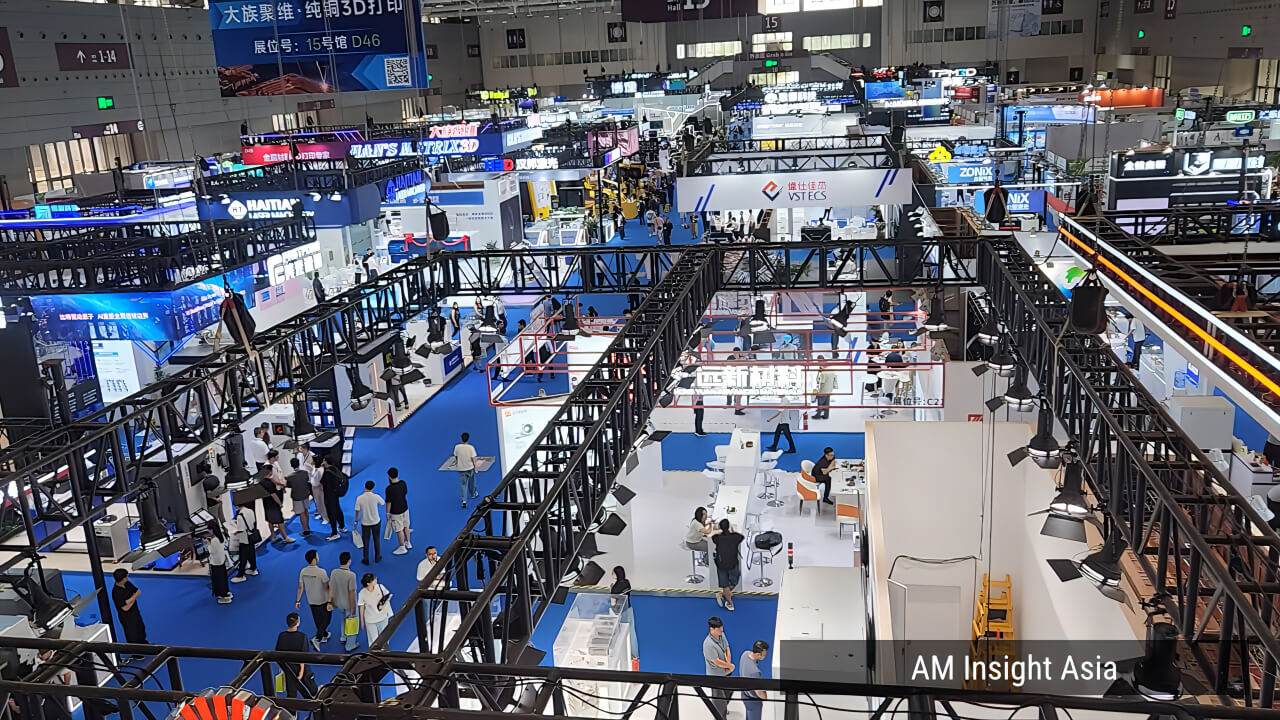
At the polymer and desktop AM section of the show floor, three things stood out: a race for new products among major manufacturers, a surge of filament booths, and a flood of 3D printed shoes. Beyond that lies a technical wall around expressing color and texture.
The details of individual products and exhibits will likely be covered by other outlets. This article looks beyond those individual facts to what emerges when the dots seen on the show floor are connected. The facts below are kept brief, serving mainly as material for that bigger picture.
New Products From the Major Makers
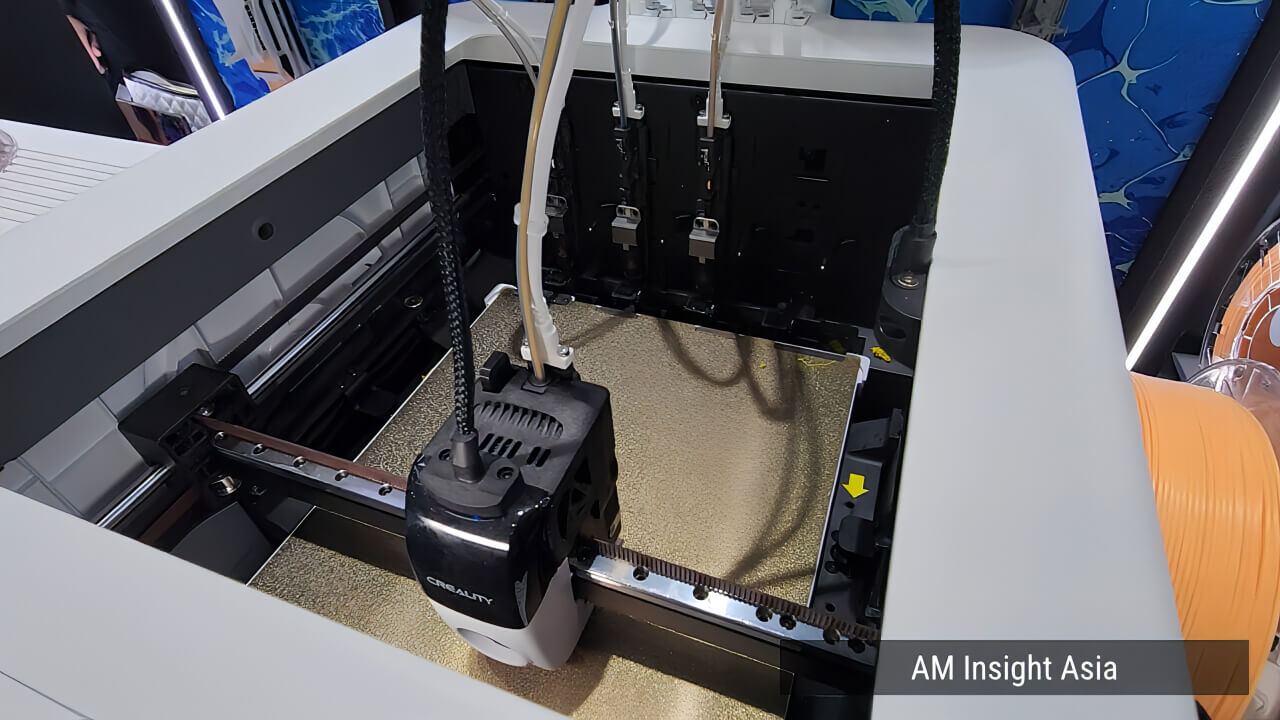
The polymer and desktop AM zone saw major players roll out new products. Bambu Lab and Elegoo had a strong presence, and Creality debuted its new K3 printer domestically, featuring the automatic nozzle-swap system KliTek (K3 would go on to make its global debut two weeks later at IFA 2026 Berlin, winning two awards).
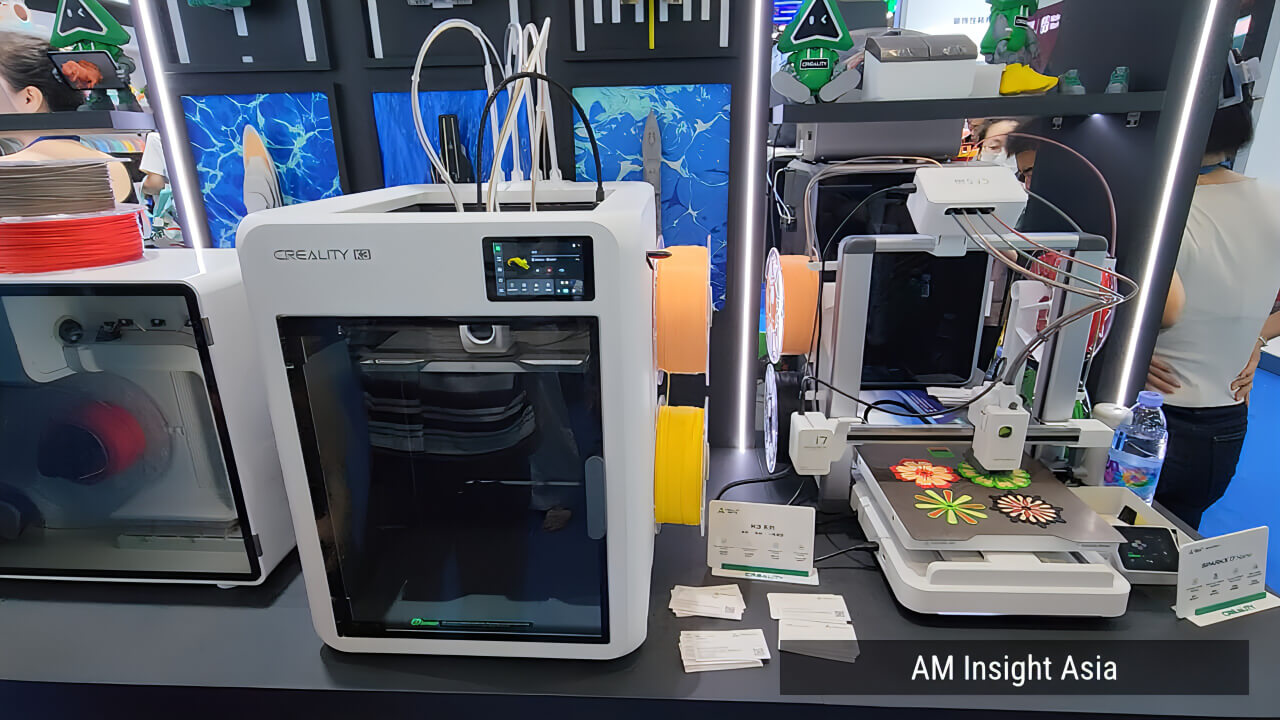
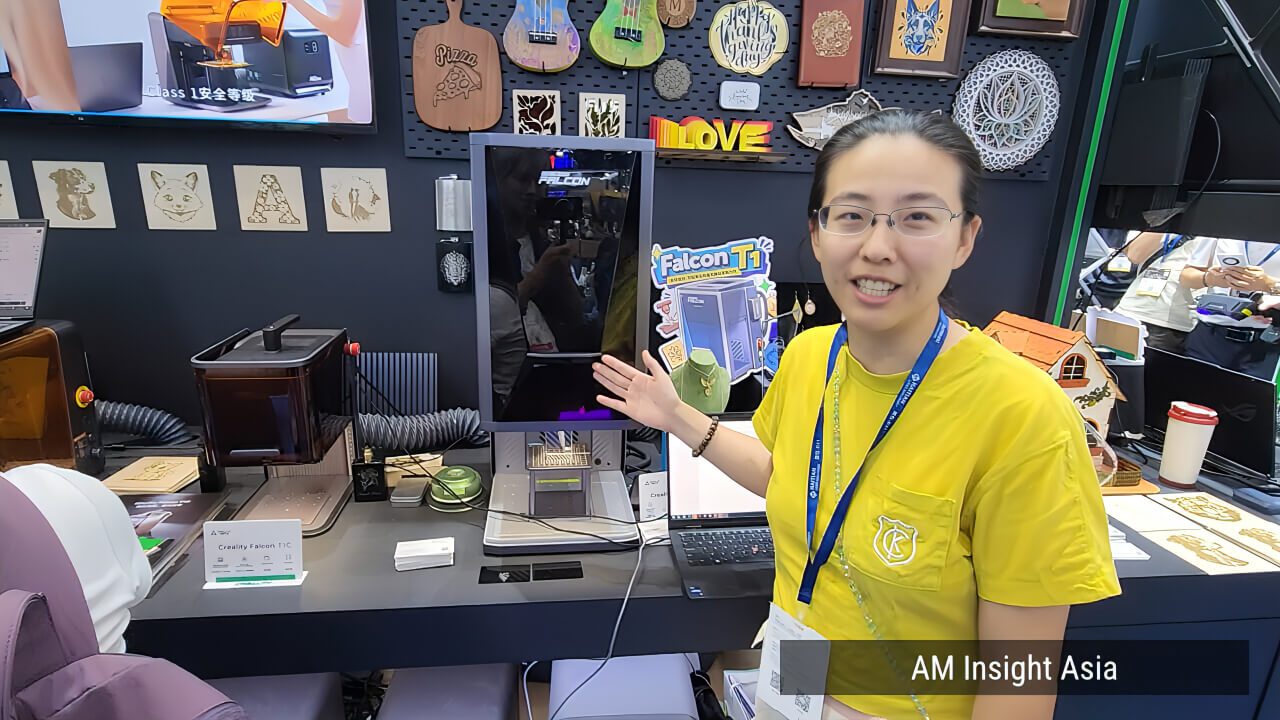
The same booth also demonstrated laser engraving on wood and crystal with the Falcon A1C and Falcon T1 engravers.
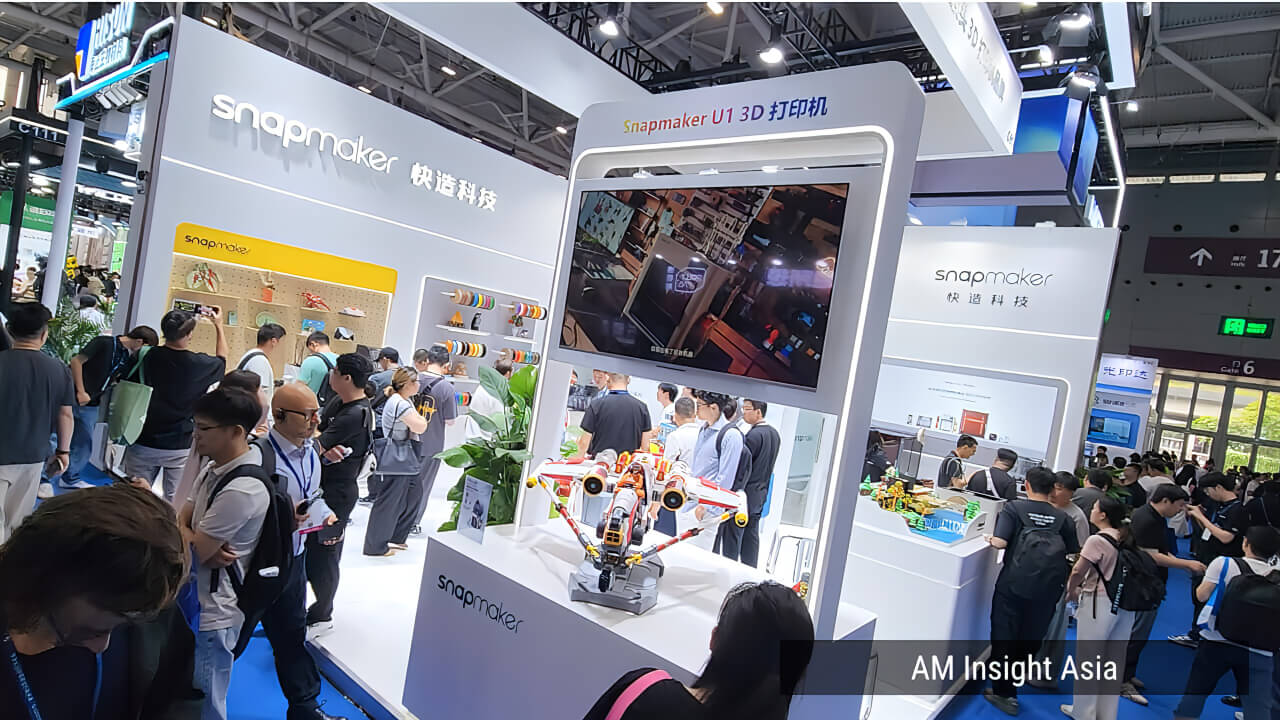
Snapmaker showed off prints made with Full Spectrum, a color-reproduction slicer technology created by community developer Radu (known as “Ratdoux”). Full Spectrum began as an open-source personal project; Snapmaker brought Radu on board in May 2026 and has been integrating the technology into its own Snapmaker Orca slicer. PollyPolymer drew attention for a “world’s first 3D printed mattress” laid out on the floor.
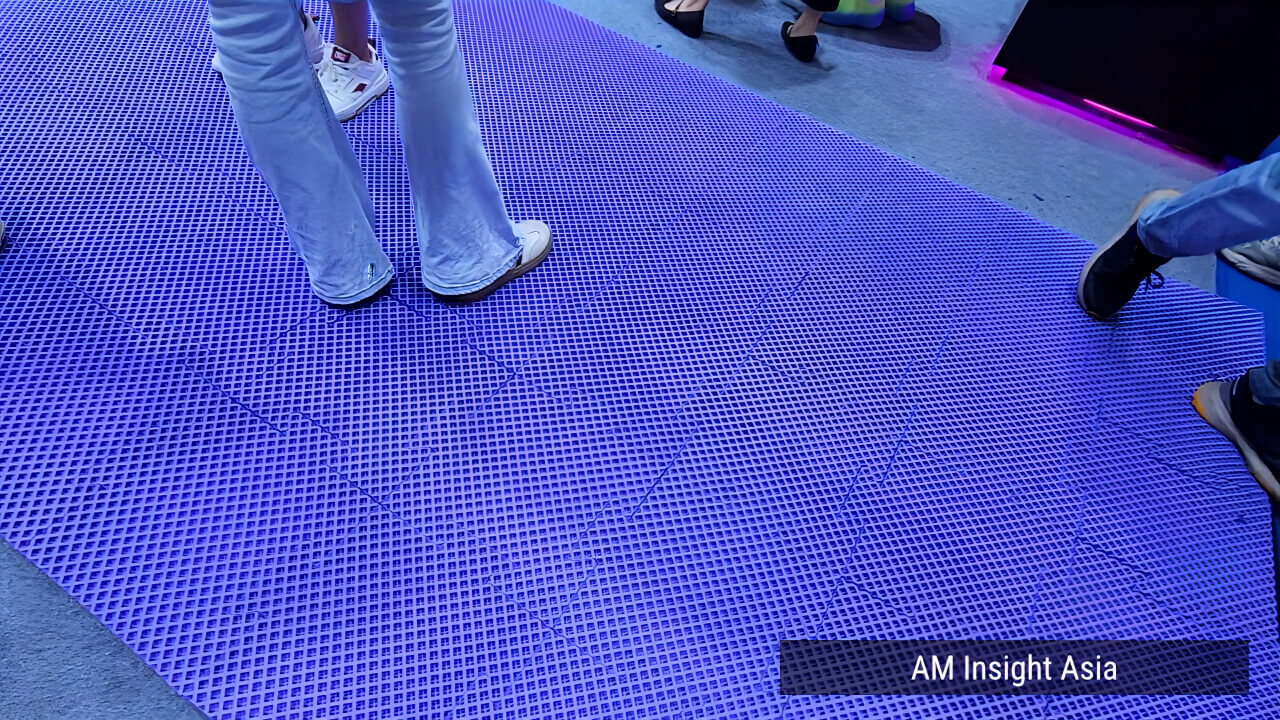
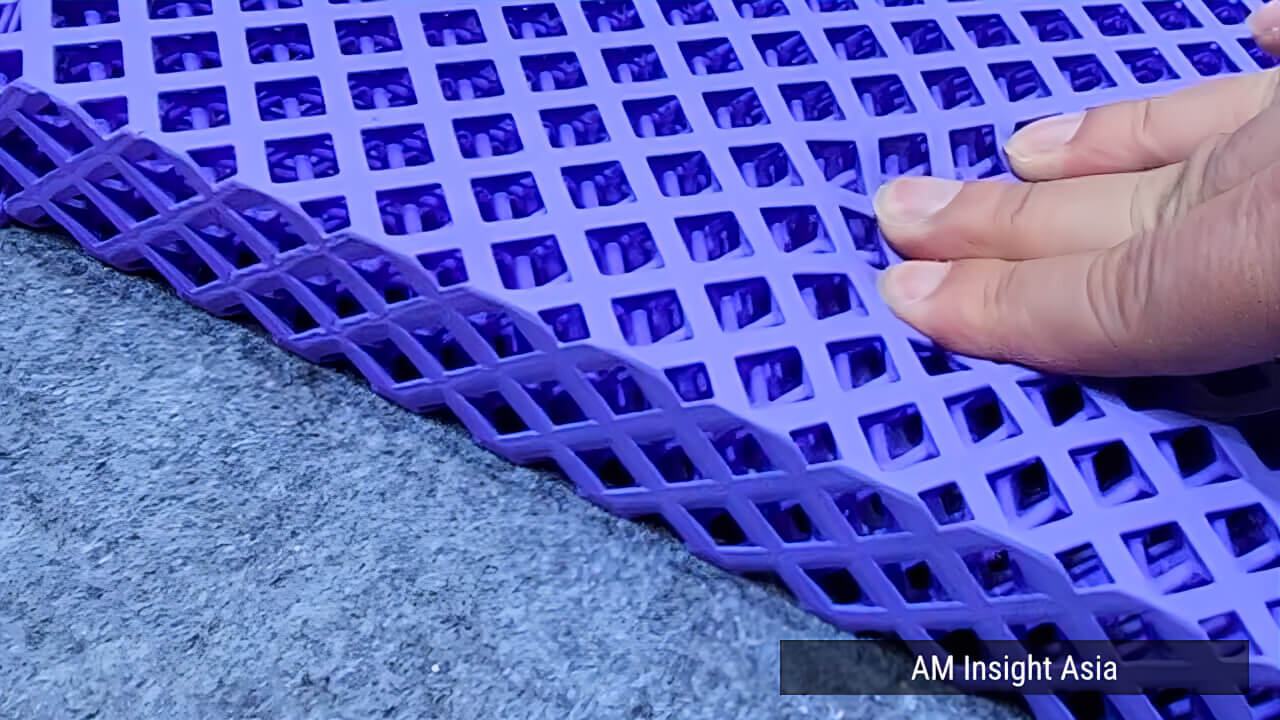
Walking on it felt cushioned and comfortable, though whether it’s really meant for a bed is another question. In industrial polymer AM, HP made its Asia-Pacific debut of the MJF 1200 (though the booth featured a large graphic panel explaining the technology rather than an actual unit), while TPM3D Printing Technology unveiled its SLS platform CF250 + PPS250 for the first time globally.
Manufacturers Less Familiar in Japan Also Had a Presence
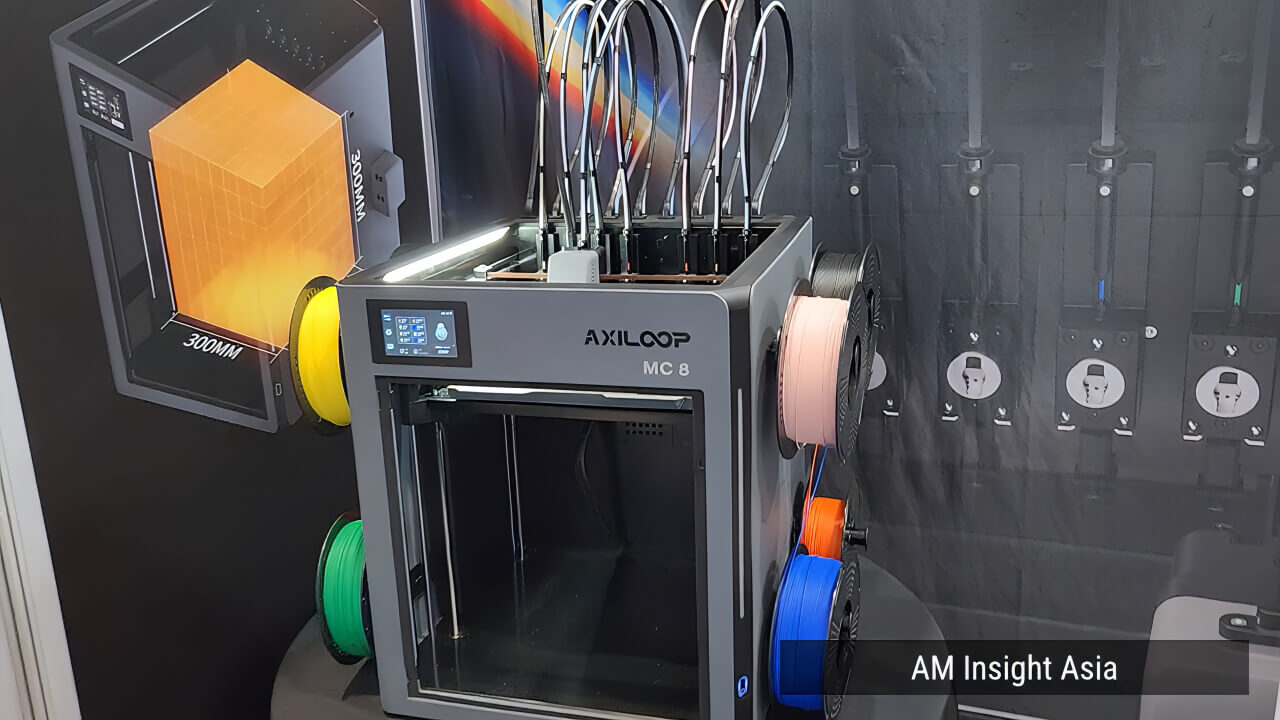
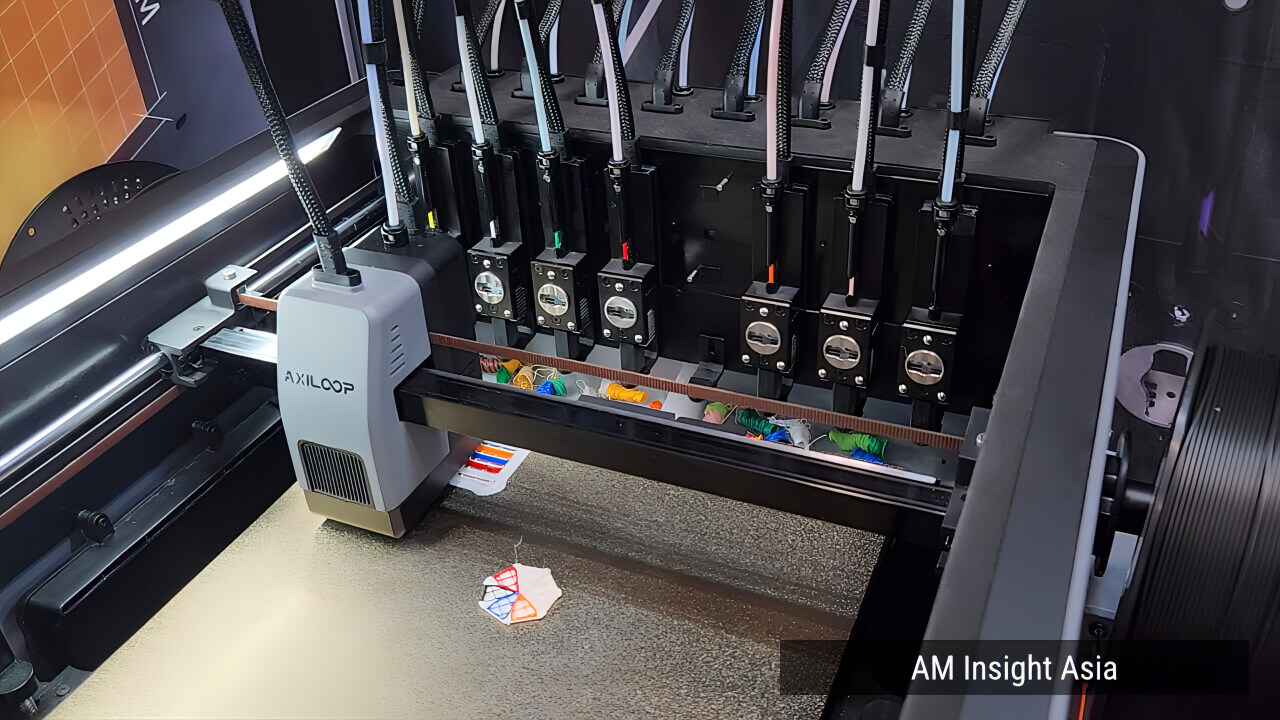
AxiLoop, a new brand under a Shenzhen-listed parent company, debuted its MC8, a printer with eight independent printheads, each fed by its own spool. Assigning a dedicated spool to each head eliminates the need to purge material from the nozzle when switching colors.
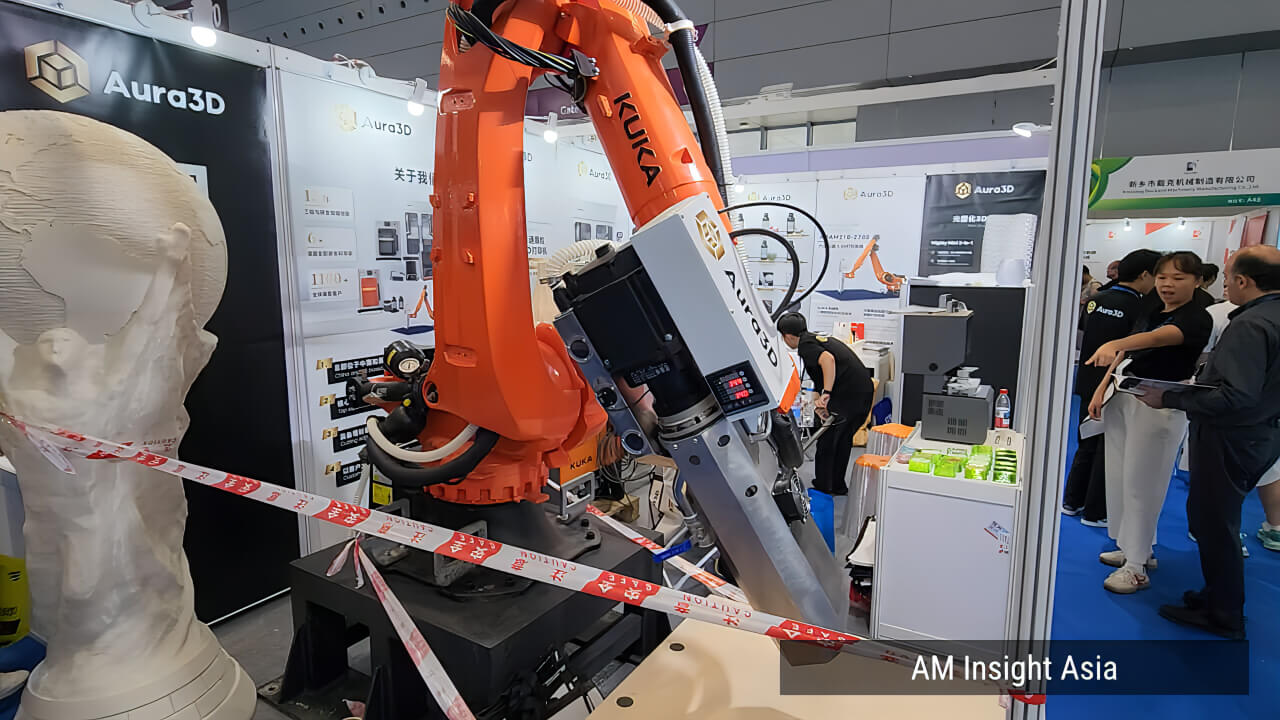
IEMAI3D, an industrial 3D printer maker specializing in high-performance engineering resins, also had a booth. Aura3D, a company focused on industrial 3D printers, showed a large-format printer built around a six-axis robotic arm, producing a life-sized bust-like sculpture.
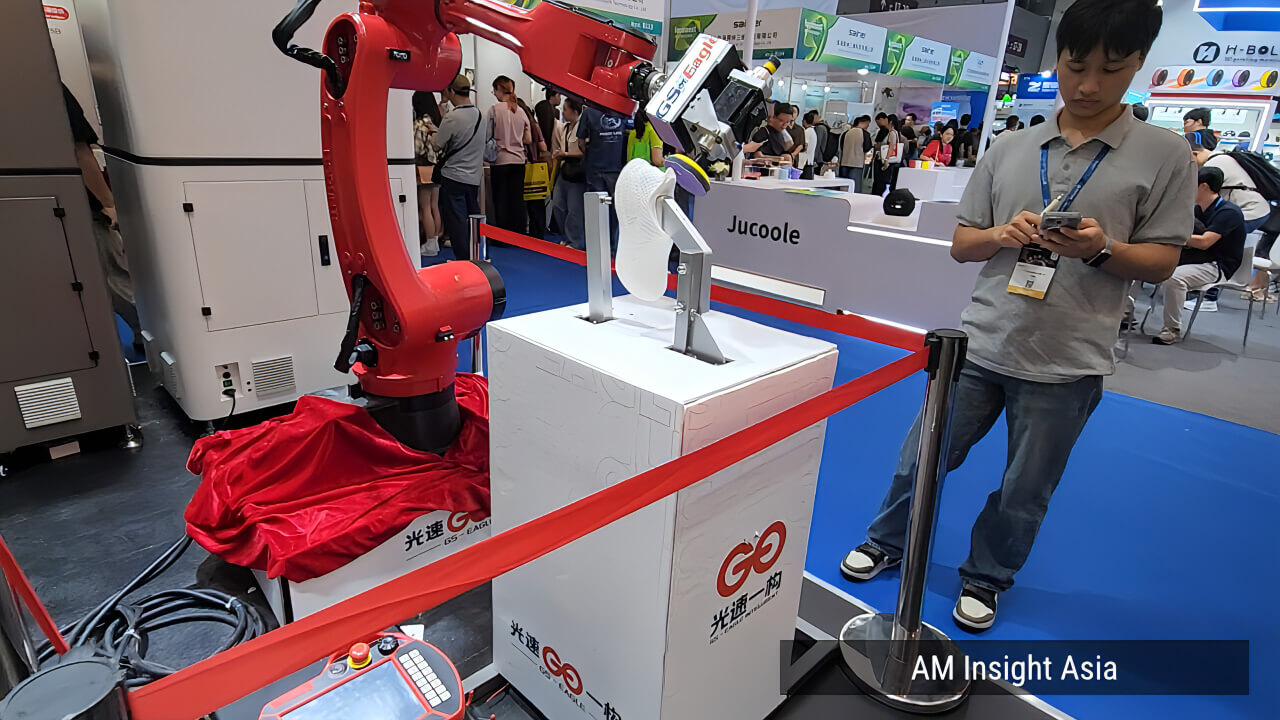
At the GS-Eagle Intelligent booth, an industrial robotic arm fitted with a polishing tool demonstrated post-processing work, smoothing the surface of 3D printed shoes.
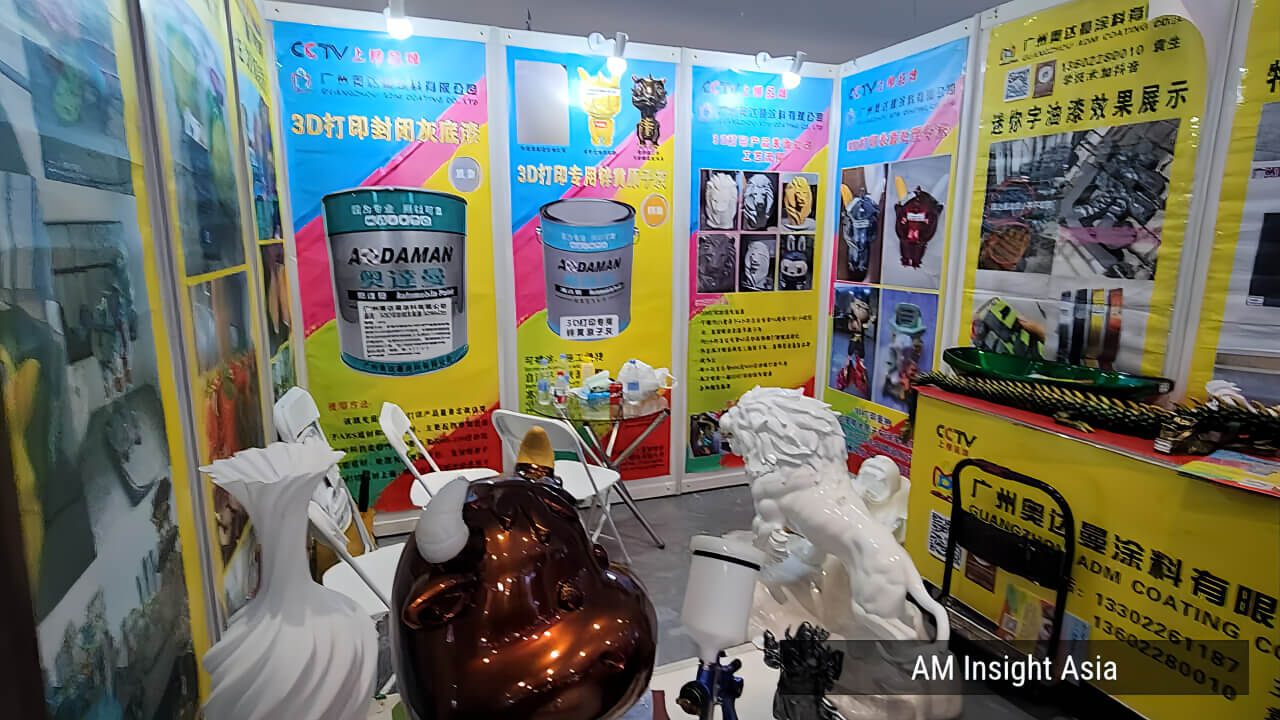
Coatings maker AODAMAN (Guangzhou) showed sealing primers, putty, and weather-resistant coatings for 3D printed products; the booth was small but drew notable interest.
Hangzhou-based Yunshan Additive Technology (YUNSHAN 3D) displayed its A1000, a large industrial FGF printer that extrudes pellet material directly, capable of meter-scale builds. Staff at the booth quoted a price of around $3,000 (roughly ¥500,000), though this figure could not be independently verified online.
Filament Booths Filled the Floor
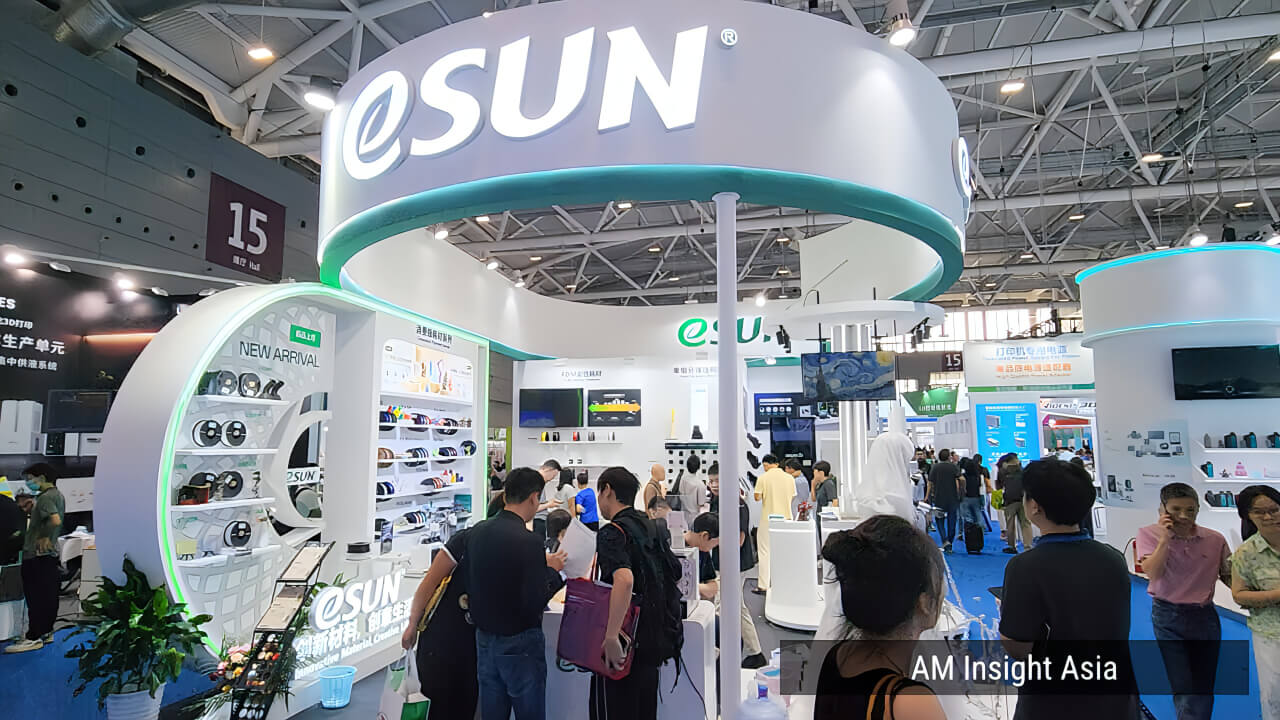
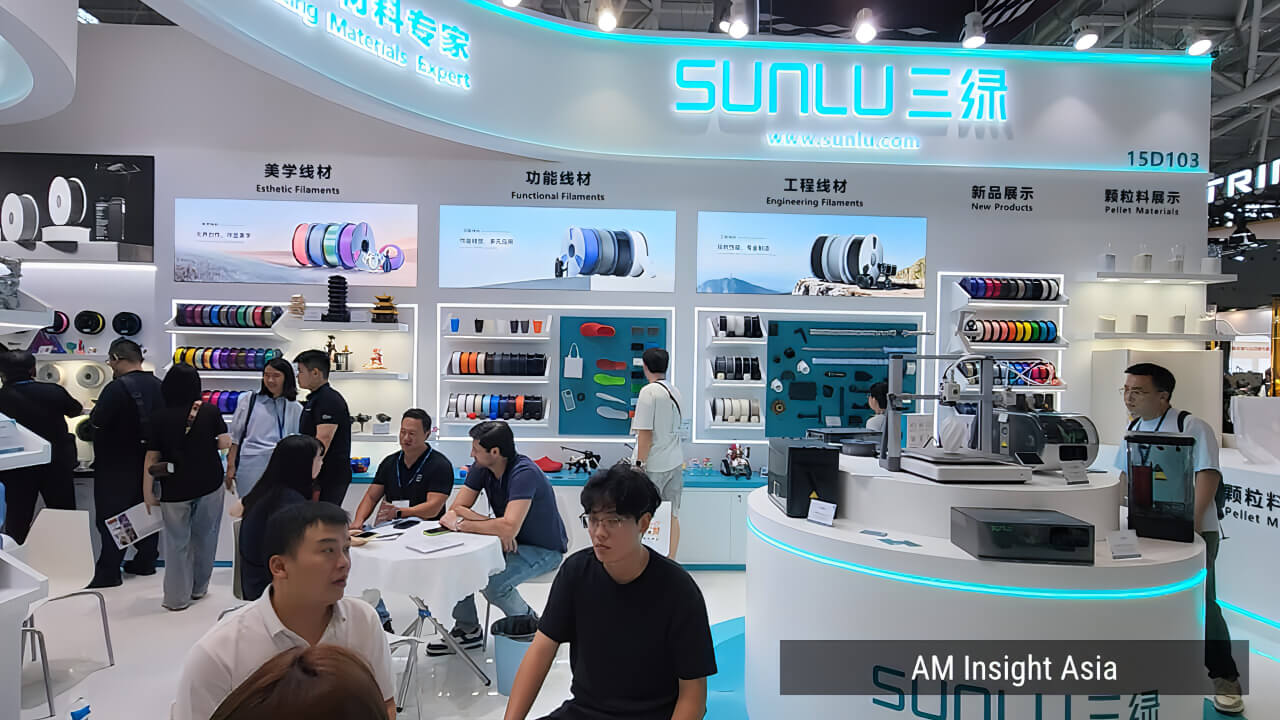
What stood out most while walking the floor was the sheer number of filament makers and resellers. Alongside major names like eSUN and SUNLU,
a number of smaller filament brands less familiar in Japan were also on display, including JAMG HE (a Shenzhen-based maker with over 20 years in UV-curing technology and one of China’s largest 3D printing materials companies), OEM/ODM-focused filament maker INKCLOUD,
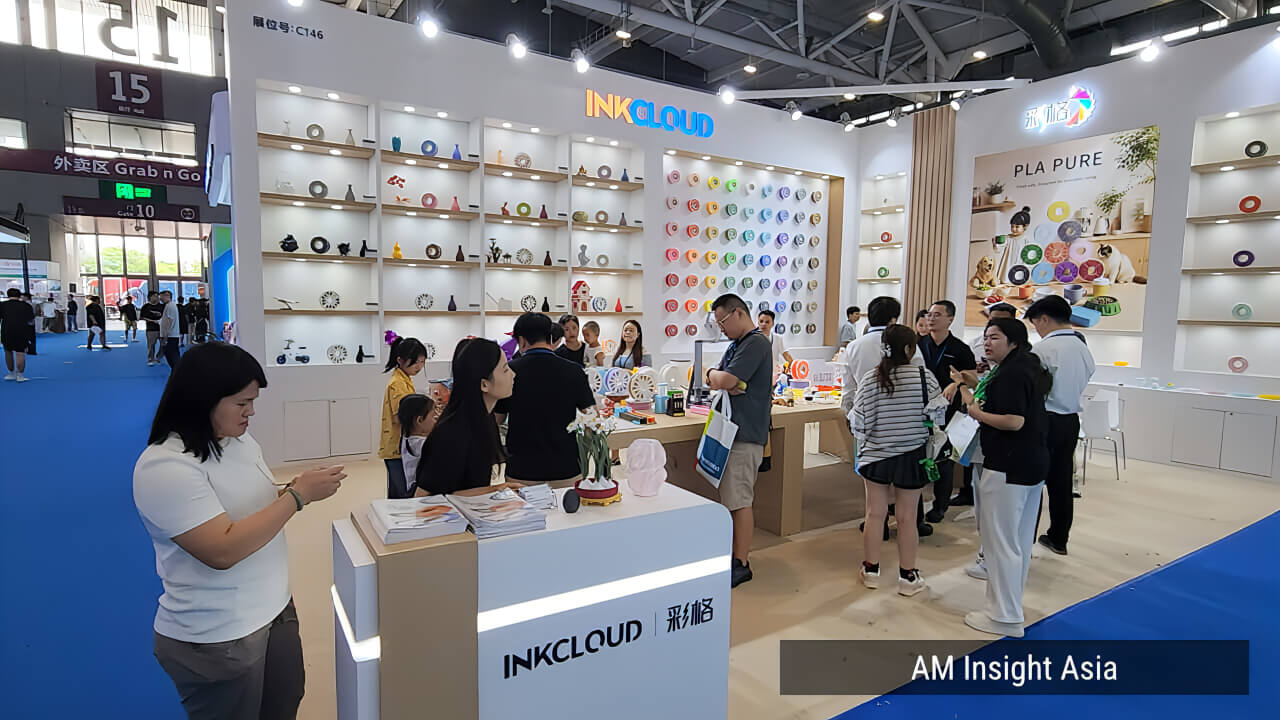
engineering filament and resin maker Inslogic, and PLIITH, a PLA resin material maker built on technology from the Chinese Academy of Sciences. The variety and range of colors in filaments keeps expanding year after year.
3D Printed Shoes: A New Battleground
Another sight seen throughout the venue was 3D printed footwear. This edition of Formnext Asia Shenzhen introduced the first design award dedicated to 3D printed footwear, the International 3D Printed Footwear Design Awards, and shoe-related exhibits spread across the venue to match.
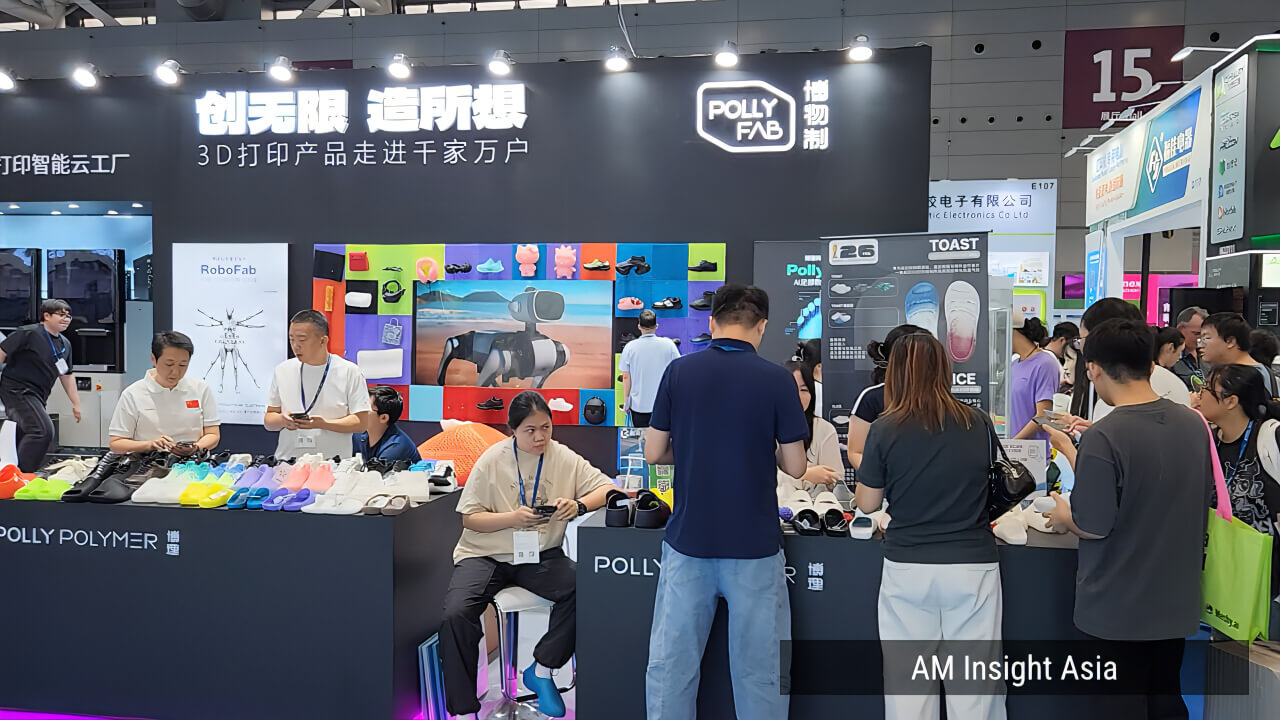
The individual companies and technologies involved will be covered separately, in a dedicated footwear piece.
Multicolor Printing Is Hitting a CMYK Wall
The number of printheads keeps climbing, and eight-head machines are no longer unusual. Filament varieties are multiplying too, and technologies like Snapmaker’s Full Spectrum, which combines four CMYK colors to reproduce a wide range of hues, have emerged.
But extending this path further exposes its limits. Filament types keep multiplying without end, while the number of printheads, despite its growth, is running into physical constraints. Layering CMYK colors also has its own limit: colors can turn dull.
What determines how something looks was never just hue to begin with. Gloss, matte finish, and translucency all shape appearance significantly, yet CMYK, designed for print, was never built to express these differences in texture. Filament labels, in fact, list color names and codes but rarely quantify gloss, matte level, or translucency. Gloss, moreover, is affected not just by the filament itself but by print speed, meaning material choice alone doesn’t settle it.
Adding more printheads doesn’t solve this cleanly either. Even if eight-head machines become common, the base four heads are still committed to something equivalent to CMYK, leaving no single obvious use for the remaining four. The printing industry already has a technique for this kind of problem: expanded gamut printing, which adds orange, green, and violet (OGV) to CMYK to widen the color range. CMYK alone reproduces only around 40-50% of the Pantone color range, while adding OGV pushes that past 90%. Following that approach, the remaining heads could instead go toward expanding color gamut with saturated oranges, greens, and violets. In other words, a new design choice emerges: should the remaining four heads go toward texture, or toward widening the color gamut itself? Snapmaker’s current U1 has four printheads, all of which are needed just to reproduce color through CMYK (branded CMYG by Snapmaker, swapping black for gray).
Designing something faithfully from a person’s mental image and printing it exactly as imagined is not yet within reach.
In September 2026, Snapmaker launched the PLA Full Spectrum Filament Bundle, optimized for color reproduction with Full Spectrum. The set bundles 1kg spools each of translucent cyan, magenta, yellow, and gray PLA, with light-transmission properties pre-calibrated so users don’t need to measure filament properties themselves to get accurate color. Packaging a CMYG base set as a product is already underway.
AM Insight Asia Perspective
Turning CMYG into a packaged product is only a first step in shifting color expression from something users calibrate themselves to something pre-optimized. Even if printhead counts rise to eight, once the base CMYK (or CMYG) four colors are accounted for, there isn’t enough room left to cover every dimension of texture. Gloss, matte finish, and translucency span multiple axes that a handful of extra heads can’t realistically cover.
What’s needed, then, is a wider range of filament sets, combinations built around use cases rather than simple extensions of CMYK. This assumes machines in the eight-head class, where heads remain after the four CMYK colors are spoken for; a four-head machine like the current Snapmaker U1, with all heads already committed to CMYG, doesn’t yet have that room. Sets built around a matte finish for dioramas, or translucent resins for pieces meant to show depth, are examples of designing around use rather than extending CMYK. Bright, light pastel colors suited to items like fancy accessories, however, are hard to achieve through CMY layering alone, in principle. CMY works through subtractive mixing, so layering colors pushes them darker and muddier rather than lighter. Achieving a pastel look requires a separate base material, something white or translucent.
That said, packaged sets like this appeal more to beginners. For advanced users, part of the appeal lies in combining colors and properties across different filament brands themselves. It’s plausible that “recipes,” the specific filament combinations used to reproduce a given print, start circulating online as a kind of shared knowledge.
This shift isn’t only about machines and filament. What first gives shape to a person’s mental image isn’t the filament or the machine, it’s the design software. CAD tools like Fusion 360 already have an “appearance” feature that lets users specify gloss, matte finish, translucency, and opacity in detail. But that information is meant for rendering, for previews, and doesn’t carry over into output files like STL used for 3D printing. The real question isn’t whether texture can be specified, it’s how that specification gets bridged to the print file, the slicer, and the machine. Once design software, slicers, machines, and filament, including AI modeling tools like Meshy AI and Tripo AI, can all share the same texture information, the goal of designing and printing exactly what someone pictures in their mind starts to come within reach.
Filament’s move into multicolor and the arrival of tool changers have already driven a kind of democratization of color. What comes next may be a democratization of expression itself, extending that same shift to gloss, matte finish, and translucency.
About the Company
Formnext Asia Shenzhen is the Asian edition of Messe Frankfurt’s international Formnext exhibition brand, organized by Guangzhou Guangya Messe Frankfurt. Held at the Shenzhen World Exhibition & Convention Center, it covers the full additive manufacturing process chain, spanning metal and polymer AM technologies along with related software, inspection equipment, and post-processing technologies.