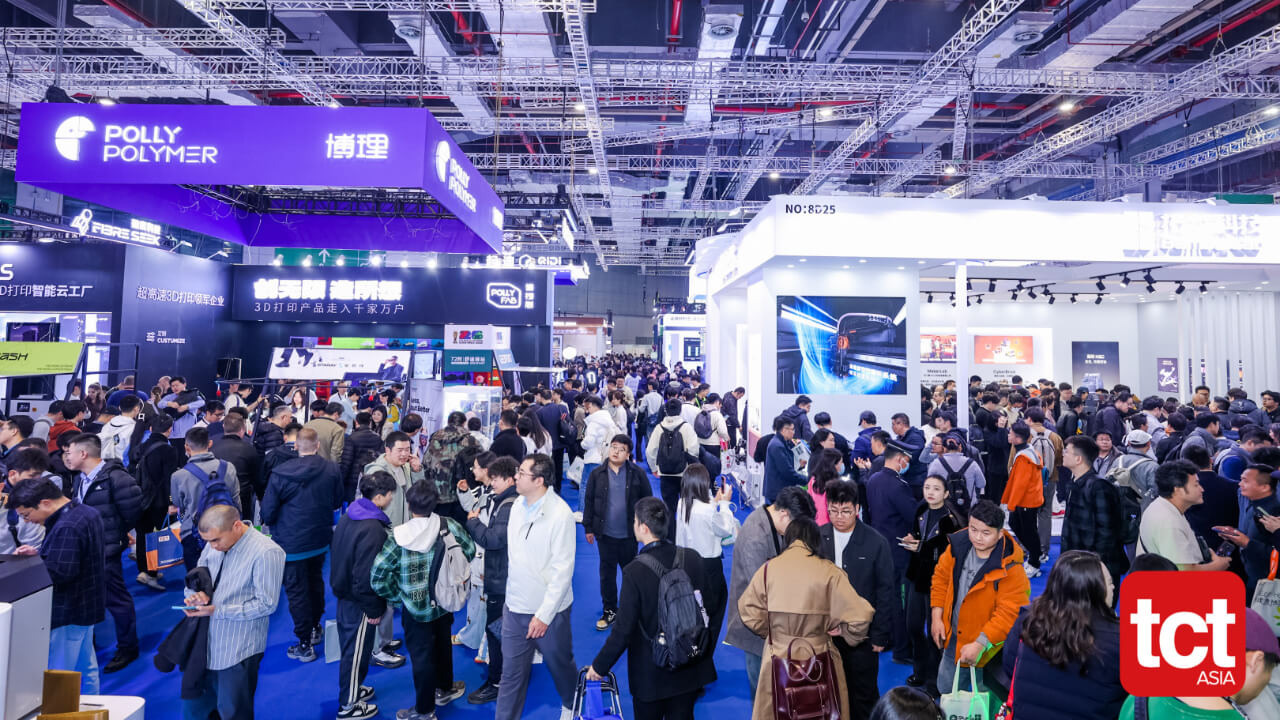
TCT Asia 2026 was held from March 17 to 19, 2026, at the National Exhibition and Convention Center (NECC) in Shanghai, China. Known as Asia’s largest additive manufacturing (AM) and 3D printing exhibition, we attended the event as members of the press. In this first installment, we share our initial impressions and the overall atmosphere of the show floor.
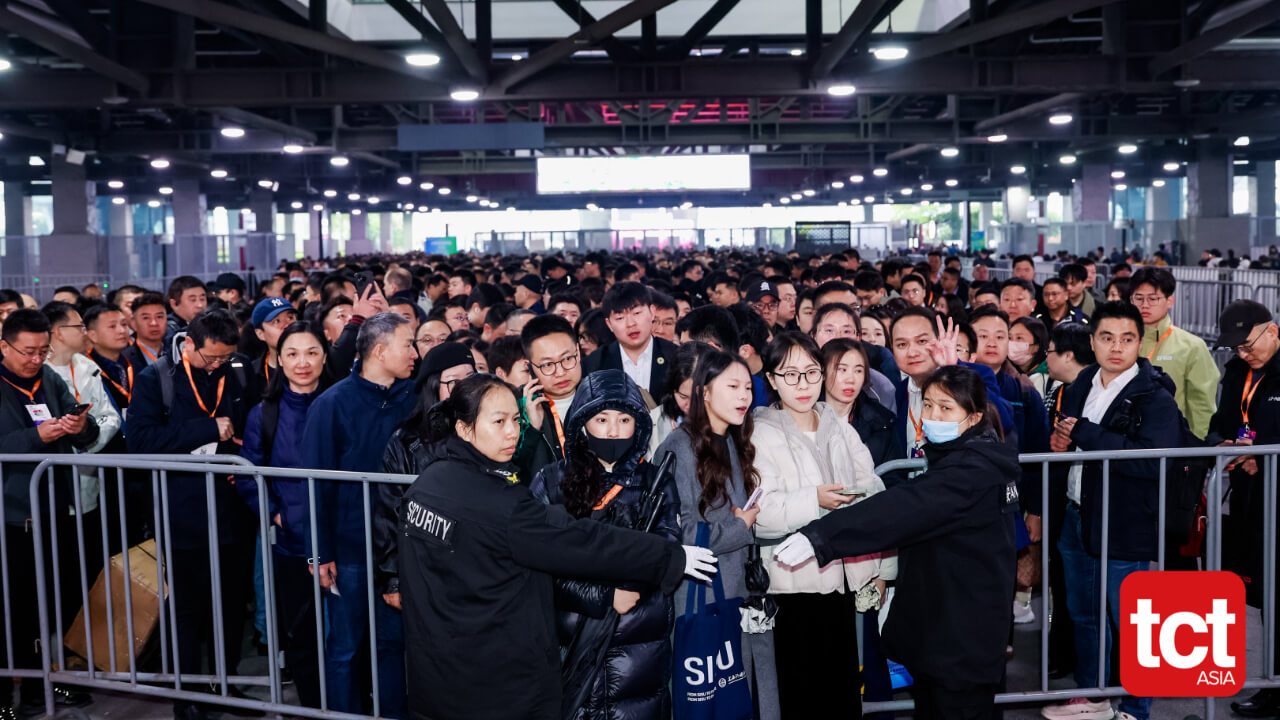
Immediately Overwhelmed — The Sheer Scale of TCT Asia 2026
The moment you step onto the show floor, the scale hits you. With over 55,000 m² of exhibition space and approximately 550 exhibitors, TCT Asia 2026 dwarfs TCT Japan, which featured around 130 booths at its January edition in Tokyo — more than four times the size.
The venue is divided into two adjacent halls: Hall 7.1 (Metal AM) and Hall 8.1 (Polymer and Non-Metal), and the layout is extremely well thought out. Separating metal and polymer technologies by hall makes it easy to navigate according to your interests. That said, while it is easy to know which hall you are in, figuring out exactly where you are within each vast hall is another matter. It is simply that large.
Booth sizes were equally impressive. While smaller booths were comparable to those seen in Japan, larger booths were far more common — and the biggest ones were roughly four times the size of the largest booths at Japanese trade shows. As a result, it was not unusual to see exhibitors displaying enormous industrial machines right on the show floor, something rarely seen at events in Japan.
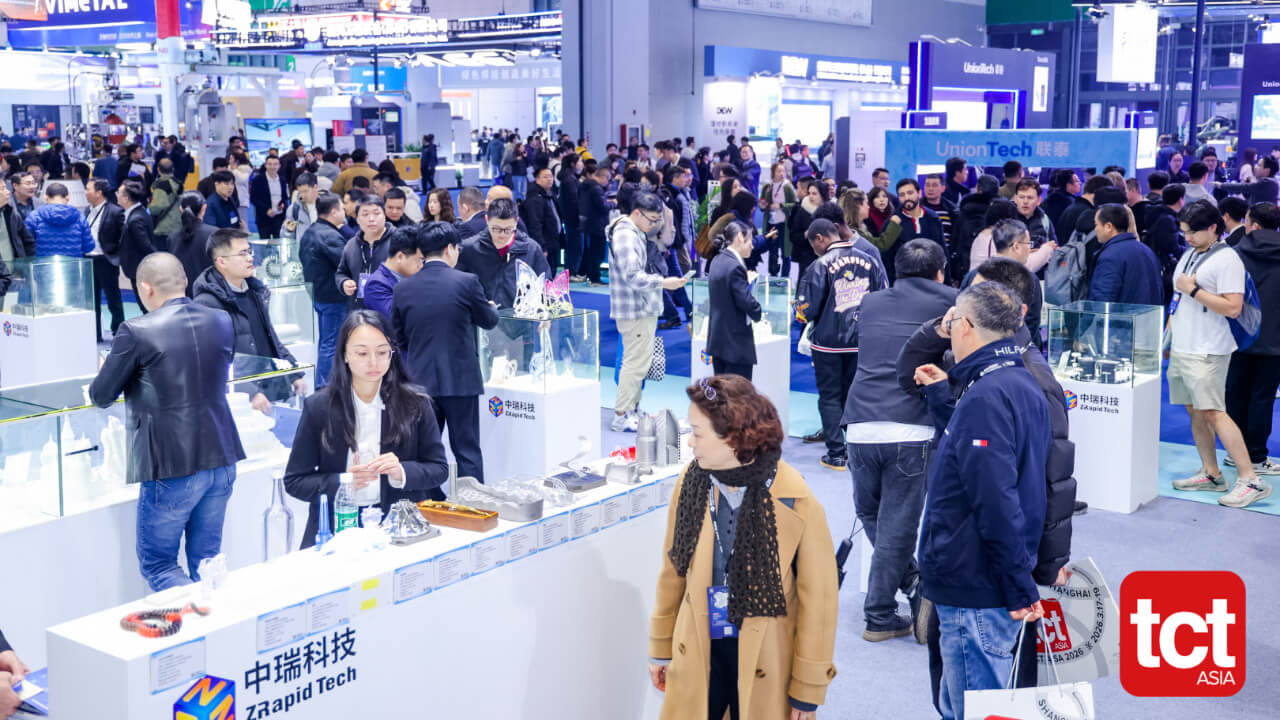
A Growing Sense of Excitement — The Festival-Like Energy of TCT Asia 2026
As you walk the floor and take in the scale, something else begins to register: a genuine sense of excitement. The atmosphere so common at Japanese trade shows — that palpable pressure to “close deals” and “capture leads” — is simply absent here. In its place is a festive energy and buzz that fills the entire venue.
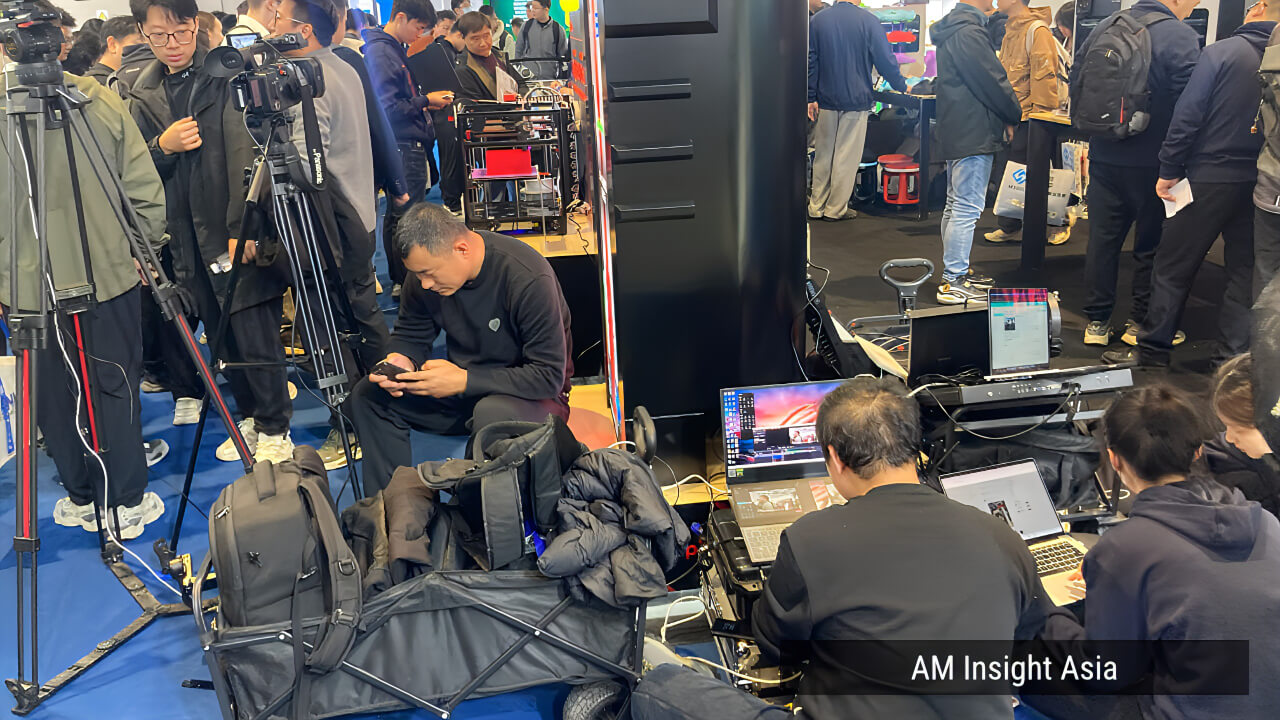
In Hall 8.1, the polymer side of the show, influencers from across Asia and around the world were live-streaming and filming throughout the event. Companies spare no expense in bringing in content creators. The strategy is clear: ensure that videos and reports continue to circulate online long after the show ends. Pre-show communication was also far more intensive than what we typically see in Japan, with exhibitors and organizers working hard to build anticipation well before opening day.
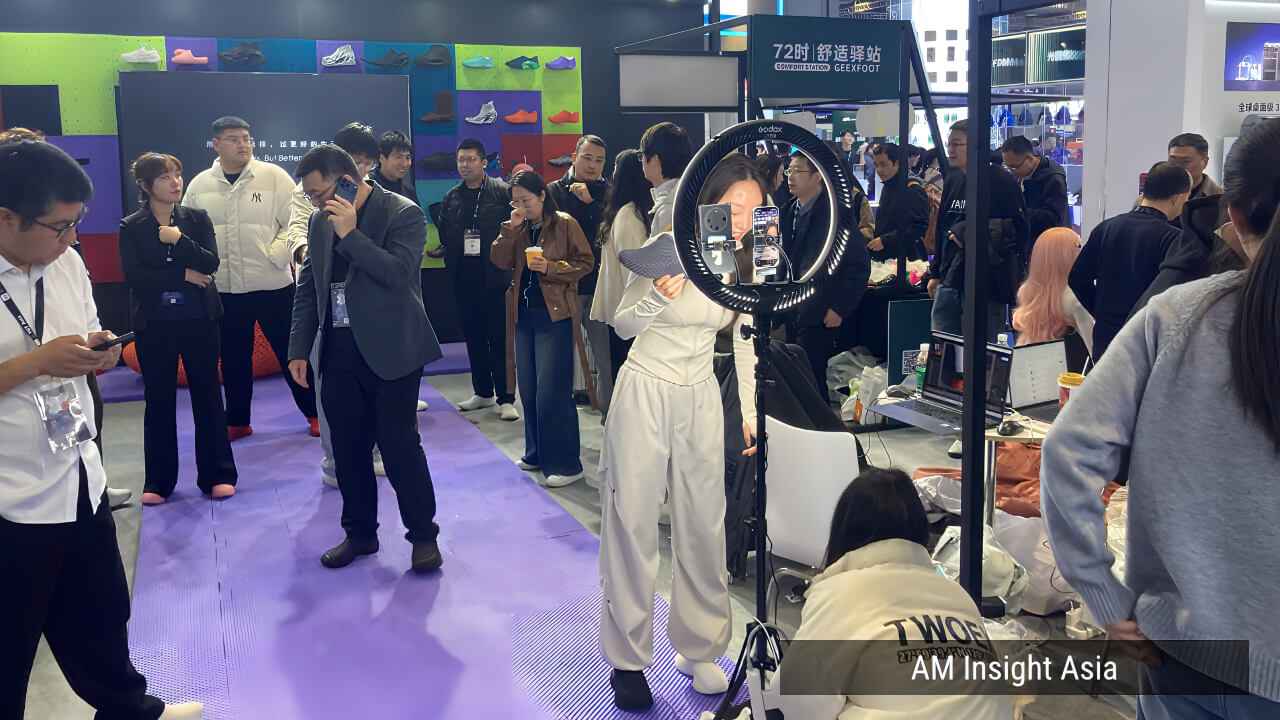
Why Does It Feel So Exciting? — The Key Differences from Japanese Trade Shows
When you stop to think about why TCT Asia feels so energizing, several factors come to mind.
The first is the approach to exhibiting. Explanatory panels are almost nowhere to be found. Instead, the dominant style is hands-on: machines and products are demonstrated live, right in front of visitors. The focus is not on presenting information that could easily be found on a website, but on delivering experiences that can only be had by being there in person. Brochure distribution was also nearly nonexistent. The philosophy seems to be: why print and hand out materials that visitors will only have to carry around, when the information is available online anyway?
The sales approach is equally different. Visitors can browse booths without being immediately pressured into exchanging business cards. Exhibitors take the time to explain their products properly, and business cards are exchanged naturally, only when there is genuine mutual interest. For those looking to build a deeper relationship, WeChat is the tool of choice.
Another interesting feature of the show is the mix of industrial and consumer-oriented products sharing the same floor space. The breadth of the visitor demographic adds to the overall vitality of the event.
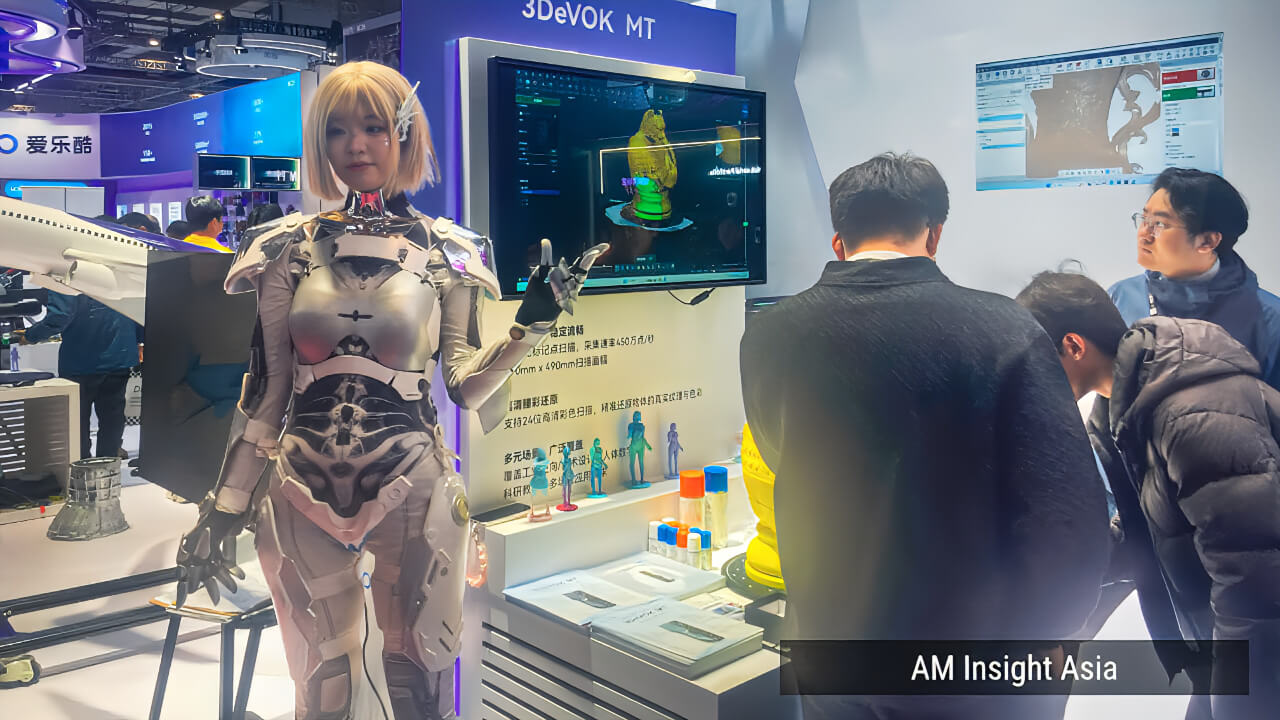
The relaxed attitude of booth staff also stood out. Staff members eating lunch at their booths, visitors sitting in booth chairs to rest without anyone batting an eye — this easygoing atmosphere softened the mood of the entire venue. It was a stark contrast to the “we need to sell” energy and the overlooked sense of festivity that tends to characterize Japanese trade shows. When aggressive sales tactics are front and center, visitors become guarded and are less likely to approach. Exhibitors may unconsciously start sizing up visitors — “will they buy or not?” — and the overall energy of the venue suffers as a result. Visitors pick up on that. At TCT Asia, the atmosphere was one where anyone could naturally stop and look.
The Battle Begins Before the Show — Pre-Awareness and Show-Floor Highlights
That said, not every booth was busy. With so many exhibitors spread across such a large venue, visitors simply cannot cover everything in detail. The natural tendency is to gravitate toward booths from companies whose names you have already seen on social media or in pre-show communications — that feeling of, “Oh, I recognize that name from LinkedIn, I wonder what they’re showing.”
For large, well-known companies, brand recognition draws visitors in. For smaller companies, pre-show social media visibility can make or break foot traffic. In fact, several booths with impressive setups were noticeably quiet, likely due to insufficient pre-show promotion.
On the day itself, the deciding factor is whether a booth has a standout feature — something that makes passing visitors stop in their tracks. The formula for a busy booth is two-stage: build pre-show awareness, then deliver a showstopper on the floor.
TCT’s own communications efforts deserve special mention here. Through TCT Magazine and consistent activity across web and social media, TCT maintains a constant presence in the industry — not just in the lead-up to the show, but throughout the year. Unlike Japan, where communication tends to spike briefly before an event, TCT’s approach reflects a genuine passion for advancing the AM industry as a whole. The ability to attract the visitor numbers TCT Asia does is, in no small part, a result of this ongoing commitment.
Challenges — Navigation and Information Access
The scale of the event does come with its challenges. Venue maps are available, but only at the entrance. The official app exists but runs slowly and is difficult to use in practice. Finding specific booths was often a struggle.
Local Chinese companies presented a particular challenge — in many cases, it was impossible to tell from a company name alone what they actually do, and approaching staff to ask every time felt like too much of an imposition.
A simple, low-cost solution would go a long way: place a QR code at each booth linking to a company profile page. Visitors scan, the page opens in their browser, and built-in browser translation handles the multilingual aspect automatically. No dedicated app development required — the cost is essentially zero.
Booths at the far ends of the venue tended to see less foot traffic. One creative workaround would be to intentionally set up seating areas in those zones, inviting visitors to rest — and giving exhibitors a chance to engage with people who might not have sought them out otherwise.
A guided tour led by knowledgeable volunteer guides, held at set times each day, would also be a valuable addition — particularly for international visitors. Think of the volunteer guides you often encounter at tourist attractions in Japan: people who share insights that you would never discover on your own. With hundreds of companies on the floor, it is impossible to absorb everything. Having someone say, “This company is actually doing something fascinating — let me tell you about it” would dramatically enrich the visitor experience.
TCT Asia Beyond the Show Floor — New Connections Through After-Hours Exchange
The appeal of TCT Asia extends well beyond the exhibition itself. One of its greatest values is the opportunity to meet face-to-face with people you have connected with online through LinkedIn and other platforms — to have real conversations that go beyond what is possible on a screen. TCT Asia is not just a trade show; it is a major networking hub where anyone — industry professionals and general visitors alike — can find meaningful connection, provided they have built a social media presence beforehand.
On the evening of the first day, we attended a gathering of around 40 people, including influencers, exhibitors, and media representatives. On the second evening, we had dinner with a journalist visiting from South Korea and spent the meal deep in conversation about the challenges facing the AM industry. The pattern is a compelling one: days spent exploring the latest technology on the show floor, evenings spent building relationships and exchanging insights with industry peers. This culture of actively expanding one’s network is a big part of what makes TCT Asia more than just a trade show.
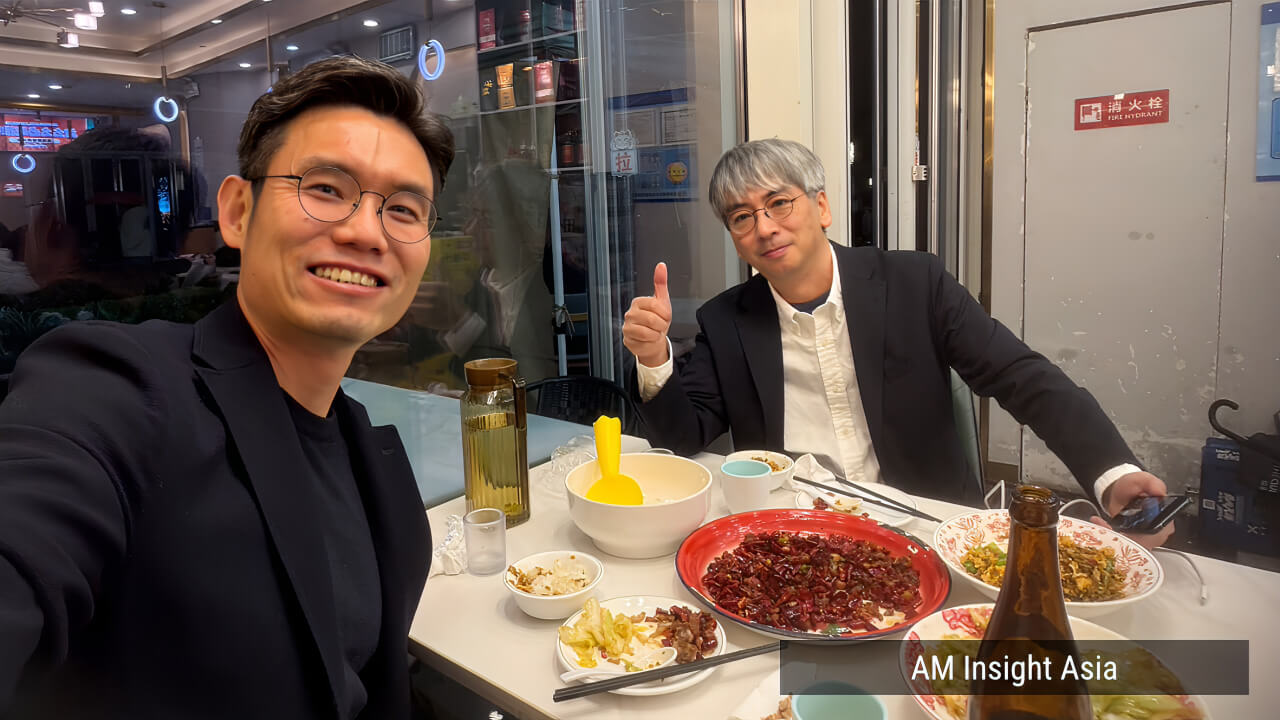
There is a value here that cannot be replicated online. For anyone working in — or looking to work in — the AM industry across Asia, experiencing this energy firsthand is something we would strongly recommend. TCT Asia is not a show you attend and then go home from. It is a place where things keep happening.
One more thing worth noting: the show floor can yield glimpses of what has not yet been officially announced. Paying close attention to what is on display can reveal hints about products in development or the direction a company may be heading — discoveries that are only possible by being there in person. We will share more on this in Part 2.
AM Insight Asia Perspective
Witnessing the energy of TCT Asia firsthand, a question naturally arose: is it simply the size of the market that allows for this level of investment? Based on what we observed on the ground, the answer is more nuanced than that.
TCT does not only excel at running events — it maintains a constant, high-quality presence through TCT Magazine and ongoing communication across web and social media platforms. The ability to create a compelling “place” for the industry, combined with the sustained effort to keep the entire AM ecosystem energized and informed: these two forces act as the two wheels of a bicycle, generating a virtuous cycle that appears to be actively creating the market itself. And underpinning all of it is the passion of the organizers themselves — not just the participants.
In Japan’s AM industry, it is common to hear that “the market is too small” or “there is no demand.” But what TCT Asia made clear is that the real question may not be the size of the market — it may be whether there is the will and the action to build one. TCT Asia, on the show floor in Shanghai, offered one compelling answer.
- TCT Asia 2026 Field Report [Part 1]: The Energy Of The 3D Printing Industry As Felt In Shanghai
- TCT Asia 2026 Field Report [Part 2]: Two Worlds Born From Diversity — Diverging Strategies In Copper Powder Additive Manufacturing
- TCT Asia 2026 Field Report [Part 3]: 7 Companies Worth Watching In TCT Asia 2026 Metal AM
- TCT Asia 2026 Field Report [Part 4]: My First TCT Asia Experience
Source: