Nine PrintTools bring multi-material printing, and 2.85 mm filament makes TPU easier to handle. But the machine only provides capability. Deciding how to use it is left to the user.
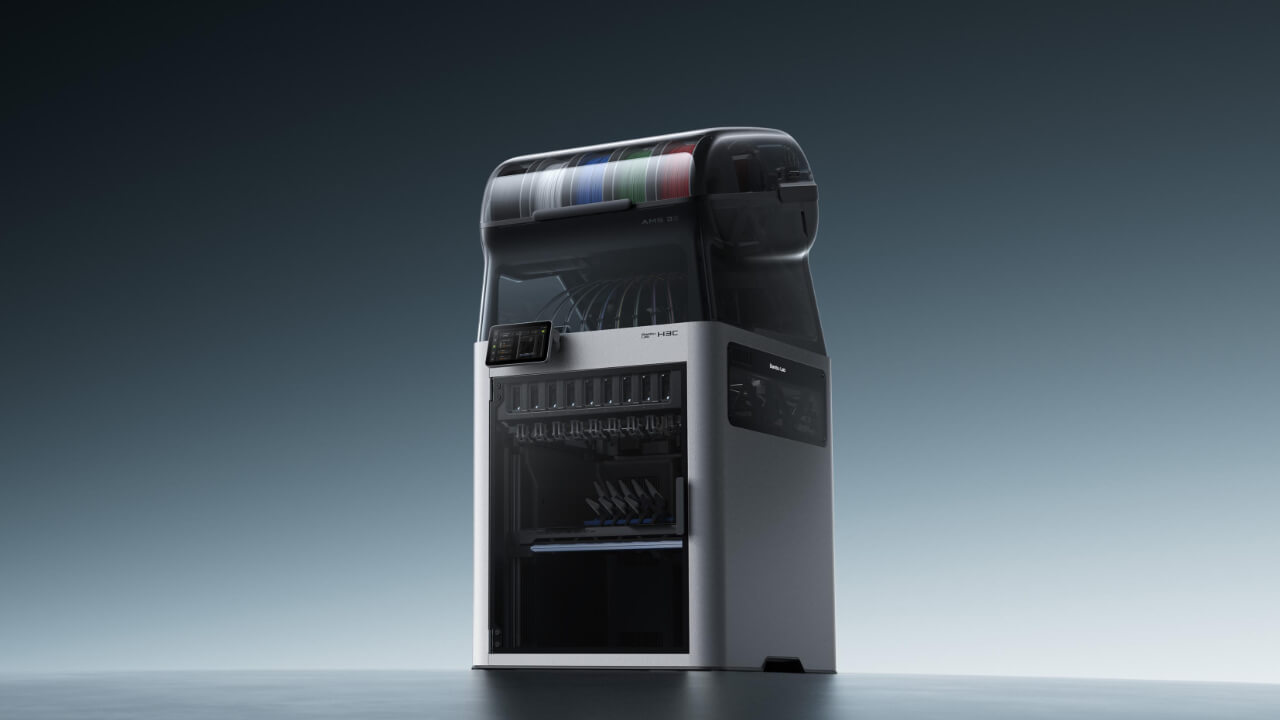
On November 3, 2026, Bambu Lab launched the H3C, a tool-changer 3D printer with nine PrintTools. It switches materials in as little as six seconds and can print TPU as soft as Shore 75A. Putting nine materials into a single print is now a realistic option on a desktop machine. But being able to put dissimilar materials into one print is not the same as being able to use the result as a part. That depends not on the machine, but on which materials are combined and how the interface between them is designed.
Bambu Lab Launches the H3C, a Nine-PrintTool Tool Changer
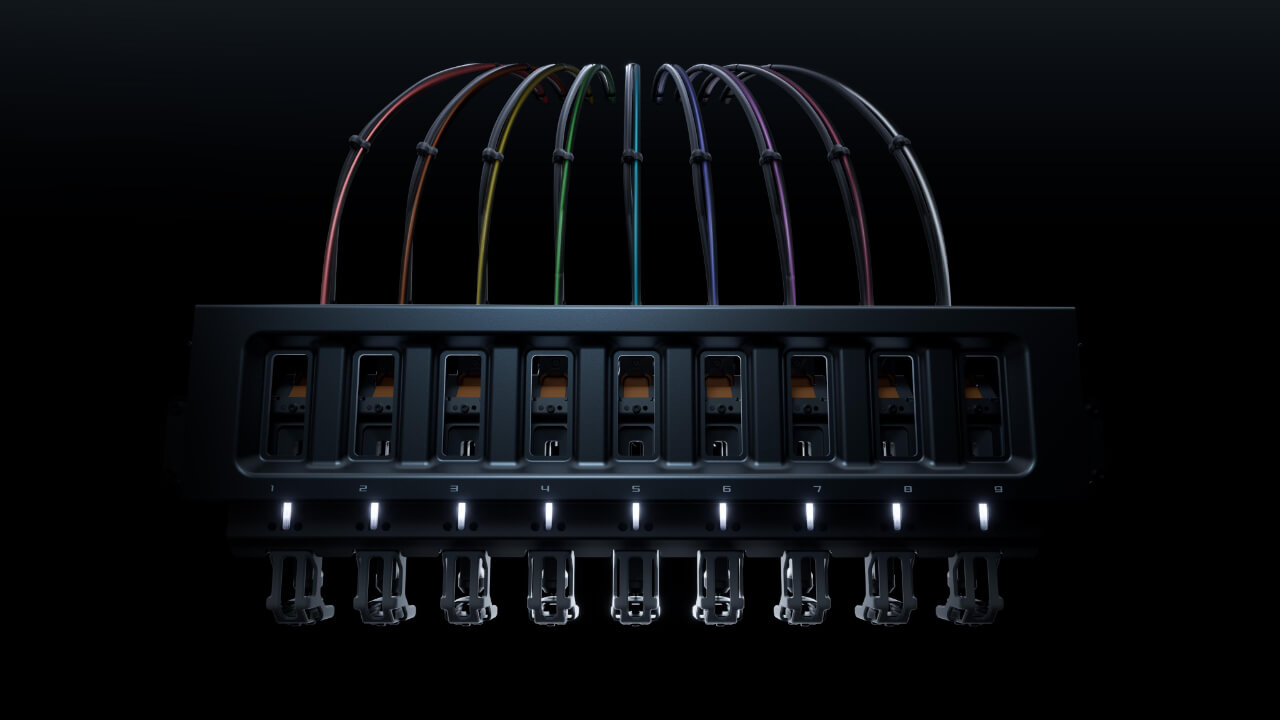
The H3C is sold as a package of nine PrintTools and the AMS 3H, a material feeding unit that holds nine spools. In this configuration, the H3C AMS Combo is priced at US$2,499 (excluding tax, shipping included). Each PrintTool has its own filament path and heater, and waits loaded and preheated.
Six-Second Switching and 2.85 mm TPU: The Barriers the H3C Removes
On conventional multicolor printers, where several materials share a single nozzle, every switch means pulling the filament back and pushing out the previous material left in the nozzle. Because the H3C gives each material its own PrintTool, that retraction is no longer needed. On top of that, Active Pre-Heat looks ahead to the next tool change and warms the next nozzle while the current PrintTool is still printing. The tool change itself takes 3.4 seconds, a full material switch takes as little as six seconds, and purge per switch is quoted at 0.038 g. The switching time and the purge figure both come from Bambu Lab’s internal testing under optimal conditions, and the six-second figure was measured with PLA Basic in filament-saving purge mode.
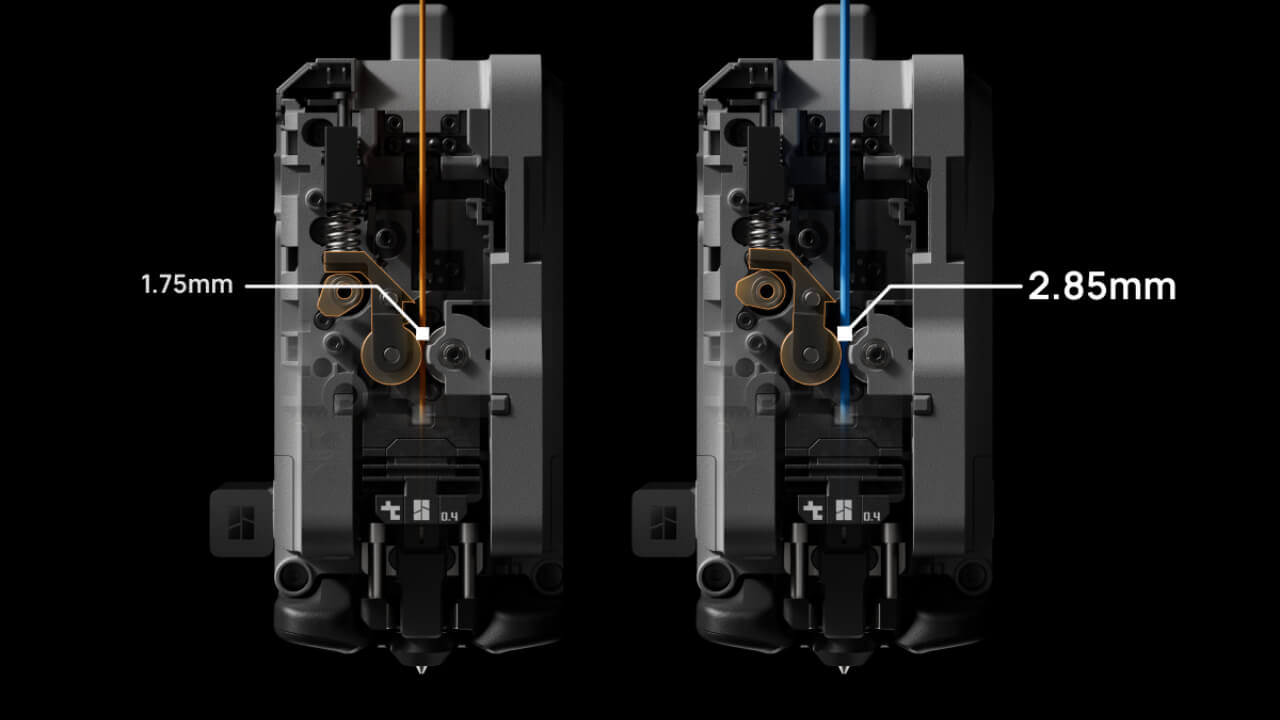
For soft TPU, the FlexFeed extruder handles both 1.75 mm and 2.85 mm filament. According to Bambu Lab, soft filament tends to bend and buckle under pushing force before it reaches the nozzle. Thicker 2.85 mm filament is stiffer, so it resists buckling and allows higher flow. The company says this lets the H3C print 75A TPU at up to three times the flow rate of a traditional printer.
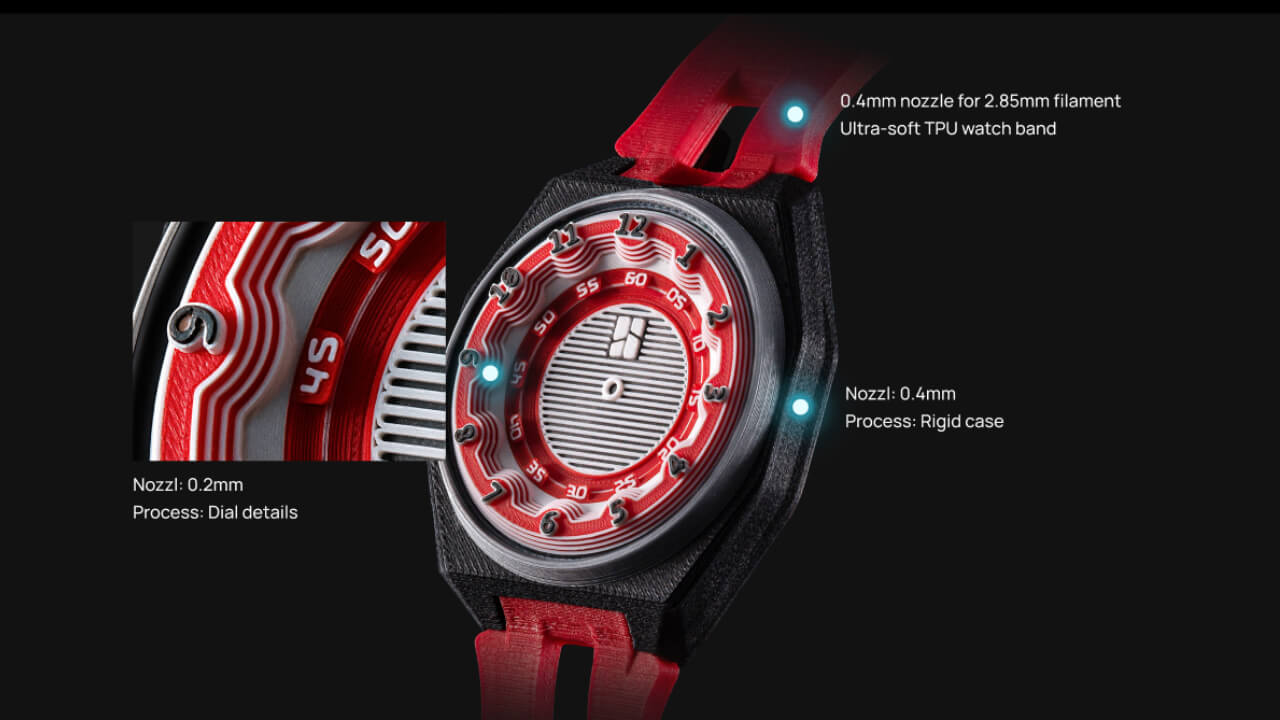
The nozzles are hardened steel, and diameters from 0.2 mm to 0.8 mm can be mixed within a single print. In one Bambu Lab example, a watch is printed as one piece: the fine dial details with a 0.2 mm nozzle, the case with a 0.4 mm nozzle, and the soft band with a 0.4 mm nozzle for 2.85 mm TPU.
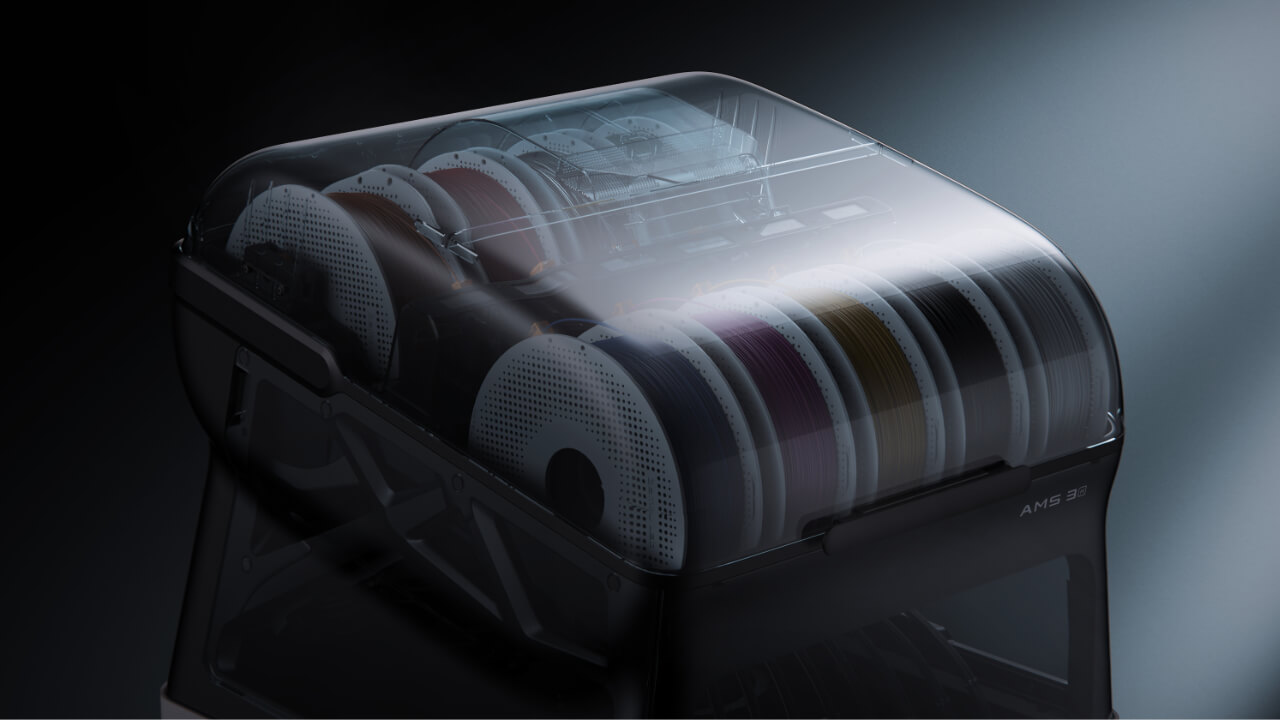
The AMS 3H is a sealed unit holding nine spools, and two of its slots double as dryers that reach up to 85°C. Drying can run during a print.
A tester who received a unit from Bambu Lab reported printing PLA, PETG, TPU (including 75A), ABS, ASA and PA-GF without issues. The tester also noted that printing different sections of a part’s outer wall with different nozzle sizes takes advance planning and experience. And because the AMS 3H has no rollers to rewind filament, unloading takes extra steps.
The Machine Cannot Make Materials Bond
According to Bambu Lab’s official Wiki, TPU and PLA may each print without problems yet do not bond strongly to each other, and the seam can delaminate under light force. The Wiki names TPU and PETG as a pair that bonds well and advises against combining TPU with standard PLA. Even so, the company allows its TPU 90A to be combined with PLA and PETG only, and only with Beam Interlocking, a slicer feature that physically anchors two materials with small beams crossing the boundary between them. For the softer TPU 85A, full multi-material printing is outside the supported scope. In other words, the manufacturer itself distinguishes between combinations that can go into the same print and combinations that actually hold together.
With the H3C, 3D-printed shoes that combine dissimilar materials have become easier to make, and the benefit to users looks large. But how well does the interface hold up in real use? A 2025 study that tested PLA and TPU in lap-shear joints found an interfacial adhesive strength of 0.20 to 0.36 MPa, with wide scatter. The researchers also note, however, that measuring interface strength accurately is difficult in itself. As far as AMIA has been able to confirm, the manufacturer does not publish interface strength for specific material combinations.
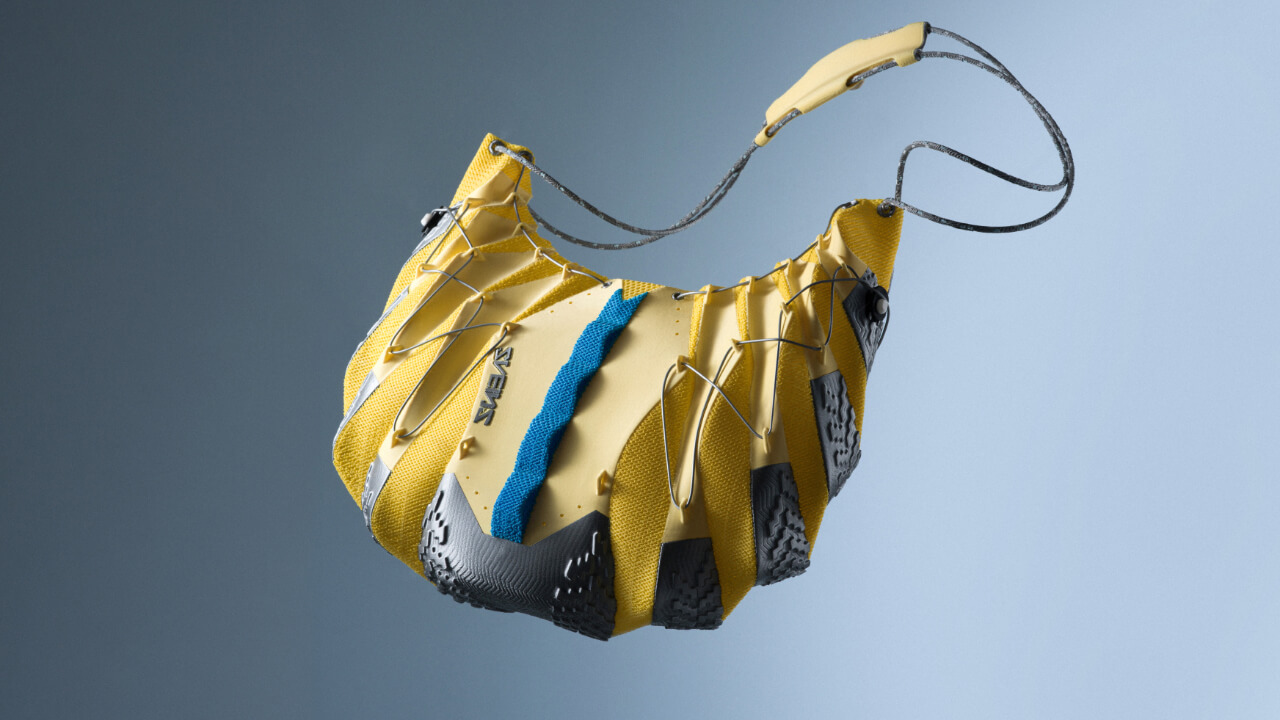
What It Takes to Use Dissimilar Materials
Turning dissimilar materials into a working part demands more material knowledge, design know-how and printing technique from users than ever before.
1. Material Knowledge
Choose materials by compatibility, not color. Loading a spool into a slot does not mean it will bond. A study comparing combinations of seven materials (PLA, PETG, PC, nylon, PVA, PP and PE) found the highest interfacial bond strength in PLA with PETG, PLA with PC, and PETG with PC. On the other hand, PLA and PETG are also used together as an easy-peel support pair. Adhesion results depend not only on the combination but also on print conditions and test methods. Which materials to combine should be decided on adhesion data and the manufacturer’s compatibility tables, not on appearance.
Know how their properties differ. PLA is stiff and barely stretches. TPU is soft and can stretch to several times its original length. When materials whose stiffness differs by orders of magnitude are joined in one part, deformation is likely to concentrate on the soft side, and stress to build up at the boundary between them.
Manage moisture. Bambu Lab requires TPU 85A/90A to be dried before use, but the AMS 3H can dry only two slots. When several moisture-sensitive materials are in use, which ones get the drying slots needs to be planned in advance.
2. Design Know-How
Don’t make the interface flat. An interface where two flat faces simply meet relies only on the chemical affinity between the materials. A study comparing interface geometries between PLA (Tough PLA) and TPU measured a tensile strength of 3.19 MPa for a flat butt joint, and all six other geometries tested (U-shape, T-shape, dovetail, encapsulation, mechanical interlocking and overlap) exceeded it. Beam Interlocking in Bambu Studio is built on the same idea. The default beam width is 0.8 mm, and Bambu Lab says narrowing it to 0.2 mm makes the bond very weak and can even cause a soft TPU membrane to come off.
Align the load with the interface. Adhesion in the build direction (Z) is weaker than bonding within a layer. For poorly compatible pairs such as PLA and TPU, the gap grows even larger. On Bambu Lab’s forum, one user argues that Beam Interlocking mainly improves in-layer shear and has only a limited effect on Z-direction peel or impact. The basic rule is to avoid layouts where the interface is peeled apart along the build direction, and to choose a print orientation where the load reaches the interface as shear.
Keep interfaces away from stress concentrations. Assume that the difference in stiffness will concentrate stress at the boundary, keep the interface away from where loads tend to act, and give the soft sections enough thickness.
Leave room for interlocking structures. The Wiki cautions that Beam Interlocking needs enough internal space for the beams to form and sufficiently thick walls. Keeping the beams away from the outer walls improves appearance but lowers strength at the edges. Deeper interlocking can also increase the number of material switches. Whether to prioritize appearance, strength or print time needs to be decided at the design stage.
3. Printing Technique
Use print settings to improve the interface. The 2025 study cited above found that lowering the layer height reduced voids and narrowed the scatter in results, and that applying a temperature gradient at the interface improved consistency. The temperature gradient did not, however, clearly raise peak strength.
Break the interface in a test print. Bambu Lab’s Wiki recommends a test print before the real job. If the part is going into service, breaking the interface under its actual geometry and load conditions is essential.
AM Insight Asia Perspective
The danger of being able to make things without really knowing how.
3D printers keep becoming more capable, and what they can do grows with every new model. The H3C, too, switches between nine materials and prints even soft TPU. But users’ knowledge may not be keeping pace. Knowledge about which materials bond to each other and how loads reach an interface is not spreading as fast as the machines are evolving.
AMIA has long argued that AM education itself is lagging behind. Single-print multi-material parts are where that gap is most likely to surface. The machine handles the printing well, so what comes off the build plate looks like a finished part. That ease carries the potential to cause problems down the line. The weakness of the interface appears only when the part is used repeatedly as a product or fixture and put under load.
People are not keeping up with the evolution of 3D printers. That is where things stand. Who will close this gap: printer makers, material makers, educators, or the companies that use these machines? Reading a manufacturer’s Wiki and compatibility tables is no longer enough. Media that publish only low-resolution information are part of the problem, too. AMIA will continue to go a step further and deliver high-resolution information.
About the Company
Bambu Lab is a Chinese consumer technology company focused on desktop 3D printers. Its brand is registered to Shenzhen Tuozhu Technology Co., Ltd., and it has sites in Shenzhen and Shanghai in China and in Austin, Texas, in the US. Alongside its 3D printers, the company develops its own filaments and the Bambu Studio slicer, among other products.
Sources
- Bambu Lab H3C (via Bambu Lab, November 2026)
- I was a tester for the Bambu Lab H3C (via Shapr3D Community, November 3, 2026)
- TPU 85A / 90A with PLA or PETG (via Bambu Lab Community Forum)
- Interfacial adhesion between dissimilar thermoplastics fabricated via material extrusion-based multi-material additive manufacturing (via Materials & Design, 2025)
- Investigation on the mechanical performance of mono-material vs multi-material interface geometries using fused filament fabrication (via Rapid Prototyping Journal)
- On the interlaminar bonding adhesion of the PLA-TPU printed multimaterial (via The International Journal of Advanced Manufacturing Technology, 2025)