While the crease on a foldable smartphone may appear minor, it has long represented a critical technical hurdle for the industry, impacting display flatness, hinge durability, and overall user experience. Overcoming this challenge requires advanced engineering and manufacturing capabilities.
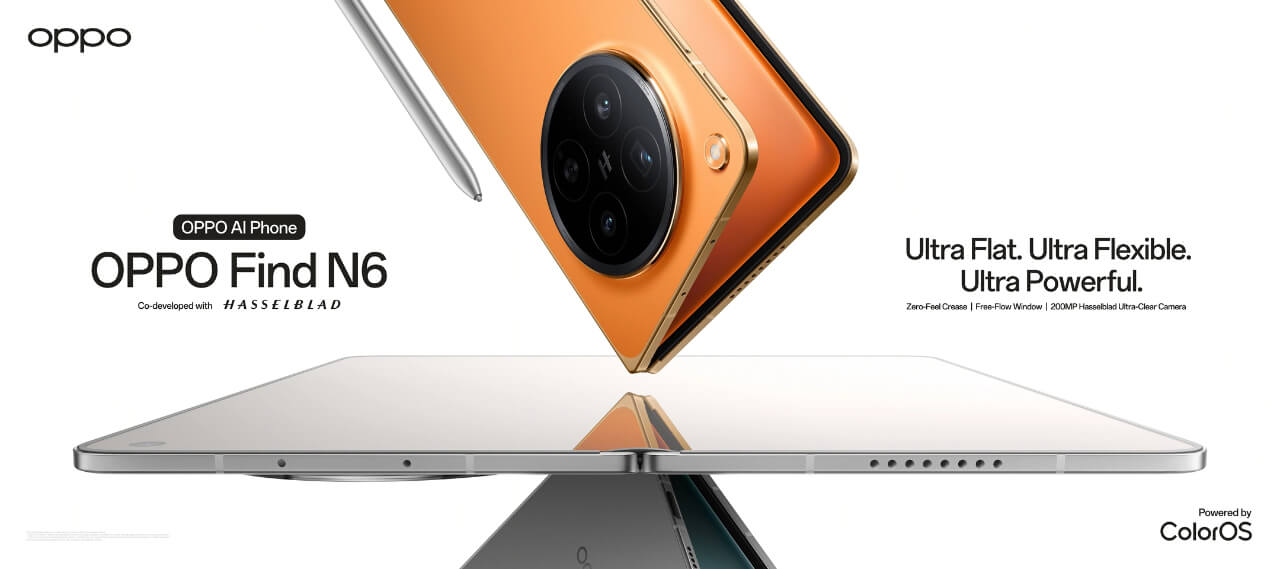
Bright Laser Technologies (BLT) has contributed to addressing this challenge through advanced metal additive manufacturing. Following its collaboration with OPPO on the hinge system for the OPPO Find N5, BLT again supported the development of the newly released OPPO Find N6, which features a highly flat, crease-minimized foldable display. The OPPO Find N6 was officially launched globally on March 17, 2026.
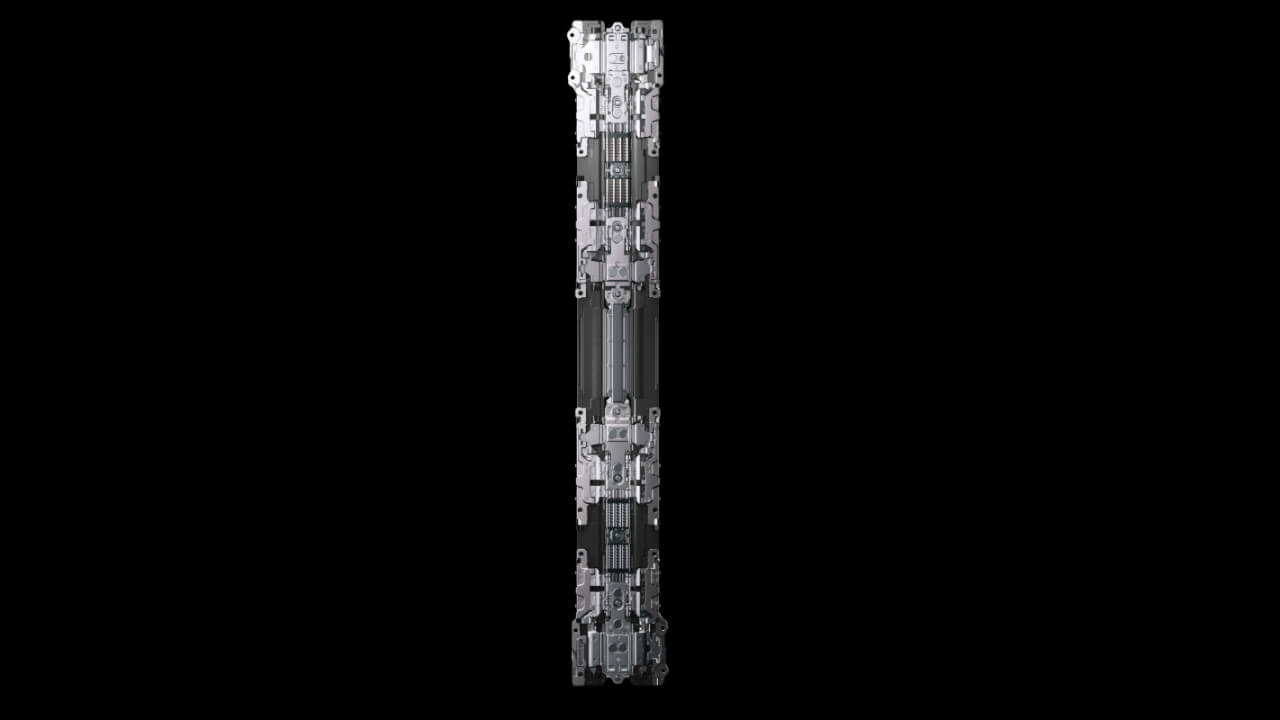
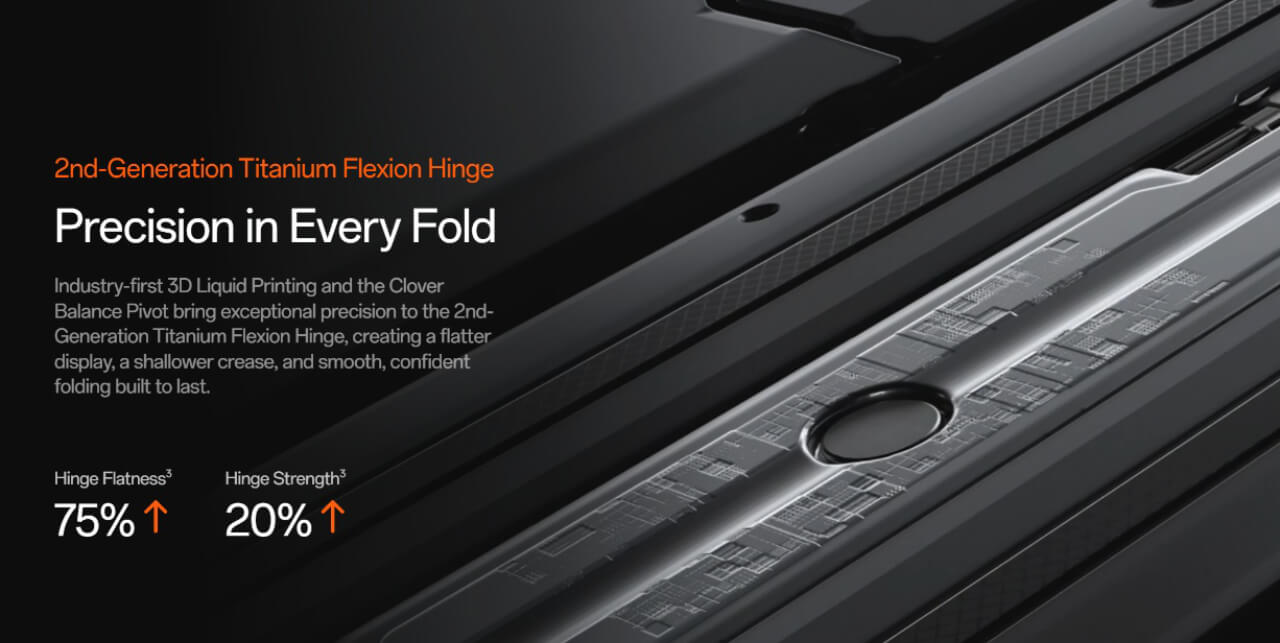
At the core of the hinge, the wing plates on both sides bear the majority of folding stress. Traditionally, these components required multiple parts—up to 13 individual pieces—machined and assembled with precision. For the OPPO Find N6, BLT leveraged titanium 3D printing to integrate these parts into a single, lightweight structure. The resulting wing plate combines high strength, reduced weight, and intricate lattice geometries, enabling designs that are difficult or impossible to achieve with conventional CNC machining, while simplifying assembly and production.
“The supporting surface flatness of the OPPO Find N6 wing plate has improved by 50% compared to last year,” said Vincent Yang, General Manager at Bright Laser Technologies (Shenzhen) Co., Ltd. “Achieving this level of precision once seemed extremely difficult—even unattainable—but through continuous iteration and rigorous testing, our team was able to meet and even exceed expectations.”
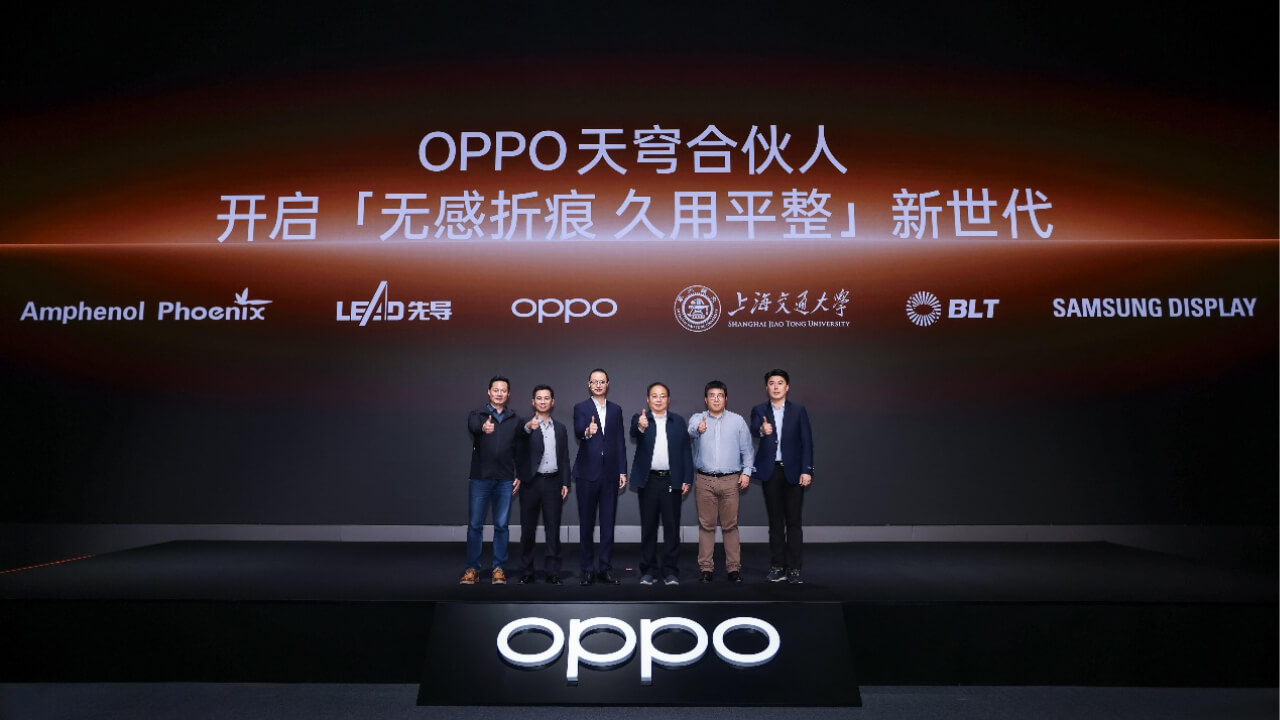
The collaboration was carried out as part of the “Tianqiong Partners” industrial alliance, initiated by OPPO to unite suppliers, research institutions, and other industry stakeholders. The alliance aims to address key technological challenges in foldable devices through joint development and knowledge sharing.
Through the combination of advanced manufacturing, engineering collaboration, and materials science, the OPPO Find N6 successfully passed 600,000 folding cycles certified by TÜV Rheinland, demonstrating the impact of technology-driven partnerships.
OPPO Vice President and President of Hardware Engineering, Liu Chang, said: “Achieving a crease-free and durable foldable display depends not only on advanced technologies such as the next-generation titanium Tianqiong hinge and Tianqiong memory glass, but also on the collective efforts of the engineers within the Tianqiong Partners ecosystem. The Find N6 represents a significant step forward in foldable display technology, as well as a meaningful improvement in user experience.”
The Find N6 project illustrates the potential of combining metal additive manufacturing, materials science, and engineering expertise to develop components for foldable smartphones that meet demanding performance requirements.
BLT’s involvement reflects its mature, market-proven end-to-end metal additive manufacturing capabilities, encompassing powder development, process optimization, component production, and post-processing. This expertise enables complex designs to be reliably scaled for industrial production, while supporting partners in transforming advanced concepts into high-performance, manufacturable components.
AM Insight Asia Perspective
In the AM industry, attention tends to gravitate toward the large and the dramatic — massive aerospace components, architectural structures, industrial-scale machinery. The BLT × OPPO Find N6 collaboration is a different kind of story. This is a case of extraordinary engineering compressed into an extraordinarily small space: a hinge spanning the full height of the device, yet only millimeters thin, built to survive 600,000 folds.
Design freedom is one of additive manufacturing’s most celebrated advantages. But freedom in concept does not equal freedom in execution. The moment a design meets the physical constraints of the machine — layer resolution, thermal behavior, support structures, surface finish — the gap between intention and reality becomes the real engineering challenge. What looks elegant on screen does not always emerge that way from the build chamber.
That gap is exactly where this project lived. BLT and OPPO did not simply apply a technology — they worked through that gap, repeatedly, until the numbers moved. A 50% improvement in wing plate flatness is not the output of a single iteration. It is the result of a process: testing, adjusting, failing, and trying again — with both sides of the partnership fully committed to the outcome.
What made that possible goes beyond machine performance. Projects like this succeed or fail on the quality of collaboration — the ability to align engineers across organizations, manage expectations under pressure, and maintain momentum through setbacks. The technology enabled the result. The teamwork made it happen.
Note: All images are sourced from OPPO’s official source.