From AI-Designed Rockets to Cost Disruption: What Hall 7.1 Revealed
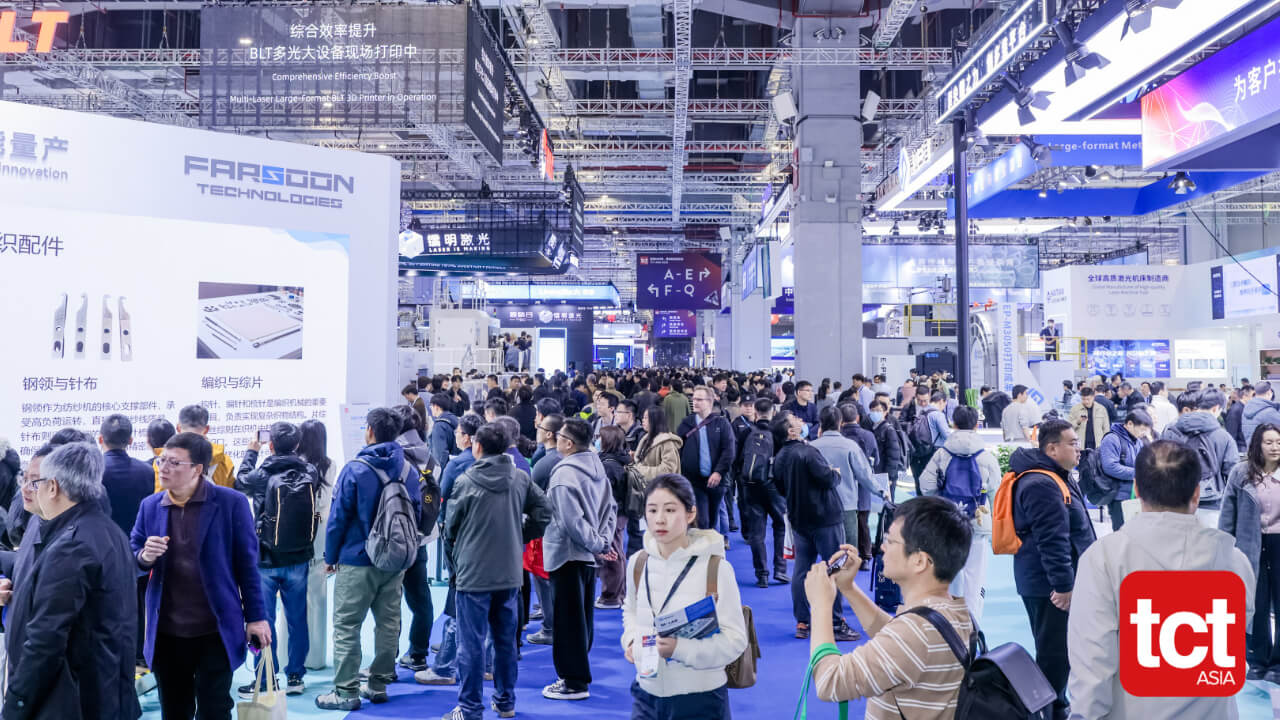
Walking through Hall 7.1 at TCT Asia 2026 (March 17–19, Shanghai, NECC), the sheer scale of the machinery on display made one thing unmistakably clear: metal additive manufacturing has moved well beyond prototyping and into serious production infrastructure. But the more lasting impression was not about size or laser counts. The conversation had shifted. It was no longer about what a machine could do in theory — it was about how to put it to work on the factory floor. From AI-designed rocket engines to fully automated production lines, cost-disrupting newcomers, and Western software giants holding their ground in a sea of Chinese hardware, here are 7 companies worth watching in TCT Asia 2026 Metal AM.
When AI Designs the Part: LEAP 71, Farsoon, and HBD
The most impactful story at this year’s show came not from a single company, but from a collaboration — between Dubai-based Computational Engineering firm LEAP 71 and two Chinese manufacturers.
LEAP 71 is sometimes described as “the first AI to build machines.” Its large-scale computational engineering model, Noyron, generates designs autonomously based on the laws of physics — no human engineer drawing in CAD, just mathematics producing geometry directly. That premise was made tangible on the show floor through two distinct partnerships.
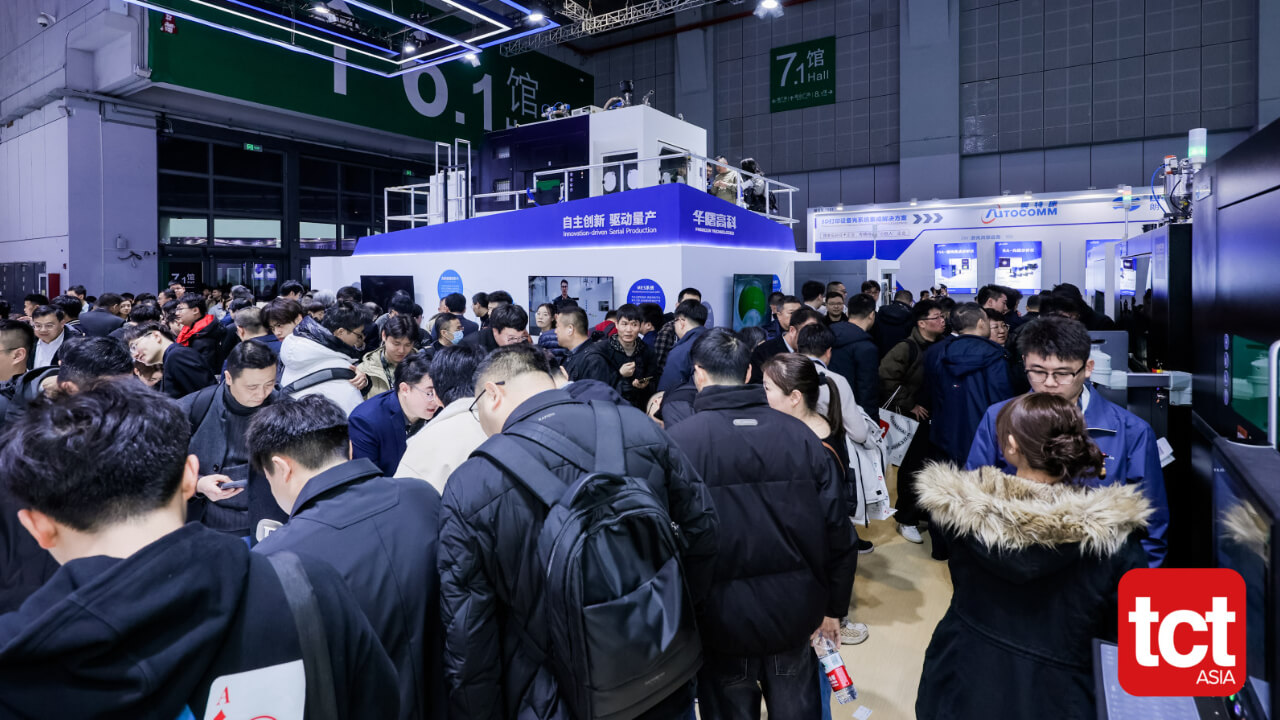
At Farsoon‘s booth, a hypersonic precooler concept — designed by LEAP 71 and manufactured on the FS811M-U-8 — was on display. The intricate internal flow channels, shaped entirely by AI, were printed directly in metal without compromise. Farsoon’s booth was arguably the most crowded in all of Hall 7.1; visitors packed in shoulder to shoulder throughout the day. The FS621M Pro, a large-format metal PBF system with a build volume of 620 × 808 × 1,200 mm, was exhibited as a live machine. Two new models were also announced — the FS1311M-U (16 lasers, build volume 1,310 × 1,310 × 1,650 mm) and the FS812M-U (41% smaller footprint) — though neither was present on the floor. The fact that Farsoon displayed both metal and polymer printed samples likely contributed to drawing the broadest cross-section of visitors.
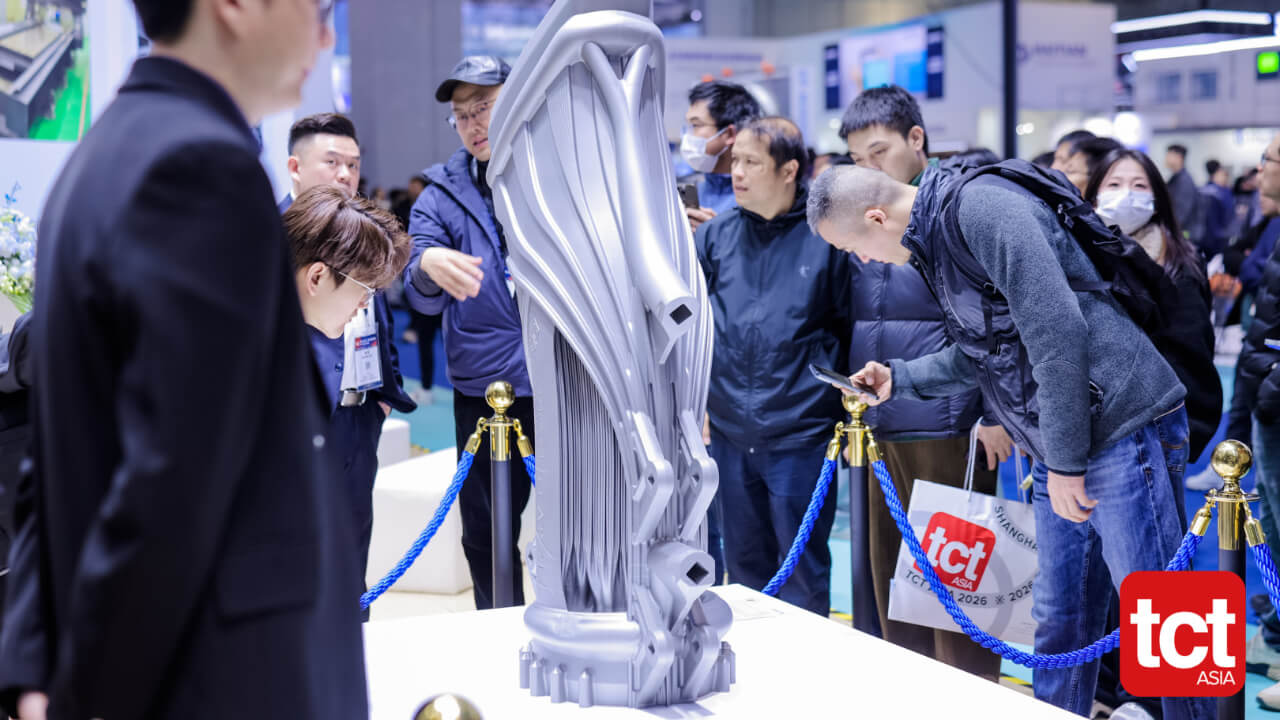
HBD went a step further. On display at their booth was the XRA-2E5 — a 200 kN thrust aerospike rocket engine designed by LEAP 71 and printed on the HBD 800 (10 lasers) over 289 continuous hours. Described as one of the largest 3D-printed aerospike engines in the world, it stood as a physical argument for what AI-driven design and metal AM can achieve together. HBD also unveiled its new Guangchi II, featuring real-time beam profile switching technology designed to balance print quality and throughput.
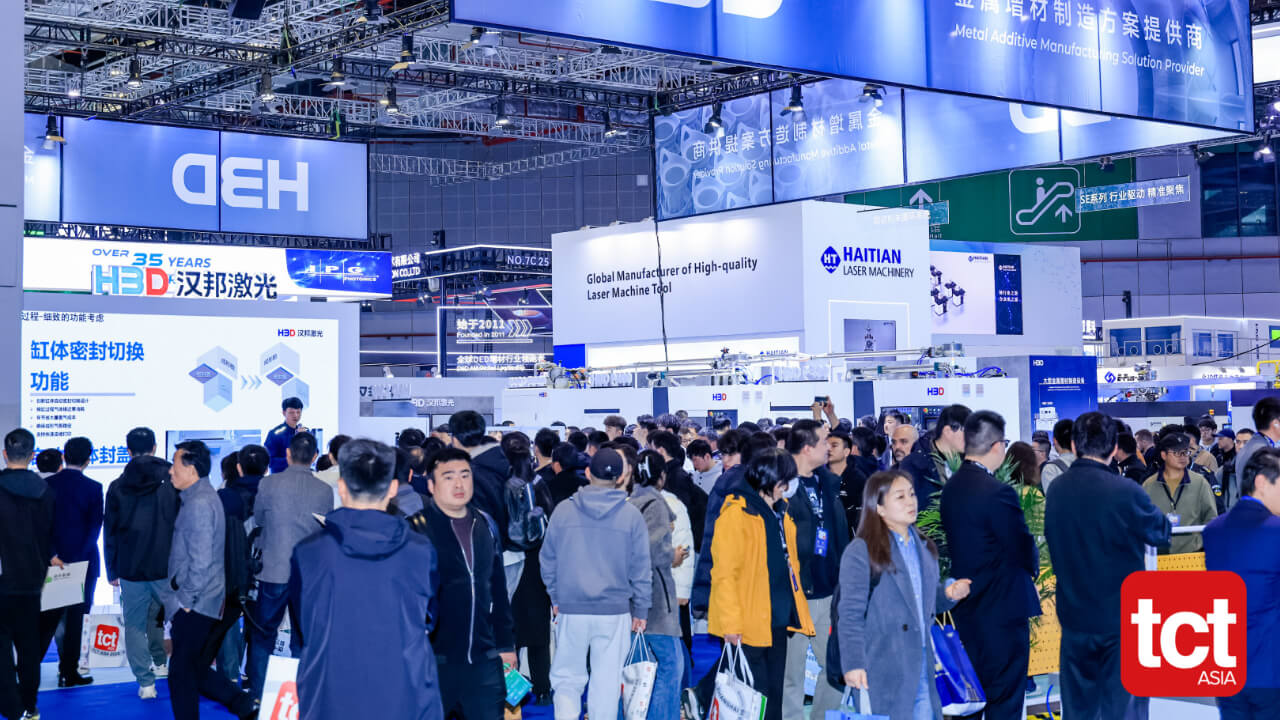
Scale as a Competitive Advantage: Eplus3D and BLT
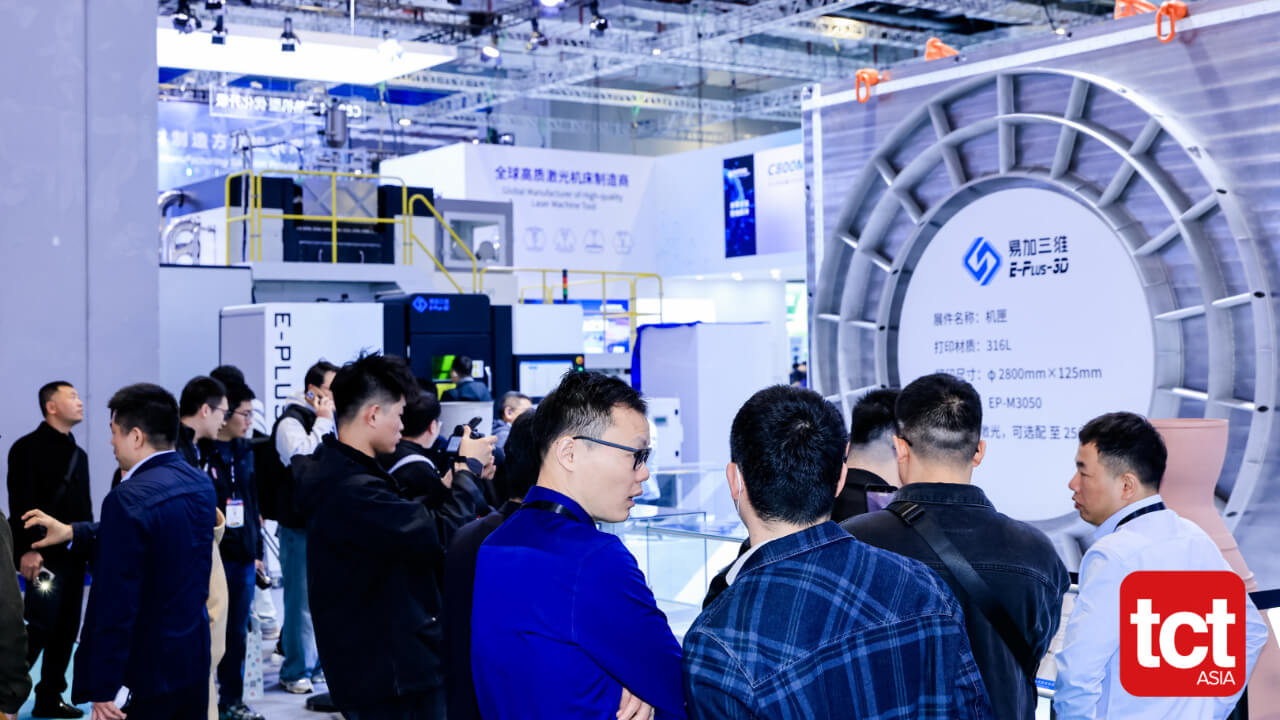
Eplus3D made its position clear: when it comes to build volume, they intend to keep raising the ceiling.
The centerpiece of their booth was not a machine — it was a 2.8-metre casing printed in 316L stainless steel, serving as a preview of the forthcoming EP-M3050. The machine itself was not present, but its specifications were teased: up to 256 lasers. With over 100 large-format systems already delivered to the aerospace sector, Eplus3D used the show to signal where they are headed next. Equally notable was a production case study involving titanium alloy hinge covers for Honor foldable smartphones — evidence that the same technology printing rocket housings is now entering consumer electronics supply chains. The cost collapse in metal AM powder (Ti-6Al-4V falling from around 600 RMB/kg in 2023 to under 300 RMB/kg by 2024) is making this crossover not just possible, but economically rational.
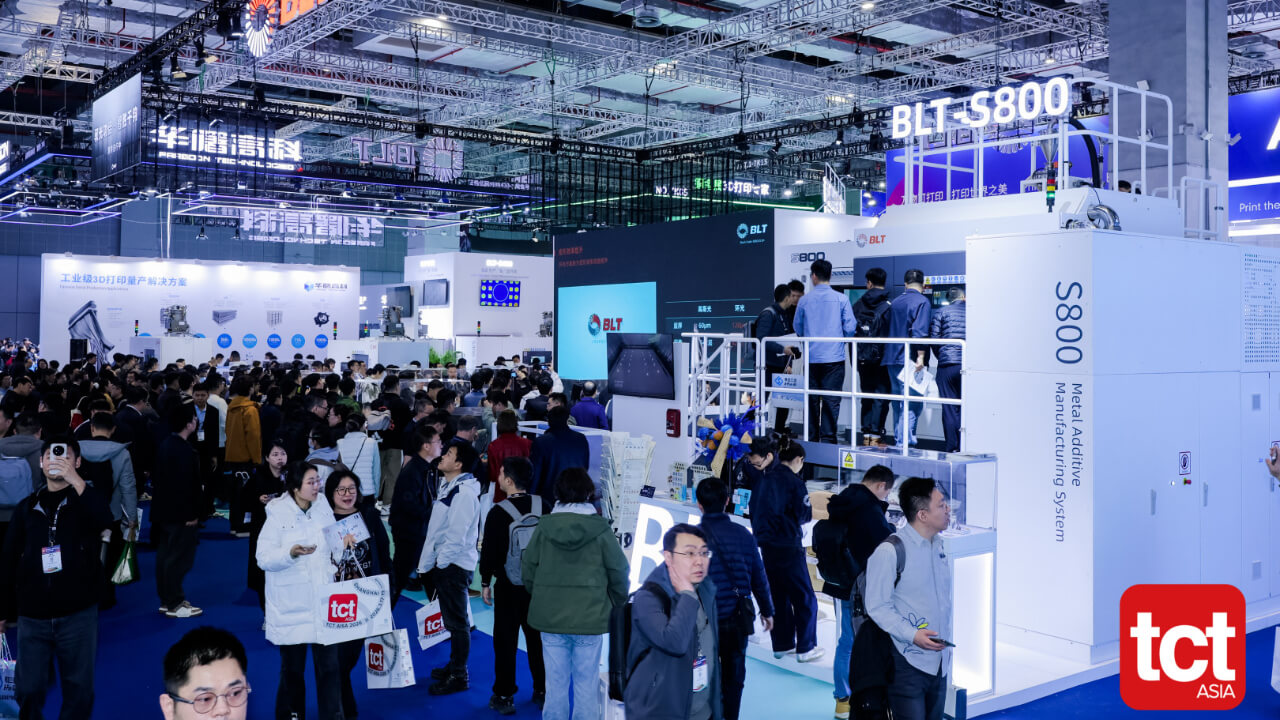
BLT approached the “how to use it” question from a different angle: automation. Their BRIGHTENLINES automated production line integrates eight printers with powder circulation, material handling, substrate removal, and waste recovery — a complete manufacturing cell, not just a collection of machines. This is exactly the shift the broader show was signaling: from demonstrating capability to delivering production. BLT also launched BLT-PrintInsight, an AI-powered quality management system offering real-time process monitoring and defect detection.
Breaking the Cost Barrier: HAITIAN
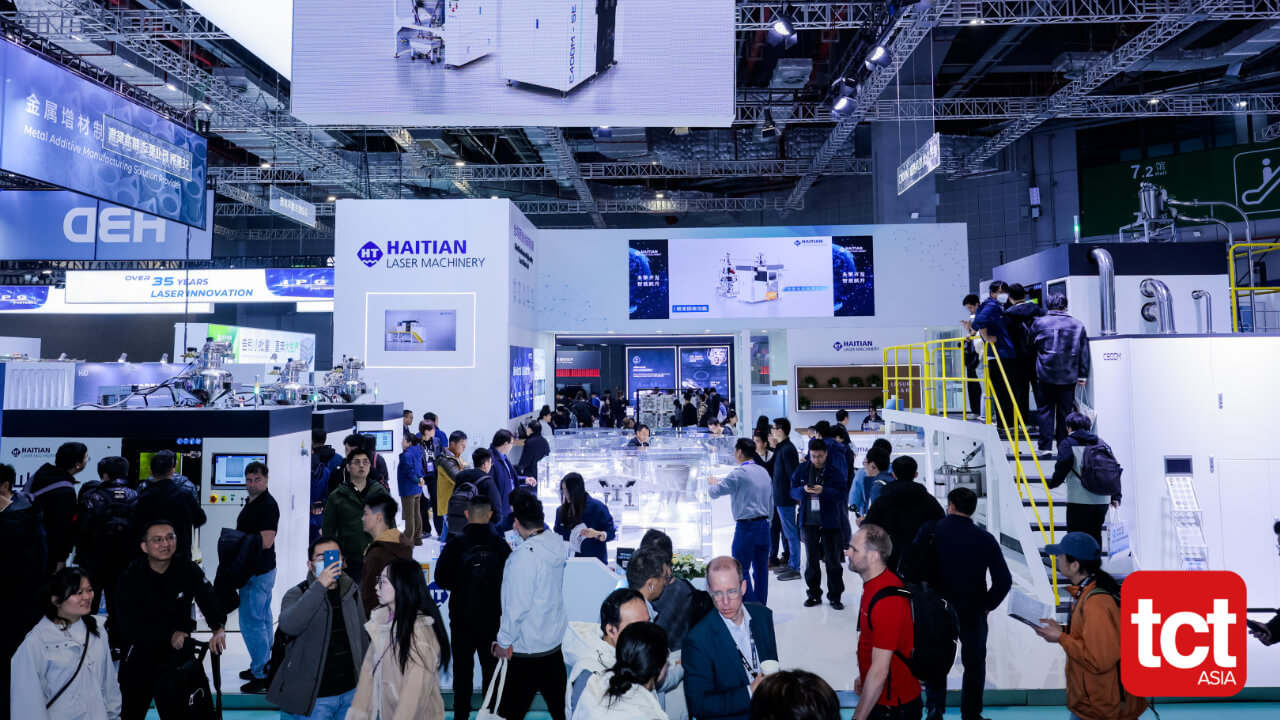
HAITIAN may well be the most consequential newcomer in the metal AM space right now — what some might call the “eye of the storm” at this year’s show.
Established in 2021 as the additive manufacturing arm of Haitian Group — the world’s largest manufacturer of injection molding machines by volume, with total assets exceeding 10 billion RMB — HAITIAN brings a fundamentally different DNA to metal PBF. The question is not whether they can build the machine. The question is what happens when the engineering discipline of high-volume, low-cost manufacturing meets powder bed fusion. Industry analysts have described HAITIAN as a potential force capable of dismantling the cost barriers that have long limited broader AM adoption. The company participated in TCT Asia’s TCT INTRODUCING zone for new product launches.
Attacking Copper AM from the Hardware Side: Addireen
Addireen draws a sharp contrast with the approach taken by material suppliers like JX Nippon Mining & Metals and Avimetal — companies covered in Part 2 of this series who are advancing copper AM from the materials side. Addireen is attacking the same problem from the hardware side: green laser technology.
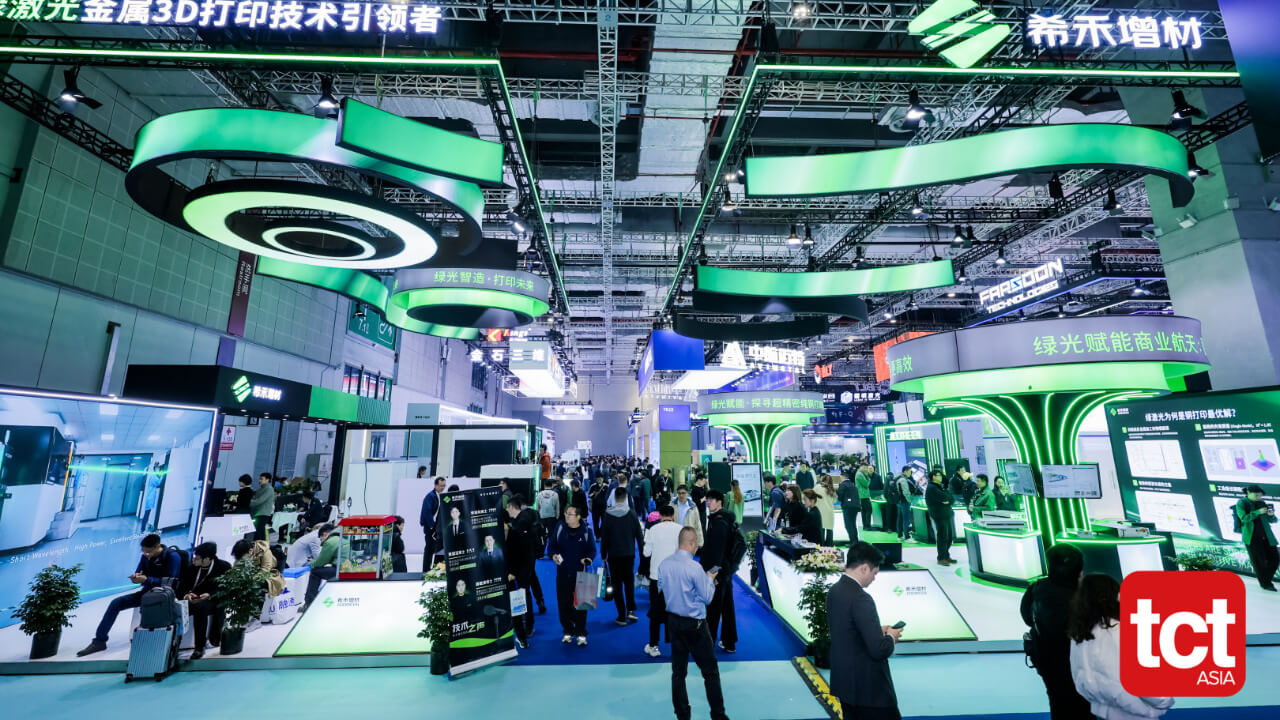
Founded in 2023 as a spinoff of Shenzhen Gongda Laser (18 years of R&D), Addireen is China’s first green laser PBF manufacturer — and uniquely, they develop their laser sources, optical systems, and printer hardware entirely in-house. Their flagship system, the ADDIREEN 400G (4 green lasers, 400 × 400 × 400 mm), achieves pure copper densities of 99.8%+, electrical conductivity of 101% IACS, and thermal conductivity of 390 W/(m·K). Green lasers are better absorbed by highly reflective materials like pure copper and gold — a fundamental materials physics advantage that IR lasers simply cannot replicate through process optimization alone. Applications in data center cooling components and precision electronics are the primary targets. The diversity of approaches to copper AM — materials on one side, hardware on the other — is itself a reflection of the depth that the Chinese AM ecosystem has reached.
Hardware Is China’s. What About the Stack? Siemens
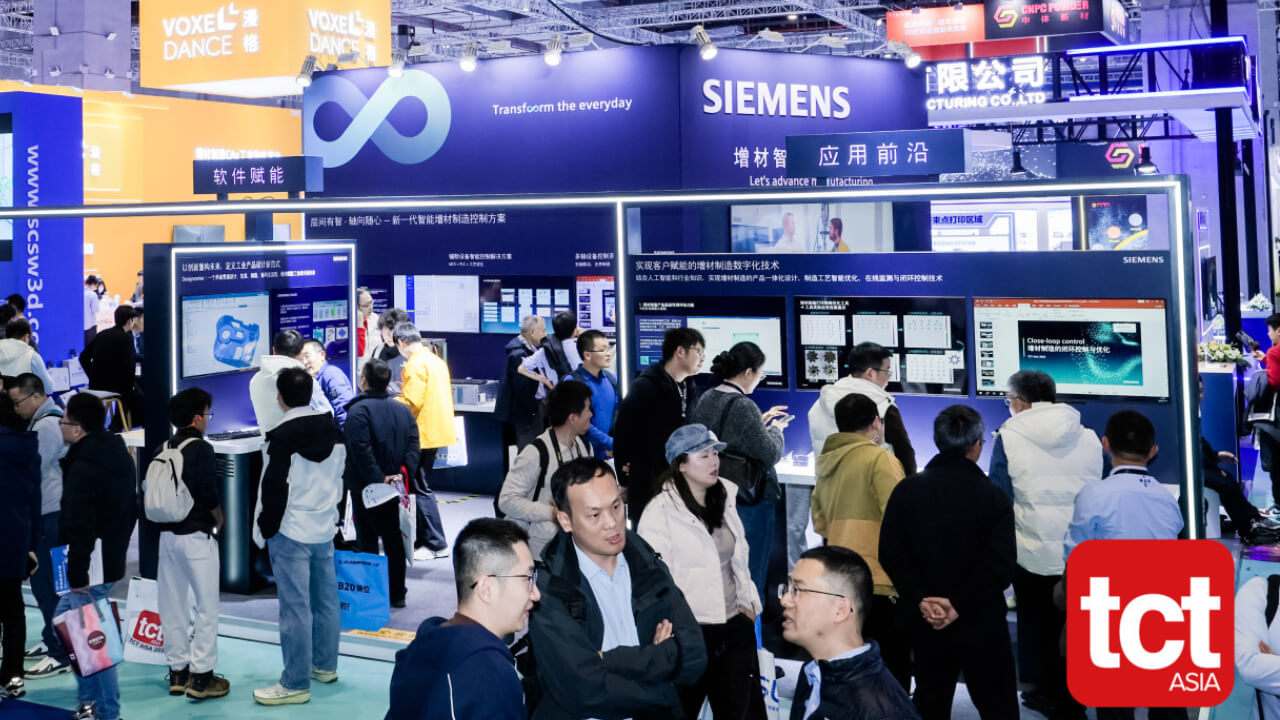
Walking through Hall 7.1, amid the towering booths of Chinese hardware manufacturers, one Western company stood out — not for its machines, but for its presence. Siemens was conspicuously well-positioned in the metal hall.
While Western hardware manufacturers were less visible at this year’s show, Siemens demonstrated a different kind of staying power. They were not there to sell printers. They were there to sell digital workflows, software, and digital twins — the infrastructure layer that sits above the hardware.
Through NX and Teamcenter, Siemens offers an end-to-end AM-ready digital thread that connects design, engineering, simulation, and production. The point is not that Chinese manufacturers lack software ambition — it is that the complexity of enterprise-grade AM software, built over decades of industrial deployment and qualification, is not easily replicated at speed.
AM Insight Asia Perspective: TCT Asia 2026 Metal AM
China’s AM industry has moved rapidly to world-class levels in hardware and materials. The pace of iteration, the depth of the supply chain, and the scale of domestic demand have produced a hardware ecosystem that the rest of the world is only beginning to reckon with. But in the domain of software, digital workflow, and quality management systems, companies like Siemens and Materialise still command significant presence — and their position in Hall 7.1 was a quiet reminder of that reality.
Whether China’s AM ecosystem will extend its reach into this layer as well — and on what timeline — may be the most interesting question to watch in the years ahead.
- TCT Asia 2026 Field Report [Part 1]: The Energy Of The 3D Printing Industry As Felt In Shanghai
- TCT Asia 2026 Field Report [Part 2]: Two Worlds Born From Diversity — Diverging Strategies In Copper Powder Additive Manufacturing
- TCT Asia 2026 Field Report [Part 3]: 7 Companies Worth Watching In TCT Asia 2026 Metal AM
- TCT Asia 2026 Field Report [Part 4]: My First TCT Asia Experience