What a Small Osaka 3D Printer Maker Found at the World’s Biggest AM Show
How Japan’s Small 3D Printer Maker Qholia Took on China
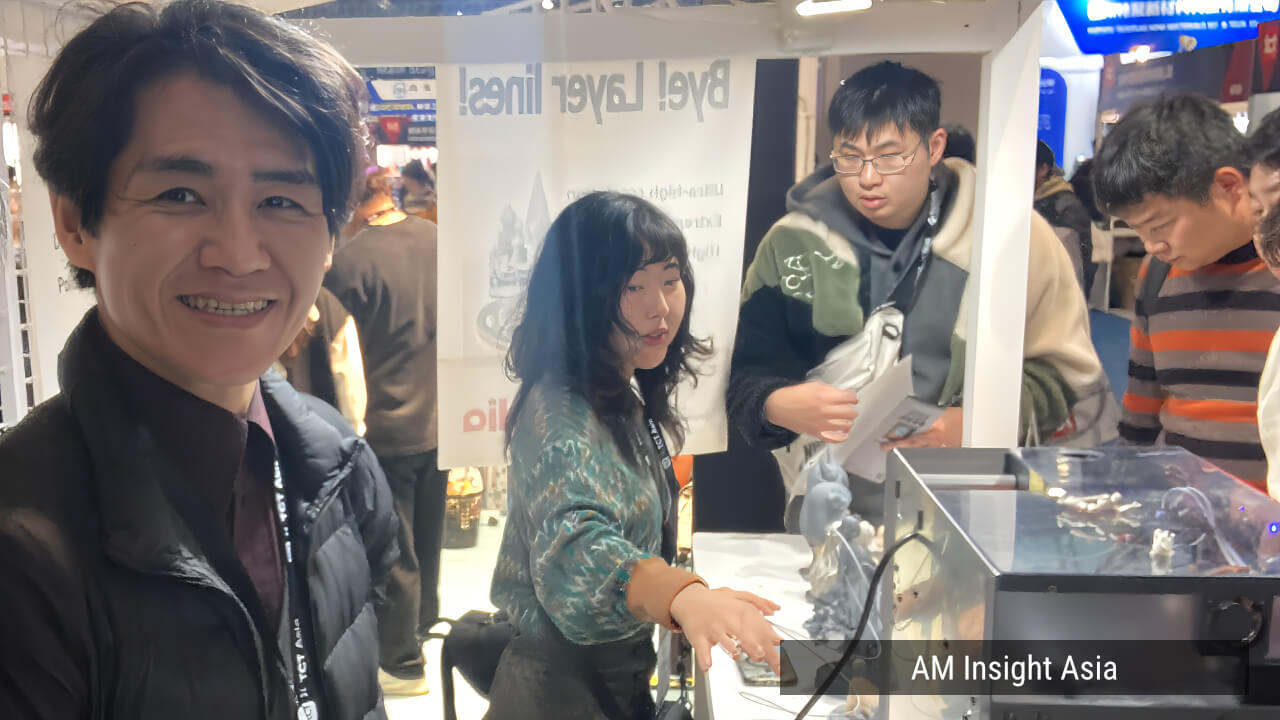
Japan has very few 3D printer manufacturers of its own. Against that backdrop, Qholia — a 3D printer brand developed by Osaka-based metal fabrication company Q-ho Metal Works — made its debut at TCT Asia 2026, held in Shanghai, China from March 17–19, 2026. With major Western brands largely absent and Chinese consumer-oriented manufacturers dominating the floor, TCT Asia 2026 is nothing short of a battleground. We spoke with Representative Director Tamu Furukawa about why he brought Qholia into the heart of it, and what he found when he got there.
What Is Qholia? A 3D Printer Brand Born in an Osaka Metal FactoryTC
Q-ho Metal Works is a metal fabrication company based in Osaka. Its representative director, Tamu Furukawa, took over as the fourth generation of the family business while pursuing new ventures under the motto: “make what doesn’t exist yet.”
Qholia was born more than ten years ago when Furukawa purchased a 3D printer for his own product development work — and found it lacking. “If making what doesn’t exist is my job,” he reasoned, “then I should make the 3D printer I actually need.” He set about building it himself. It’s worth noting that Furukawa also had a hand in the foundational design of one of Japan’s current commercial FDM printer lines — a professional credential that lends considerable weight to his engineering instincts.
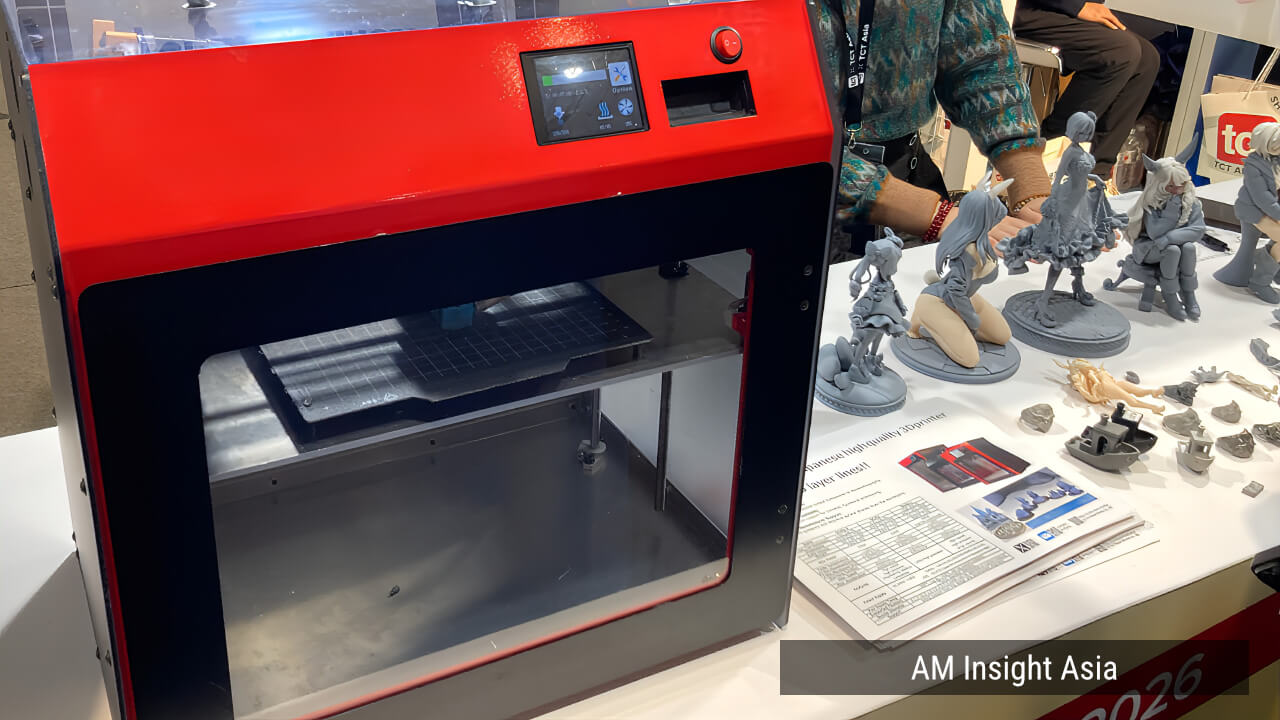
Development is handled almost entirely by Furukawa alone. Assembly and shipping are managed by company staff. The business employs around 20 people in total, but only a handful are involved in Qholia operations. The brand’s design philosophy draws directly from the company’s manufacturing roots: metal enclosures, domestically laser-cut components mounted directly to the frame, and the kind of structural rigidity that comes from decades of metalworking expertise.
Why Qholia Keeps Selling — Even as Chinese Machines Flood the Market
Over roughly ten years since launch, Qholia has sold approximately 600 units domestically. Rather than chasing volume, the brand’s model centers on direct, hands-on support from Furukawa himself — the same engineer who designed the machine.
The customer base skews toward universities, research institutions, and listed companies: organizations that prioritize precision and reliability over price. Applications range from industrial prototyping and jig fabrication to materials testing and — for individual users — highly detailed figure modeling.
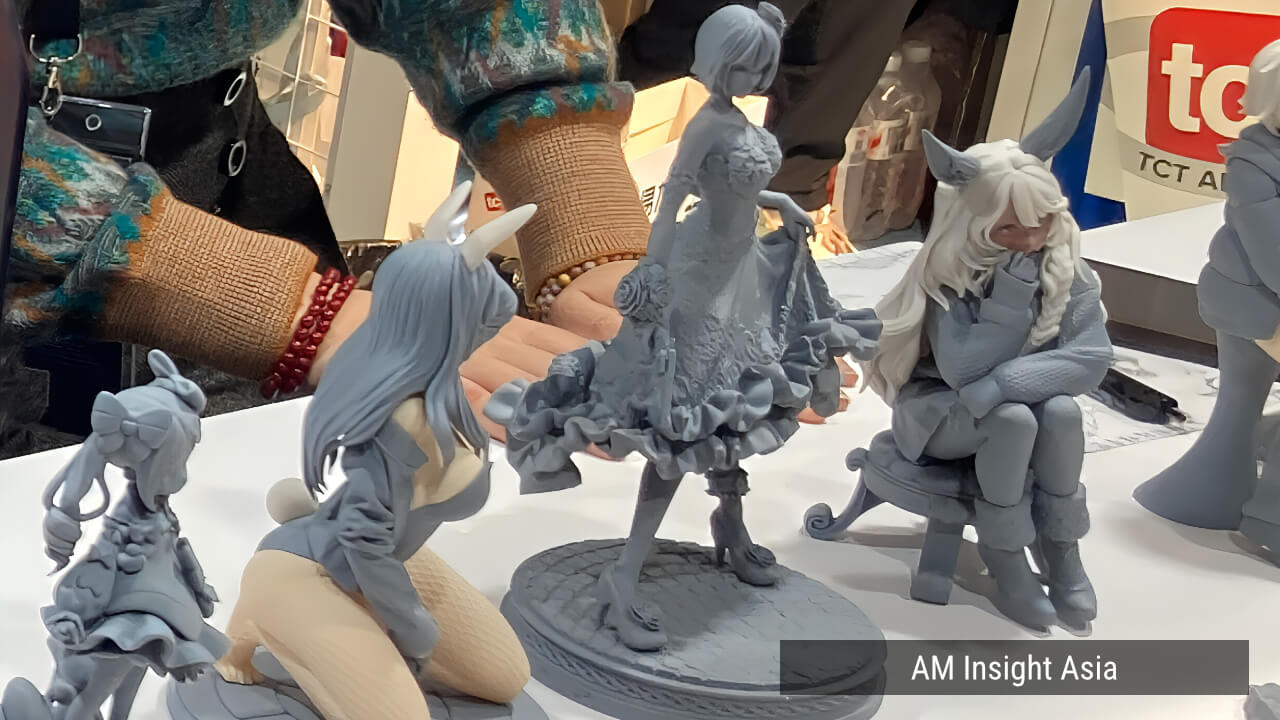
Qholia’s defining feature is its ability to produce surface finishes that barely show layer lines, despite being an FFF machine. Pick up a Qholia print and it can look like it came off a resin printer. That level of finish from a filament-based machine consistently surprises people who see it for the first time.
Post-sale support and upgrade paths are also a meaningful differentiator. Many users are still running machines purchased years ago — and Qholia offers overhaul-and-upgrade services that bring older units up to current performance standards.
On the rise of Chinese consumer machines, Furukawa is candid: “The difference in national-level investment is enormous.” But his response isn’t resignation — it’s focus. “I think about what I can do.” That’s the mindset that keeps Qholia going.
Why Head to China? The Decision to Exhibit at TCT Asia 2026
Japan has almost no 3D printer manufacturers developing and selling their own machines. Even major Western brands have limited presence at TCT Asia 2026. No other Japanese manufacturer was exhibiting. So why did a small Osaka operation decide to show up?
“I’d been wanting to exhibit at an overseas show for a while,” Furukawa says. Across sourcing, development, and sales, there were dimensions of the business that couldn’t be fully addressed within Japan alone. The desire to build international connections had been building for some time.
Two factors made TCT Asia 2026 the right choice: proximity and cost. The 3D Genius Hub exhibition fee was relatively affordable, and compared to other international options, the distance from Japan was manageable. Weighed against alternatives like RAPID+TCT or Formnext, TCT Asia 2026 made the most sense on both counts.
On the Ground at TCT Asia 2026 — What Furukawa Saw and Felt
Stepping onto the show floor, the first thing Furukawa noticed was the energy. Exhibitors and visitors alike were buzzing. The scale and vitality of China’s 3D printing industry hit him in a way that no article or data set could convey.
“You get a real sense that 3D printers are just part of everyday life here,” he says. In Japan, 3D printing still carries a “special equipment” feeling. In China, it’s woven into everyday manufacturing. Printed objects appear in ordinary commercial settings without anyone remarking on it. That sense of normalcy — the sheer ordinariness of 3D printing in China — was the starkest contrast with home.
The 3D Genius Hub zone, where Qholia was exhibiting, brought together startups and smaller-scale exhibitors. Furukawa could watch the massive booths of major manufacturers just across the floor, while also seeing companies and individuals closer to his own scale taking their shot.
Who Came to the Qholia Booth — and What They Wanted
The visitor response was energizing. It wasn’t just individual hobbyists who stopped by — corporate representatives were among those who lingered and asked questions.
Some visitors noted that the price was high. Compared to Chinese consumer machines, Qholia’s price point is significantly greater. But what stood out more was the reaction to print quality. Visitor after visitor expressed genuine surprise at what the machine could produce. “This does things we can’t do yet” was a recurring response — and it was said with interest, not dismissal.
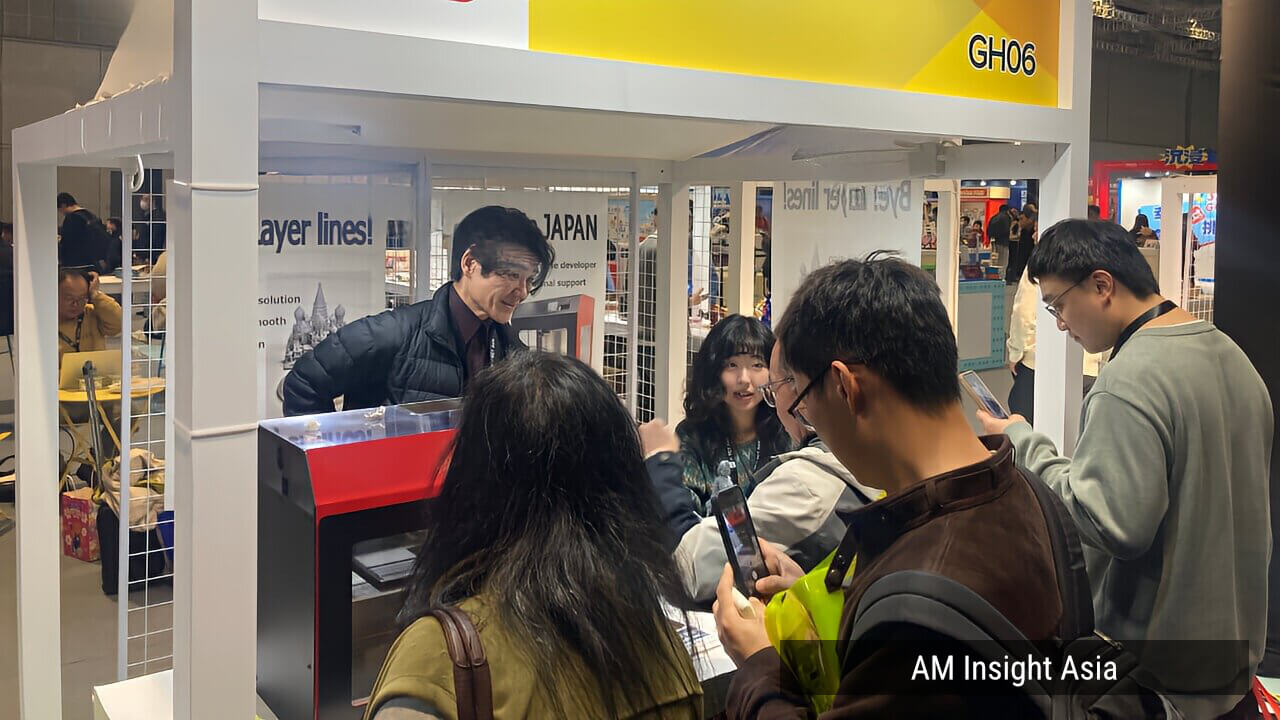
Despite being a small booth tucked toward the edge of the hall, there were always people gathered around it, asking detailed questions. The intensity at that modest stand was, by all accounts, conspicuous.
Was It Worth It? And What Comes Next
For Furukawa, TCT Asia 2026 was, in his own words, “stimulating in a lot of ways.”
Concrete outcomes are still being assessed — the show had just ended — but ideas for new product directions had already begun to surface. Perhaps more significantly, the experience opened up a possibility he hadn’t fully considered before: that developing and manufacturing in Shenzhen might one day make sense. Not as a cost-cutting move, but as a strategic one — for the speed of information flow, the logistics infrastructure, the balance of quality and price, and the potential of Shenzhen as a hub into Southeast Asian markets.
“There were hints about future directions, and it raised my motivation,” Furukawa reflects. He intends to return to TCT Asia next year.
Advice for Companies Considering the Leap
Furukawa has straightforward counsel for others thinking about exhibiting in China: “You absolutely need to see China for yourself. If you’re going to spend money on travel and accommodation, experiencing China might be more valuable than attending a show in Japan.”
Two things impressed him most about the Chinese show environment: first, that manufacturers exhibit directly — not through trading companies — which means the information is fresher and denser. Second, that you can meet people who are actually using the technology in production, not just evaluating it. “You encounter people who are running the floor,” he says. “That matters.”
On the practical side, he’s emphatic about language: having a staff member fluent in both Chinese and English was essential. “If you’re going to exhibit, you need staff who speak Chinese and English. That’s the lesson.”
He also offered a broader reflection on product development: “When you chase one function, something else always drops.” Knowing clearly what you’re building toward — and what you’re willing to trade — may have come into sharper focus in Shanghai.
AM Insight Asia Perspective
AM Insight Asia has consistently encouraged Japan’s AM users and manufacturers to look outward — not necessarily because overseas expansion is the goal, but because engaging with the global landscape makes any company stronger. The world is moving toward recognizing and rewarding brands that are known beyond their home market.
Against that backdrop, the fact that a small team — a metal fabrication company at its core, with only a handful of people working on Qholia — walked into one of the most competitive 3D printing shows in the world is both surprising and genuinely admirable. For any Japanese company accustomed to domestic trade shows, a Chinese exhibition is a jolt: the booth scale, the visitor energy, the pace of the floor — all of it operates at a different register.
There’s no need to copy what China does. But stepping outside familiar territory, placing yourself in a genuinely different environment, and asking what that means for your own direction — that’s exactly what overseas exhibitions are for. Qholia’s debut at TCT Asia 2026 is a small but vivid example of what that kind of courage looks like in practice.
- TCT Asia 2026 Field Report [Part 1]: The Energy Of The 3D Printing Industry As Felt In Shanghai
- TCT Asia 2026 Field Report [Part 2]: Two Worlds Born From Diversity — Diverging Strategies In Copper Powder Additive Manufacturing
- TCT Asia 2026 Field Report [Part 3]: 7 Companies Worth Watching In TCT Asia 2026 Metal AM
- TCT Asia 2026 Field Report [Part 4]: My First TCT Asia Experience