$1.5 Billion Heavy-Electrical Maker, One of Japan’s Big Eight, Sets Its Sights on Becoming a Global DED Player
This announcement is now more than a month old. We could have simply turned the press release into a story. Instead, AM Insight Asia visited DAIHEN’s AM development site in Hyogo to hear directly from the people building it. The news deserved that kind of attention.
This is not a startup, nor a small manufacturer. A company with roughly $1.5 billion in sales, 107 years of history, and a track record of steadily adding new strengths over the decades, one of Japan’s Big Eight heavy-electrical makers, is entering additive manufacturing with an eye on large structural components. Its weapons: in-house core technologies and an already-built global sales network.
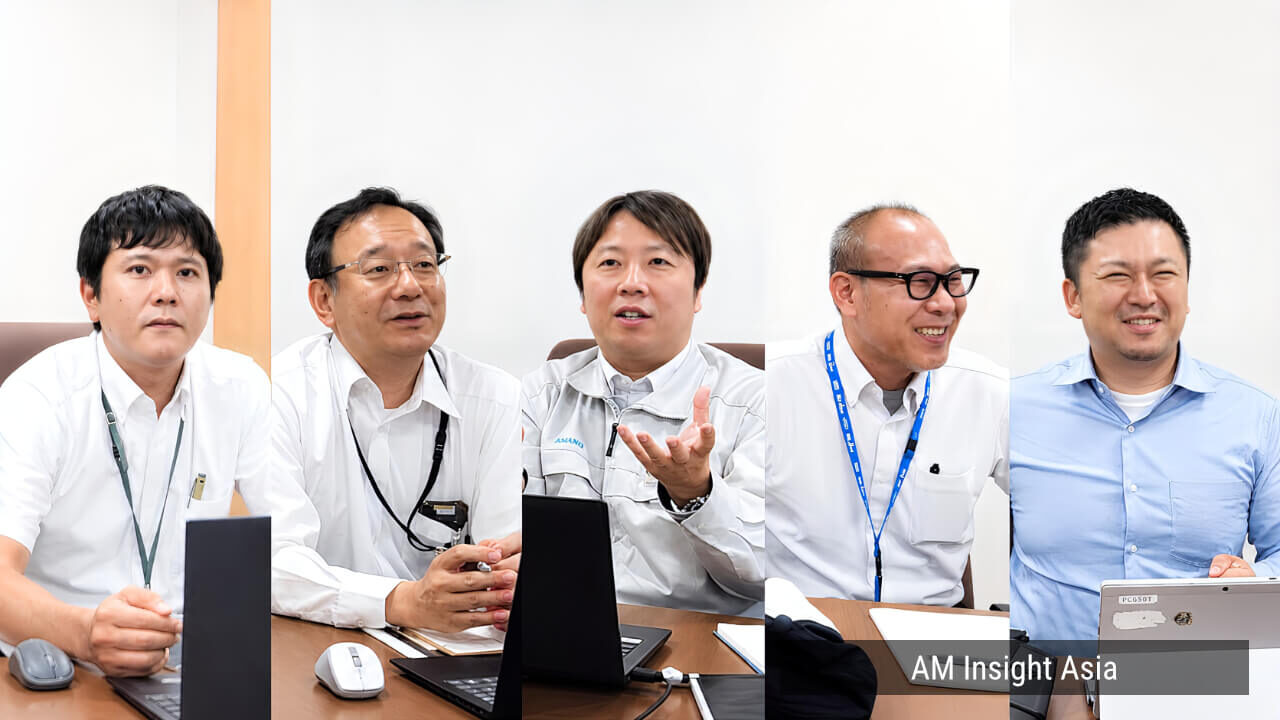
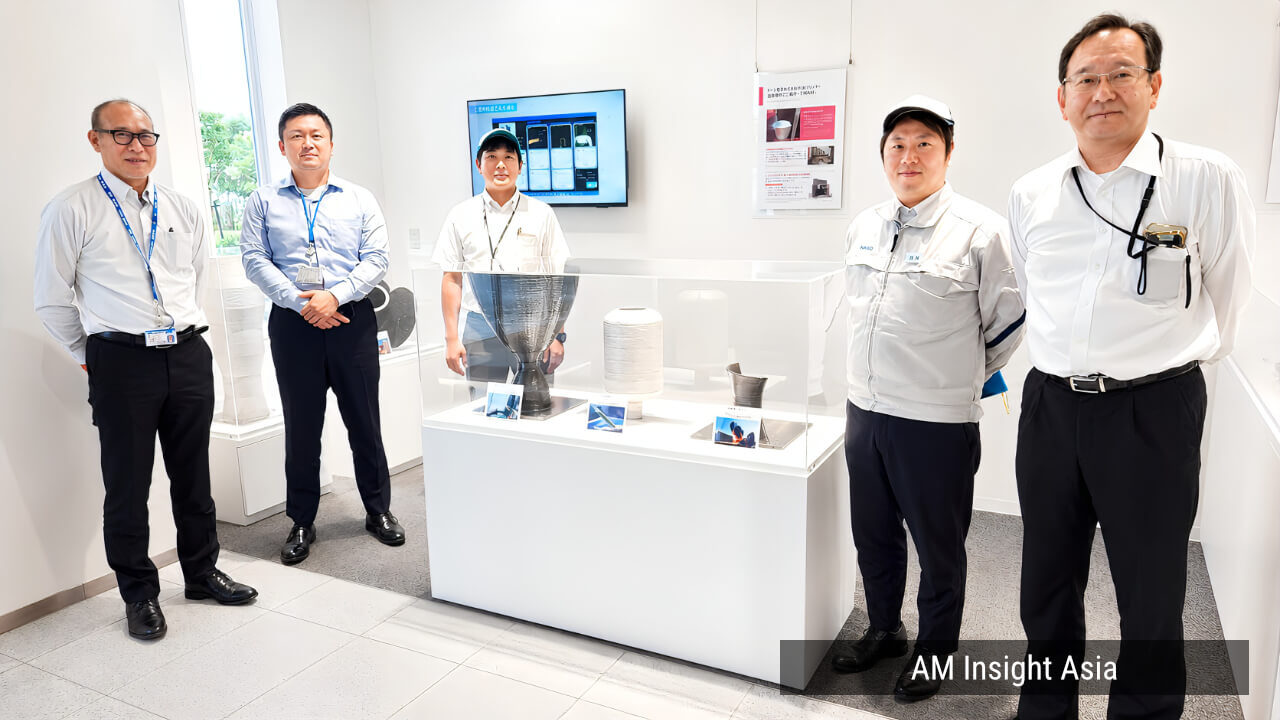
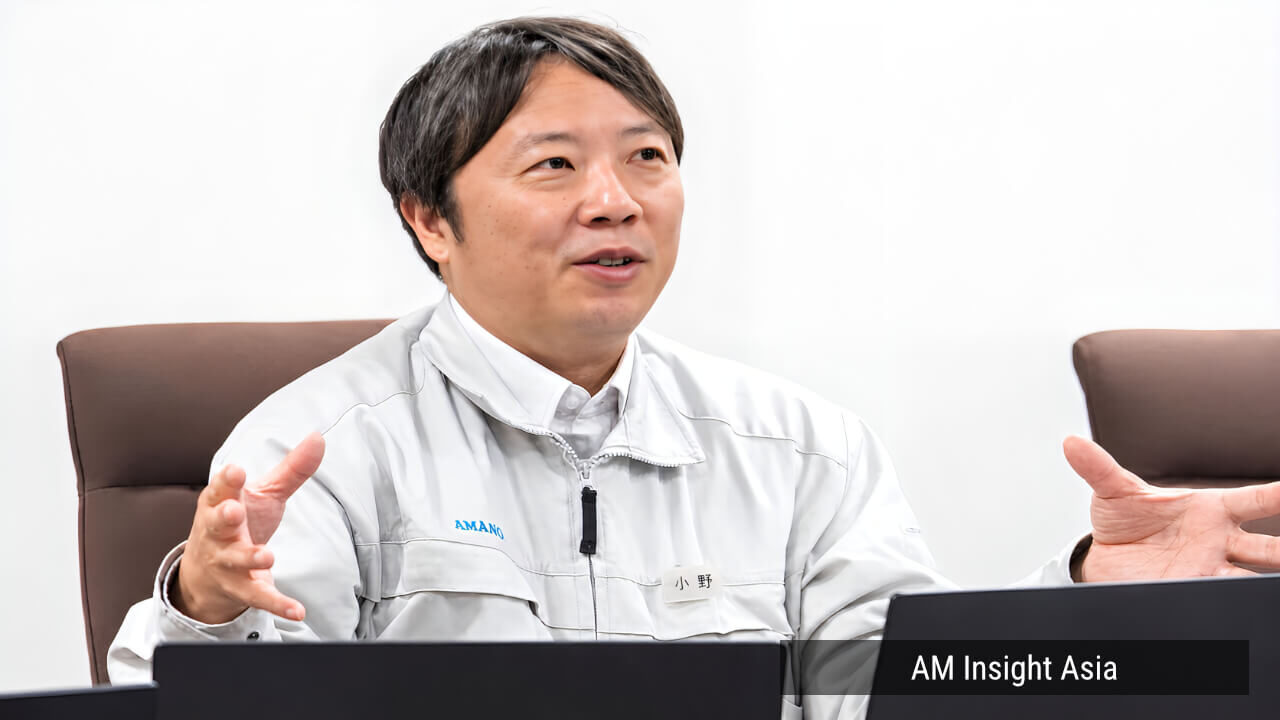
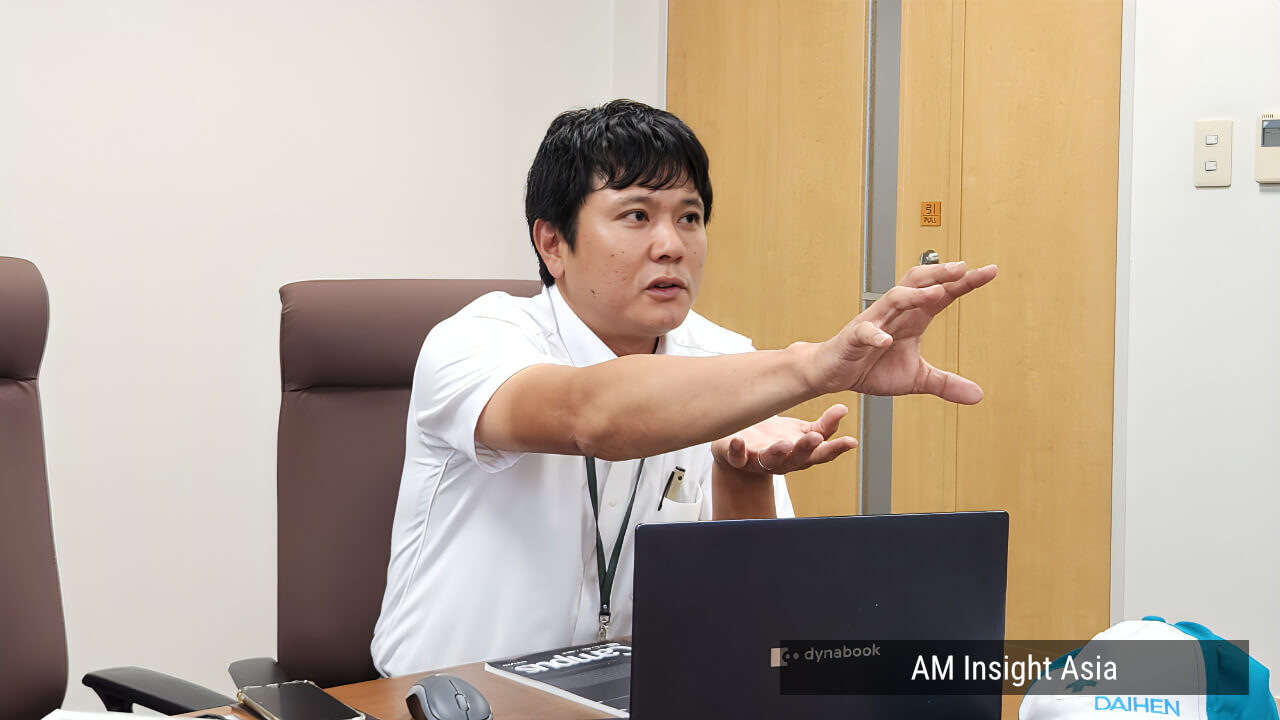
Koji Osawa, General Manager, Dept. of Advanced Materials Processing Systems Sales, Welding & Joining Div.
And other members of the team
| Photo: AM Insight Asia
What Is the ArcBuilder 3D?
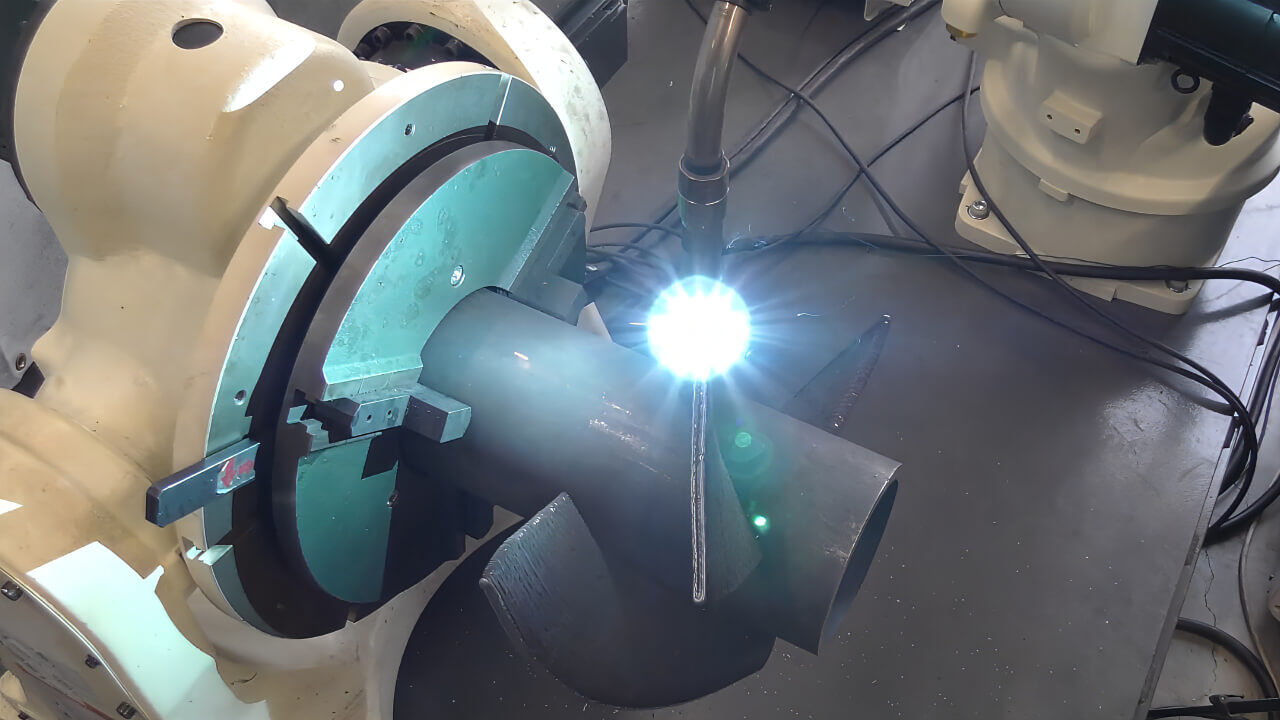
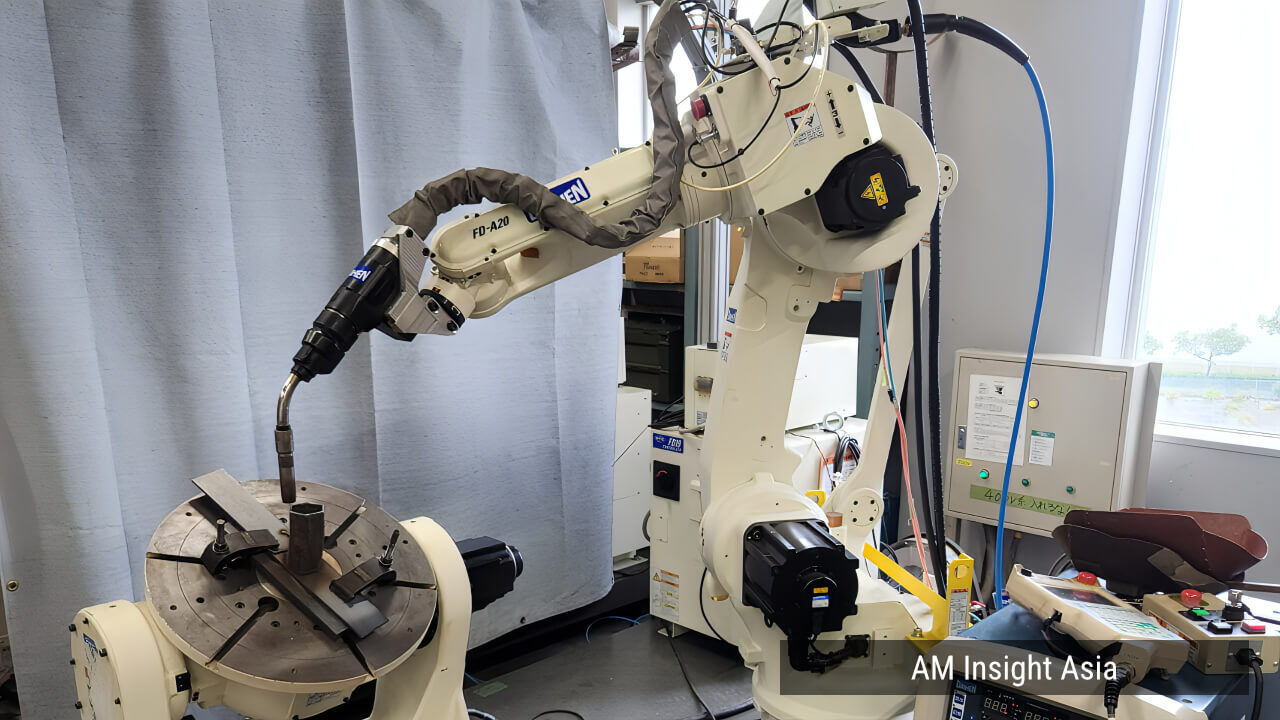
On May 18, 2026, DAIHEN unveiled the ArcBuilder 3D, a WAAM (wire arc additive manufacturing) metal 3D printer, and began taking orders on May 29. The launch marks the company’s first move into additive manufacturing.
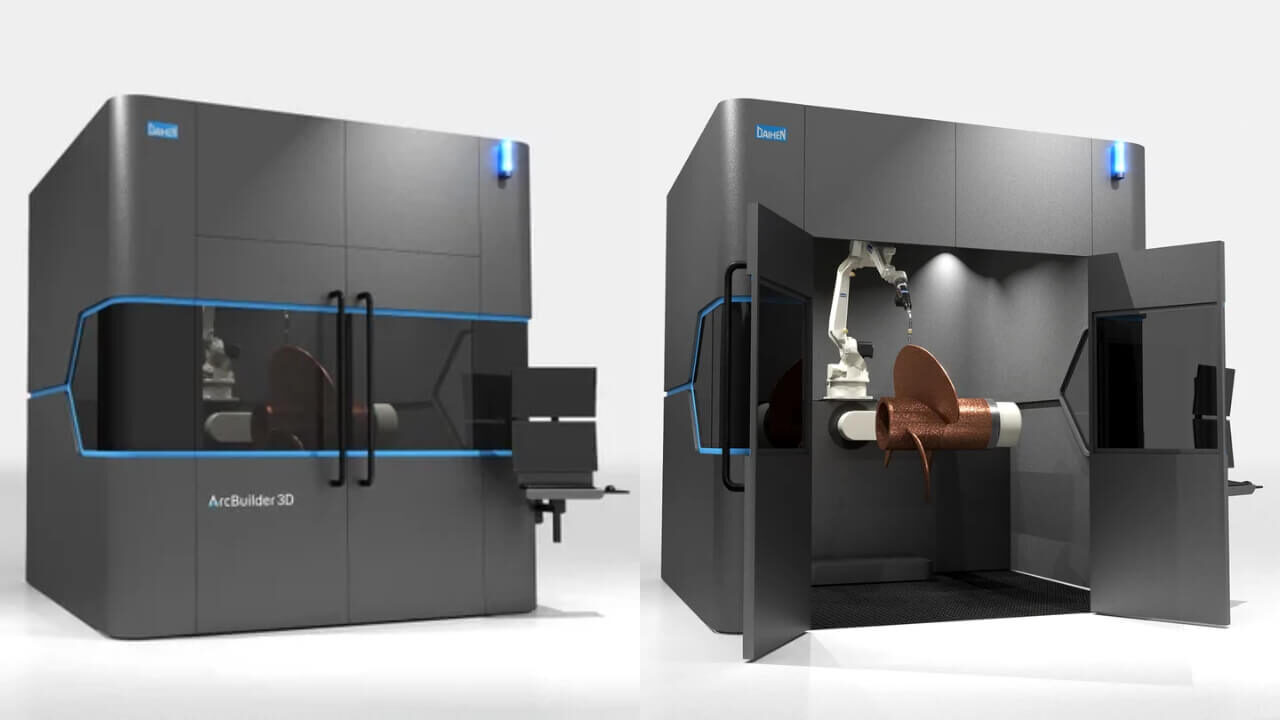
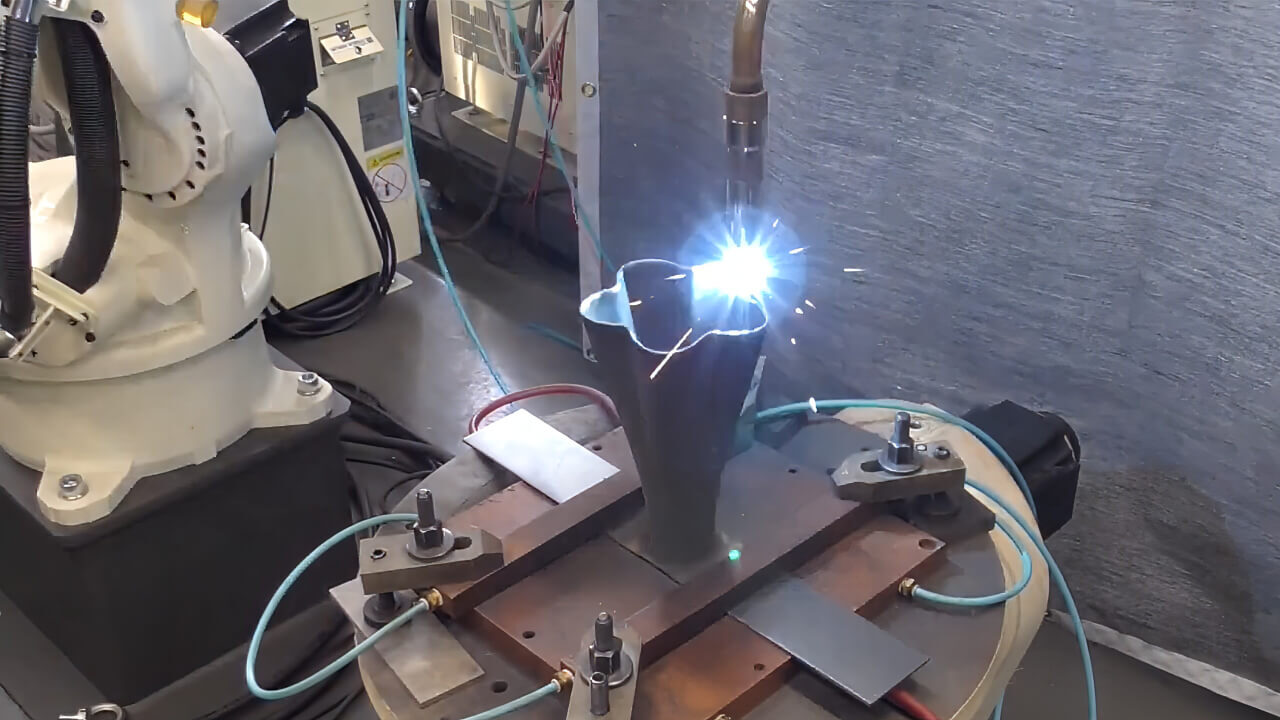
At the core of the technology is DAIHEN’s proprietary AC Synchro-Feed welding process, which the company brought to market in 2015. By synchronizing high-speed forward and backward wire feeding with the welding current, it cuts spatter, the metal spray produced during welding, by more than 98%. The ArcBuilder 3D applies this process to achieve high-speed, low-temperature builds without sacrificing deposition volume, and DAIHEN says the approach lifts build efficiency by 24% over conventional welding. The system can switch welding waveforms to suit different materials, including steel, stainless steel, and aluminum alloys, and comes with dedicated software that supports robot programming, generating optimal toolpaths even for complex CAD geometries.
The maximum build volume is a 1.5-meter cube. The system is priced at $460,000 (excluding tax), and DAIHEN is targeting sales of 20 units in its first year, fiscal 2026. Beyond selling the hardware, the company also offers a contract manufacturing service through its Rokko plant in Kobe’s Higashinada Ward, where dedicated technical staff with welding and robotics expertise handle everything from consultation and quotes to production and delivery.
DAIHEN is targeting the shipbuilding, energy, construction machinery, and aerospace sectors. Its goal for fiscal 2030 is $62 million in sales and 60-70% domestic market share, a figure covering the entire WAAM business, hardware, maintenance support, materials, and contract manufacturing, combined across domestic and overseas markets.
107 Years Old, One of Japan’s Big Eight
DAIHEN was founded in 1919 as Osaka Transformer Co., making it 107 years old in 2026. It is one of the Big Eight heavy-electrical manufacturers, a group that also includes Hitachi, Toshiba, Mitsubishi Electric, Fuji Electric, MEIDENSHA, Nissin Electric, and TAKAOKA TOKO. In the fiscal year ended March 2026, DAIHEN posted consolidated sales of roughly $1.46 billion, up 5.0% year on year, and operating profit of roughly $116 million, up 16.1%, both record highs. The business rests on three pillars: energy management (transformers, battery storage systems, EV charging systems), factory automation (industrial robots), and material processing (welding machines, high-frequency power supplies for semiconductor manufacturing equipment).
The company’s original business was transformers, but in 1934 it applied that expertise to enter the welding machine business, and over the following decades built up a robotics business as well. According to DAIHEN’s investor presentation from December 2025, its arc welding robots hold a 39% domestic market share (No. 1 in Japan) and a 20% global share (No. 1 worldwide). Pole transformers, its founding product, hold a 61% domestic share (also No. 1). DAIHEN says its arc welding machines also rank among the largest in the world by market share.
Six Years in the Making, a Bottom-Up Decision
Work on the core technology began around 2020, when DAIHEN’s independent Technology Development Division began researching new joining technologies. In fiscal 2023, the company set up a New Joining and Processing Technology Planning Department to formalize a business plan, including market size estimates and growth projections. At the International Welding Show in Osaka in 2024, DAIHEN showed its pre-commercial WAAM technology as a reference exhibit, a midpoint on the road to the formal launch. The decision to enter the business was not handed down from the top; rather, teams from R&D and business planning built the case with market data and won management’s approval, a bottom-up process.
Three reasons underpin the decision to enter. First, the WAAM market as a whole is expected to grow at roughly 20% a year. Second, since WAAM is built on arc welding, and DAIHEN already holds top-tier global shares in both arc welding machines and welding robots, it had the technical foundation to compete. Third, it could reuse its existing sales and service network worldwide, rather than build one from scratch. The six years between the start of technical work in 2020 and this year’s launch also show that this was not a snap decision but an entry built up over time.
The Competitive Edge of Owning Both Power Source and Robot
Looking across the global WAAM (wire arc DED) market, the leading players, Gefertec, WAAM3D, AML3D, Lincoln Electric Additive Solutions, and MX3D, are mostly specialist ventures or divisions of larger companies based in Europe or the US.
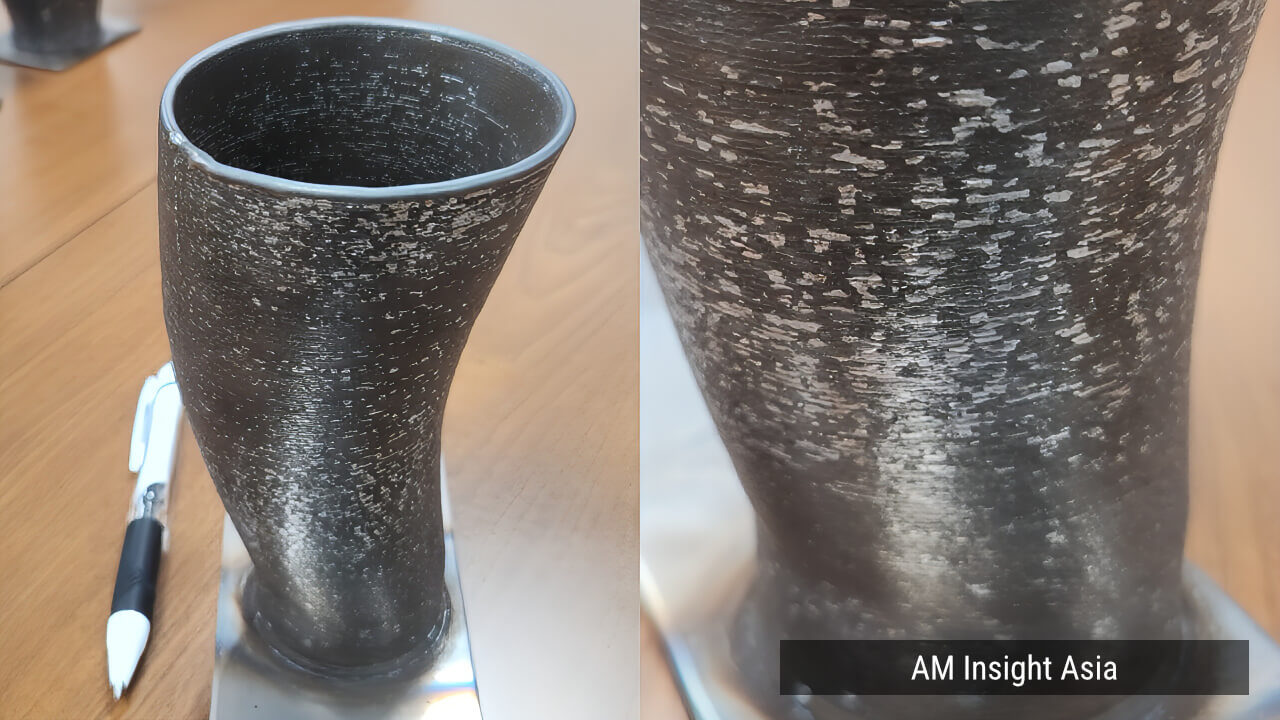
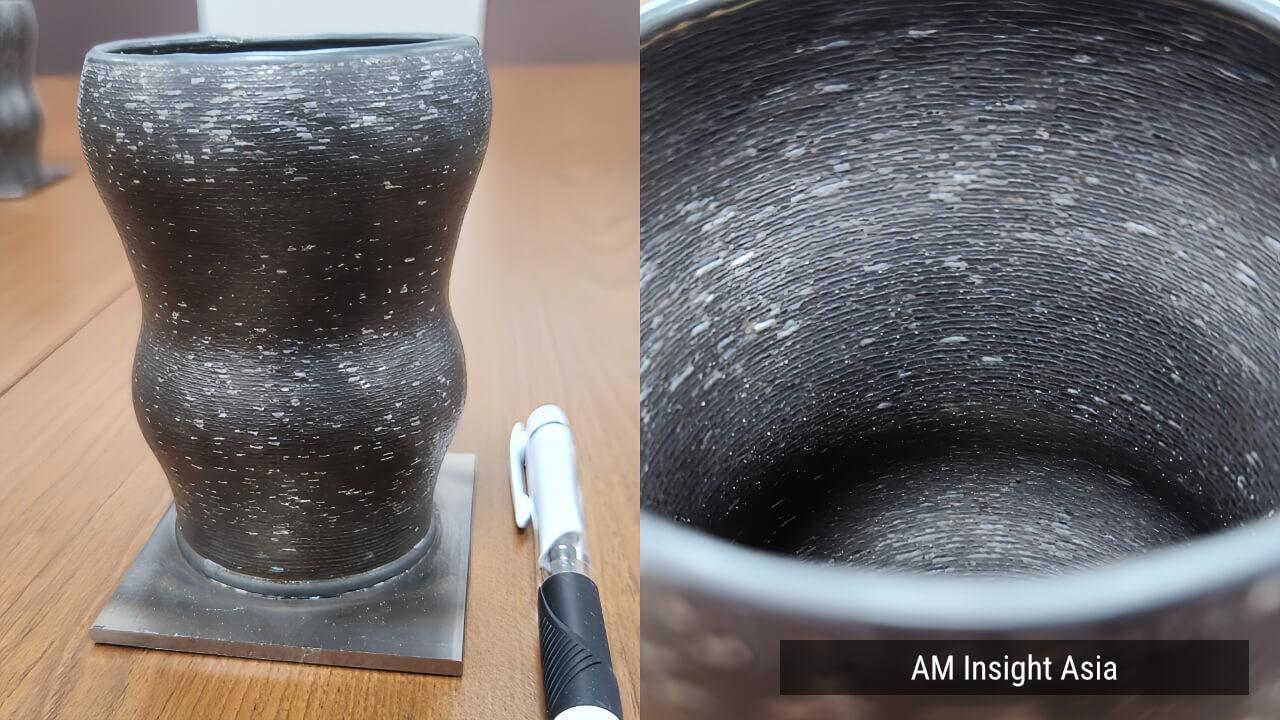
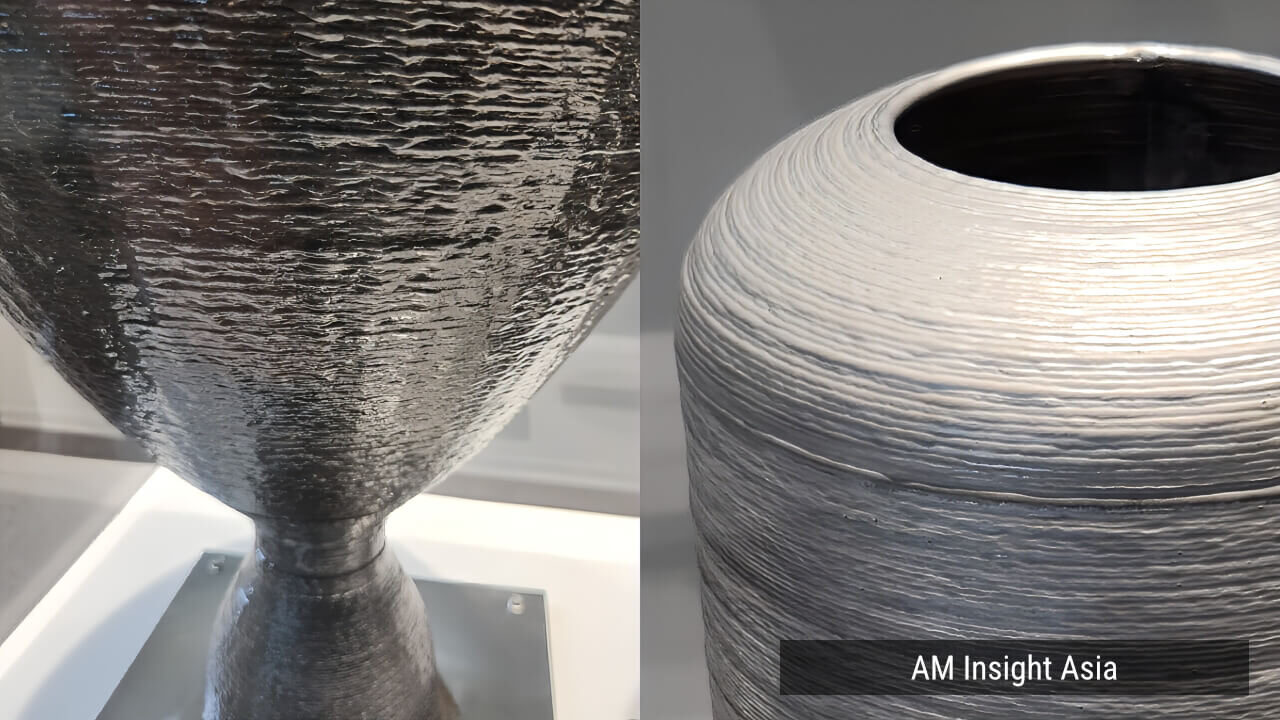
Most of these overseas players follow an integrator model, sourcing robots and welding power sources from outside suppliers and assembling them into a system. DAIHEN, by contrast, develops both the power source and the robot in-house. Owning the power source matters because it is central to controlling low-heat, low-current welding for a stable bead, and the parts we saw at DAIHEN’s development site had a smoother surface, with far less of the layer-line texture typical of conventional WAAM output, than the rough, uneven finish common elsewhere. This vertical integration, rather than relying on outside suppliers for core technology, is what sets DAIHEN apart technically from the specialist players overseas.
The other asset is its already-built global sales network, a decisive advantage over startups that must build distribution from zero. DAIHEN believes that moving from robots and welding equipment into WAAM is a natural extension of its existing service and sales expertise, rather than a leap into unfamiliar territory.
Starting With Repairs
DAIHEN’s chosen entry point is repair work, not mass production of new parts. In Japan especially, manufacturing new parts requires clearing standards set by classification societies such as NK, a significant barrier to entry. Repair and prototyping face a comparatively lower certification bar. This is less a fallback than a deliberate, staged roadmap built around that certification barrier. By pairing hardware sales with a contract manufacturing service, DAIHEN also aims to lower the entry barrier and reach machine-tool customers who fall outside its existing welding and robotics client base. As the design philosophy known as DfAM (Design for Additive Manufacturing) gains ground, the company is also eyeing an eventual move into mass-produced parts. It has not laid out specific plans for pursuing overseas standards such as ASTM or classification-society certification.
Since the official announcement, inquiries through DAIHEN’s domestic distributor network have picked up, and the company says it has fielded interest from several overseas competitors as well. Within Japan, customers in defense and other sensitive sectors had previously told DAIHEN they would prefer domestic equipment over machines from overseas makers.
AM Insight Asia Perspective
Japan’s metal AM industry has been slow to get off the ground domestically, and within that sluggish market, it has continued to lose ground to established Western players and emerging Chinese manufacturers. Our honest expectation was that any new domestic entrant would be, at best, a venture-scale attempt, and we had more or less made peace with that. That is exactly why a heavy-electrical incumbent with real resources behind it moving seriously into this space landed with more impact than we expected, and it was a welcome surprise.
Japanese companies have been acquiring overseas AM technology, Nikon’s purchase of SLM Solutions and TDK’s recent acquisition of Fabric8Labs among the examples. DAIHEN’s approach stands in contrast: it is building on its own technology and existing sales network rather than buying its way in. The six-year process behind this launch was not a response to that external trend. Still, in AMIA’s view, choosing to build organically rather than acquire is likely to change the competitive equation, on price and on quality, for the overseas WAAM specialists that have built their businesses on an integrator model, sourcing both robots and power sources from outside suppliers.
There’s another business implication worth flagging: the long-term potential of the repair market DAIHEN has chosen as its entry point. Around the world, plenty of operations keep old machinery running through repeated repairs rather than replacing it outright, and plenty more face long lead times getting spare parts to remote sites. If a single system can handle both new builds and repairs, there’s no added training cost for a separate skill set. With supply chain resilience now a global priority, the ability to serve that repair demand may end up mattering more than hardware sales themselves.