Raise3D Aims Its New Series at Mass Production
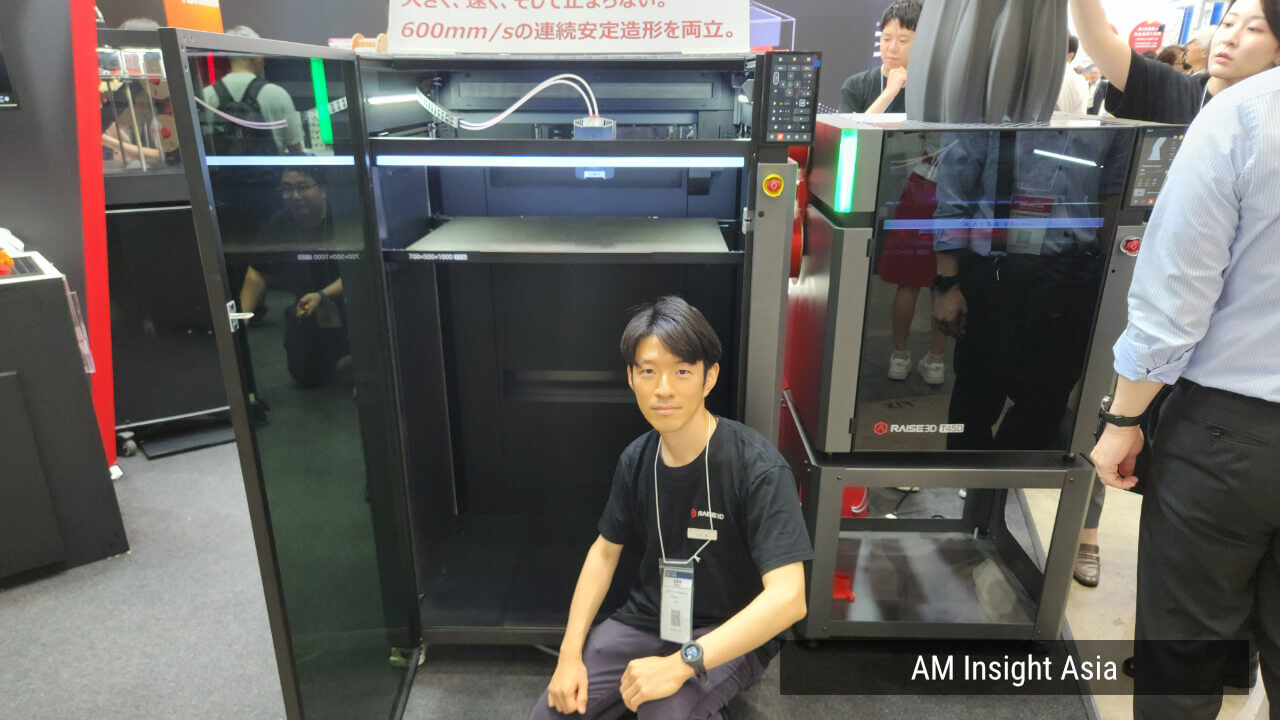
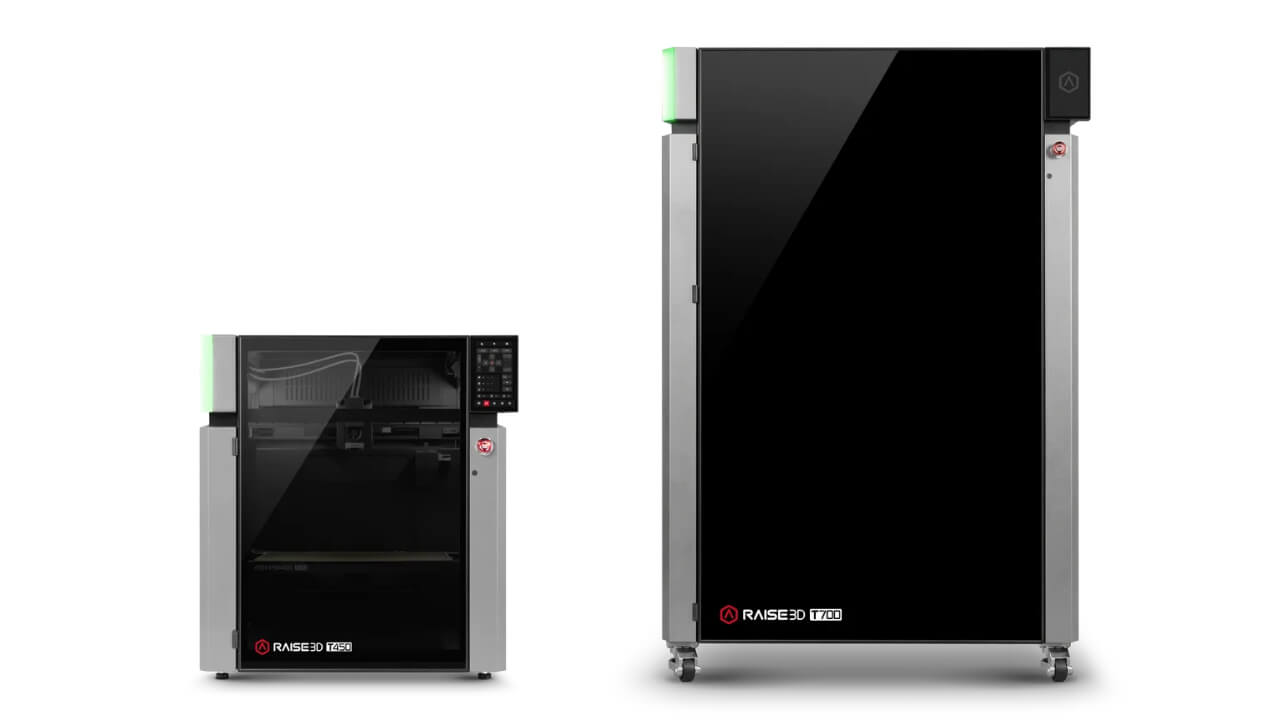
On July 1, the Next-Generation 3D Printing Expo opened at Tokyo Big Sight, part of Manufacturing World Tokyo, running July 1 through 3. At Raise3D’s booth sat two FFF 3D printers, Raise3D T450 and T700, that had not been announced anywhere. Neither appeared on the company’s website or in a press release. AM Insight Asia posted the news on LinkedIn from the show floor, and hours later Japan 3D Printer Co., Raise3D’s Japan distributor, published its own announcement. Raise3D’s global unveiling has not happened yet; it is expected around September. One impression worth noting from seeing the machines up close: for their build size, both have a surprisingly compact, uncluttered footprint.
T450 and T700 Specs Confirmed at the Show
Shared specs (T450 and T700)
- Max print speed: 600 mm/s
- Max head travel speed: 1,500 mm/s
- Max acceleration: 30,000 mm/s²
- Motion system: 4WD CoreXY (four-motor drive)
- Precision: IT11 level
- Nozzle temperature: up to 420°C, compatible with high-performance polymers including PEEK/LCP (per Raise3D’s on-site seminar)
- Frame material: aerospace-grade duralumin
- Extrusion: TwinFlow™ single-nozzle dual extrusion
T450-specific (new flagship production model)
- Build volume: 450 x 350 x 400 mm (63L)
- Unit size: 710 x 635 x 785 mm
- Unit weight: 72.9 kg
- Max daily output: 3.5 kg
- Success rate: 98% (per Raise3D internal testing data)
- Compatible materials: PPA CF, PPS CF, PC, TPU-95A, spanning industrial to prototyping use
- Unmanned production: 20+ sensors and dual AI cameras for automatic print-failure detection, electronic door lock
- Pre-orders open: July 1
- Shipping begins: October onward (planned)
T700-specific (large-format monolithic printing model)
- Build volume: 700 x 500 x 1000 mm (350L)
- Unit size: 964 x 792 x 1478 mm
- Unit weight: 150 kg
- Intended use: automotive parts, aerospace interior components, and other large parts previously built in sections
- Official launch: expected 2027
TwinFlow™: Why Faster Printing Doesn’t Starve the Nozzle
FFF printers use several different motion systems, and CoreXY is the one most widely used in high-speed machines. Regardless of motion system, a standard single-nozzle setup melts and extrudes one filament at a time, which means faster printing tends to outpace how quickly resin can melt and feed through. That has long been a structural bottleneck.
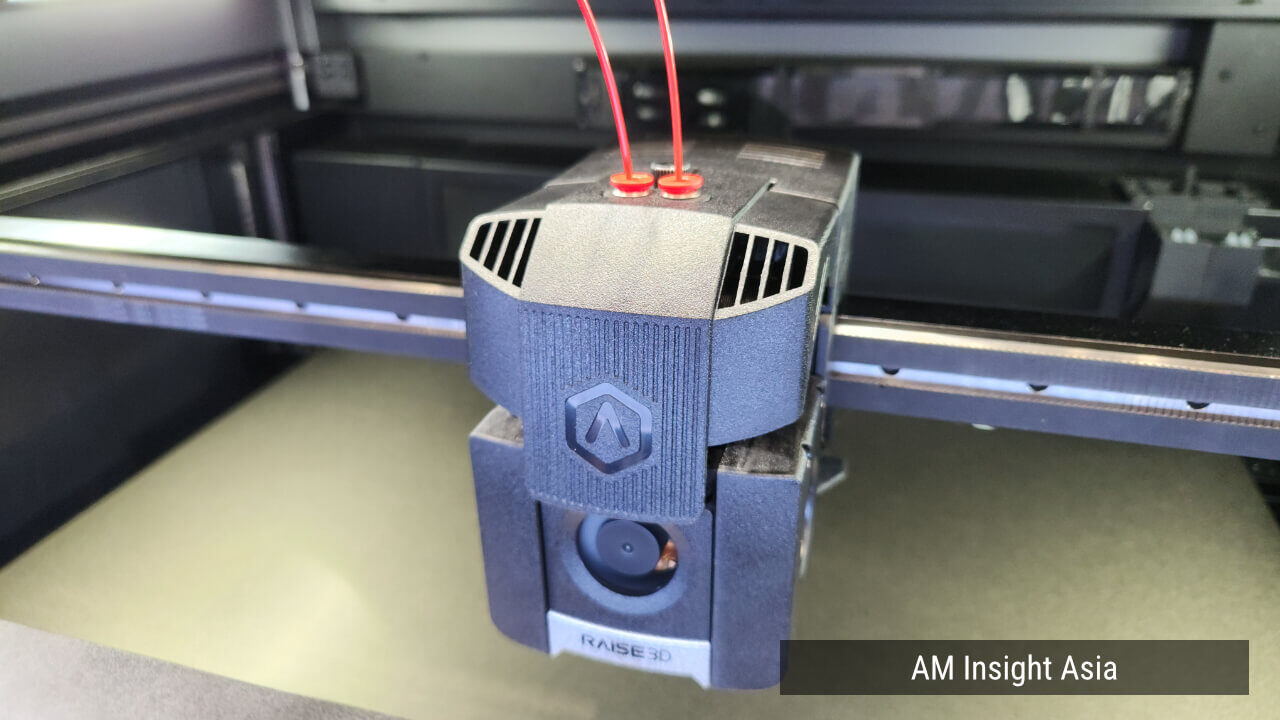
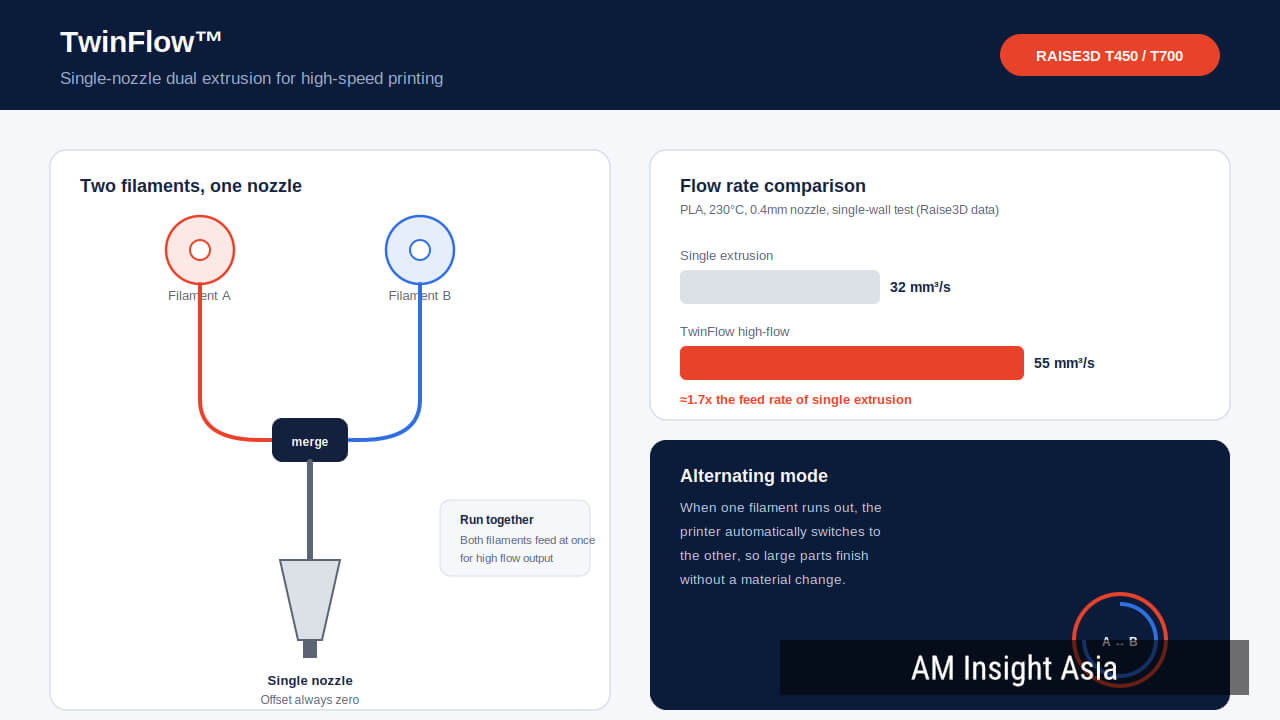
Raise3D’s TwinFlow™, built into both machines, is a single-nozzle system that merges two material paths into one nozzle. Melting two filaments at once and extruding through the shared nozzle increases the total feed rate, so supply can keep up even at higher speeds. Flow output in the high-flow dual mode reaches 55 mm³/s, about 1.7 times the single-extrusion rate of 32 mm³/s. Because there is only one nozzle, offset is always zero, removing the need for calibration.
Beyond running both filaments at once, the system also supports alternating operation: when one filament runs out, the printer automatically switches to the other, letting large parts finish without a material change.
4WD CoreXY: Balancing Speed and Precision
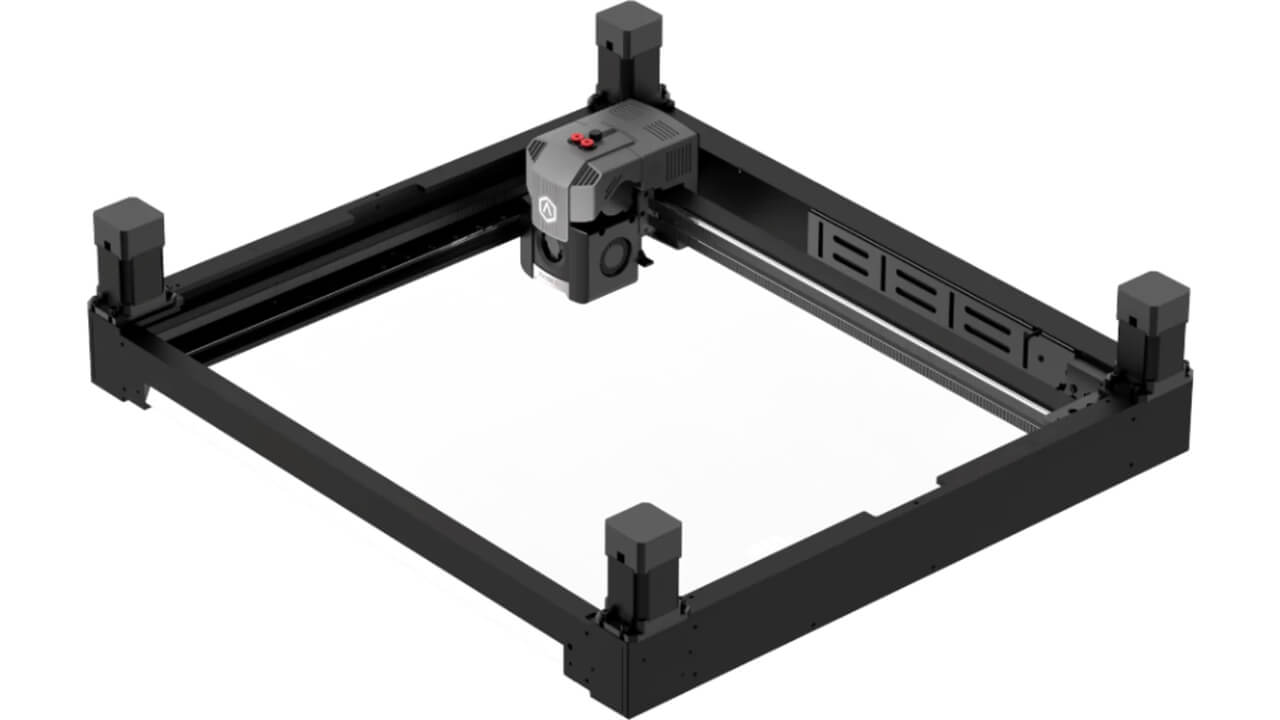
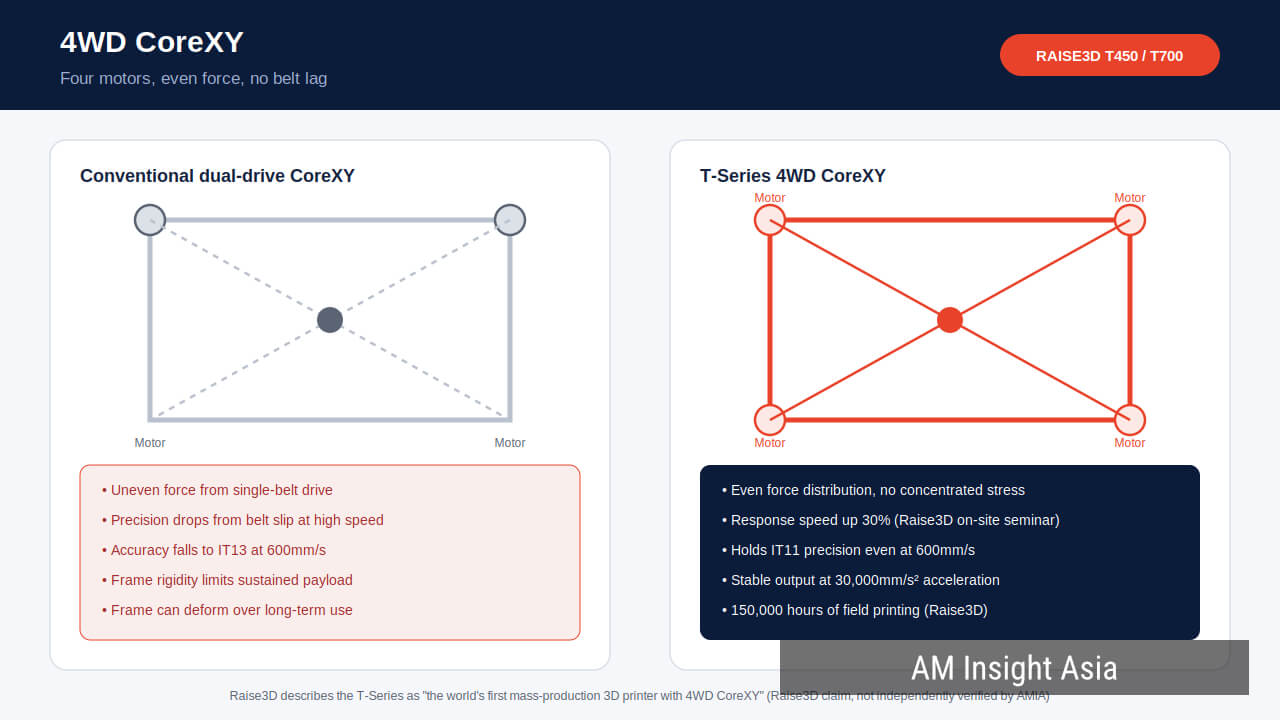
The high-flow output from TwinFlow™ only matters if the motion system can keep up, which is where the four-motor “4WD CoreXY” structure comes in. According to Raise3D, conventional dual-drive CoreXY setups suffer from uneven force distribution from single-belt drive and precision loss from belt slip at high speed. 4WD CoreXY is designed to solve that: even force distribution eliminates concentrated stress, and Raise3D said at its on-site seminar that response speed improves by 30%. The company says the printers maintain IT11-level precision even at 600 mm/s, and stable output even at 30,000 mm/s² acceleration.
Raise3D describes it as “the world’s first mass-production 3D printer with 4WD CoreXY,” claiming consistent precision from the first print to the hundredth and pointing to 150,000 hours of field printing as validation. Both claims come from Raise3D’s on-site presentation; AMIA has not independently verified them.
The AI Sensors Behind Unmanned Operation
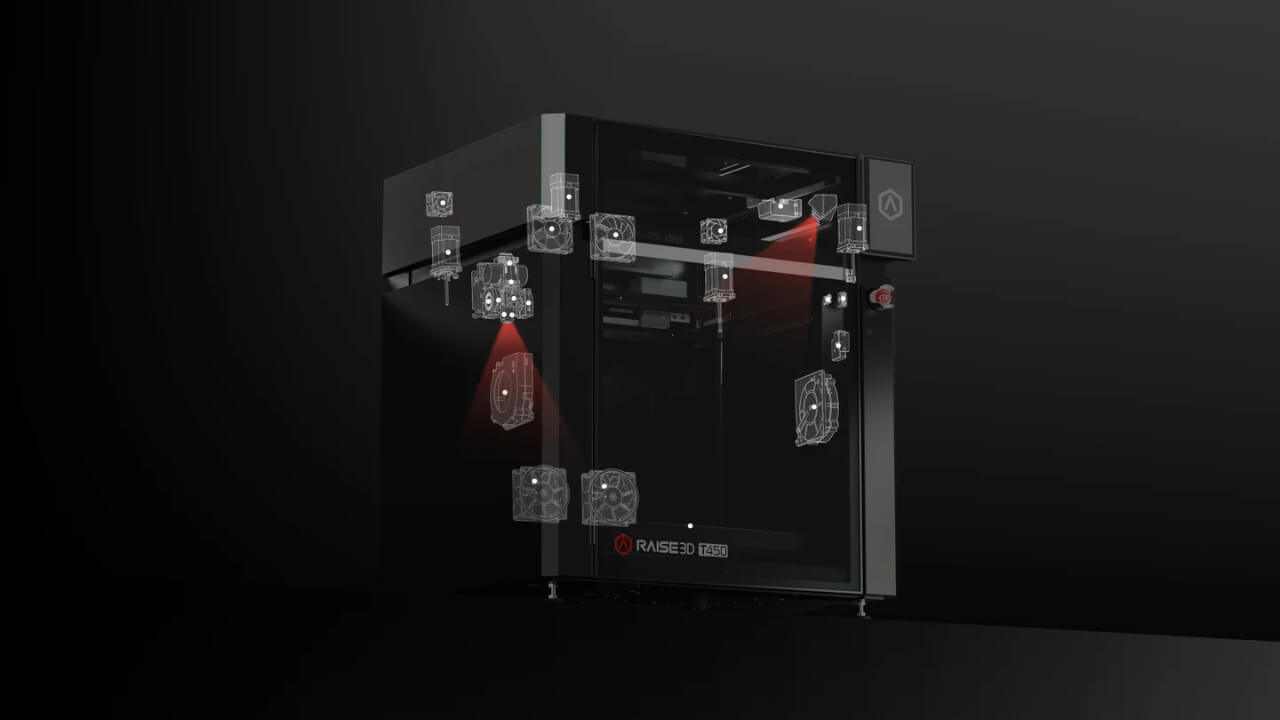
Running as production equipment means the machine can’t need someone watching it constantly. Both T450 and T700 carry 20+ sensors and dual AI cameras that detect print failures, such as spaghetti errors, and nozzle clogs in real time. Filament runout is also detected automatically, pausing the print safely to avoid wasted material or damage.
An electronic door lock prevents accidental door openings mid-print, guarding against failures caused by sudden chamber temperature drops. For low-temperature materials like PLA, an automated smart top window works with a cooling fan to handle exhaust and cooling on its own. Raise3D said at its seminar that these features cut labor costs by 60% (per Raise3D internal testing data) and support unattended overnight operation.
AMIA also noted a red physical emergency-stop button on the side of both units at the show, a hardware switch that halts printing instantly if something goes wrong. The spec sheet also lists power-failure recovery, letting a print resume on-site after an unexpected outage. For machines built around unmanned operation, these physical safety features belong in the same conversation as the software.
Why T700 Could Reach 350L
Large build volumes aren’t new on their own; Raise3D already sells the RMF500 (500 x 500 x 500 mm). What has limited large-format printers in practice is that bigger build volumes take longer to fill.
T700 reaching a usable 700 x 500 x 1000 mm (350L) production footprint looks, in AMIA’s read, downstream of TwinFlow™’s high-flow extrusion and 4WD CoreXY’s stable 600 mm/s speed, rather than the other way around. The size didn’t come first and get sped up afterward; the speed came first, and that is what made a build volume this large practical. This causal reading is AMIA’s analysis; Raise3D has not stated it directly.
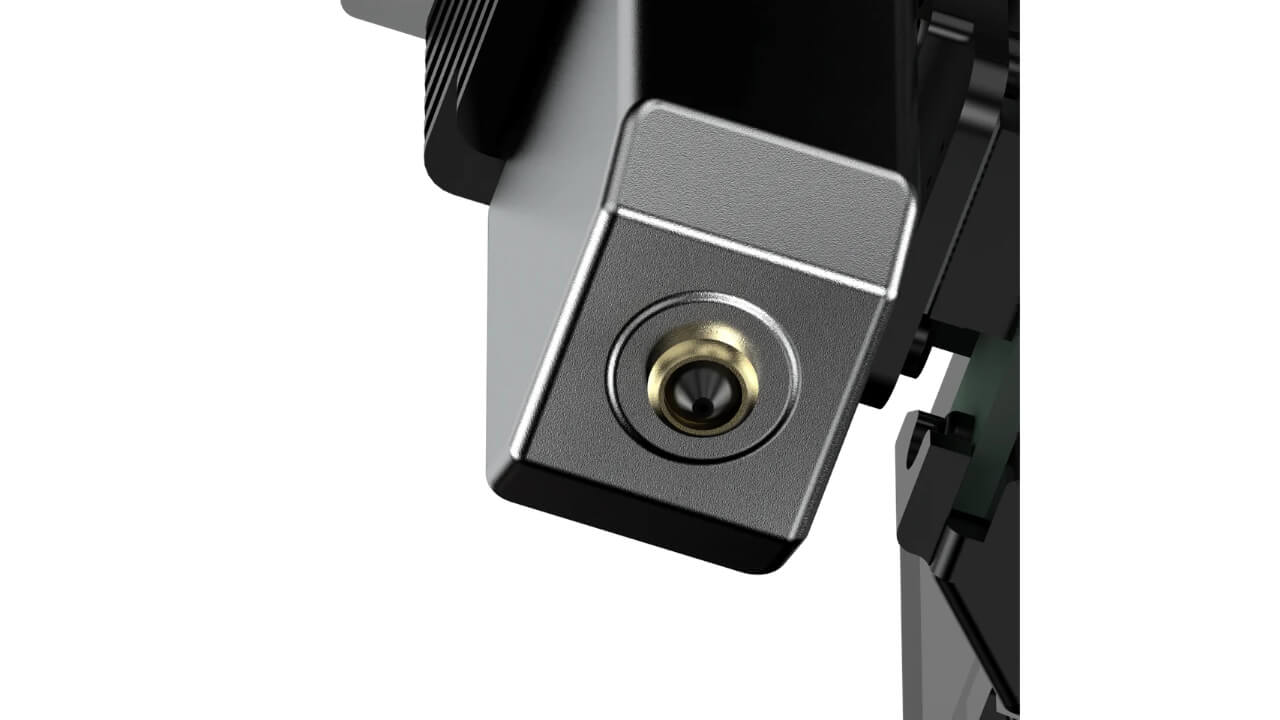
There is also a thermal margin worth noting. Larger build volumes and higher-flow extrusion both pull more heat out of the system, and heat loss mid-print is what drives warping and dimensional error. Both machines carry a 420°C nozzle ceiling and a 70°C chamber ceiling. At the on-site seminar, Raise3D described this temperature headroom as a “thermal reserve”: even without running the nozzle at its maximum, having that ceiling available helps keep temperature stable when melting large volumes of resin at high flow rates. This reading is AMIA’s analysis; Raise3D has not directly linked the headroom to precision.
This lines up with the stated goal: printing large, monolithic parts for use cases like automotive components and aerospace interiors within a practical build time, without splitting and gluing them together afterward.
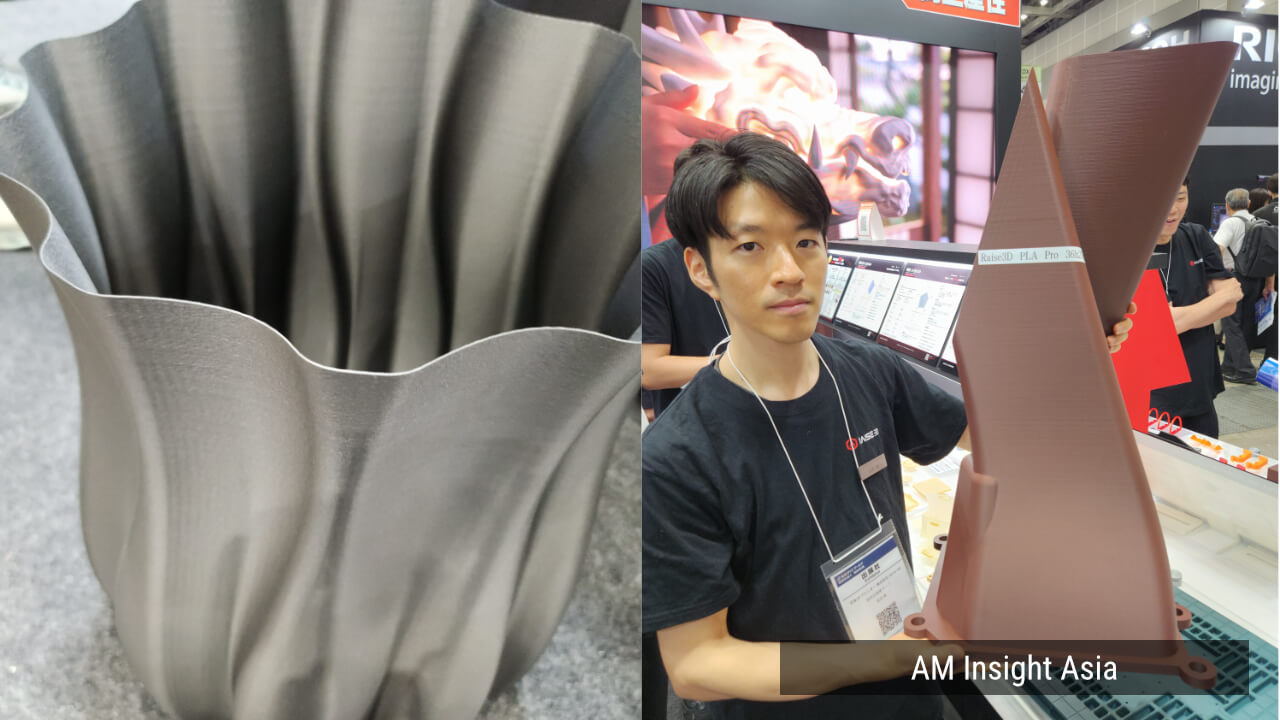
Japan 3D Printer Co.: The Distributor Behind the Numbers
Japan 3D Printer Co., Raise3D’s official Japan distributor, has held that role since February 2017. According to IDC, Raise3D held the number-one share of Japan’s professional FFF 3D printer market in 2018 and 2019.
The company’s cumulative installations in Japan now exceed 5,000 units, per its own site. AMIA’s read is that this track record owes as much to solution-oriented sales, going beyond simply moving hardware to work through customers’ manufacturing problems, as it does to the product itself. Having built the Japan market since Raise3D’s early years appears to underpin the trust it has earned from Japanese manufacturers.
AM Insight Asia Perspective
Mass production is already a normal use case for AM in China. Seen against that backdrop, Raise3D’s pivot from prototyping machines toward what it now calls printers for mass production reads as one more sign of that shift spreading across the Asian market. TwinFlow™’s high-flow extrusion, the sensor suite for unattended operation, the aerospace-grade frame: none of these read like a prototyping machine simply sped up. They read like equipment redesigned from the ground up for production. Worth watching is how a distributor with more than 5,000 units sold in Japan carries this new series into the market.
Showing the hardware in Japan ahead of its own global unveiling points the same direction. This reading is AMIA’s speculation; Raise3D has not stated it officially. When the global announcement lands around September, AMIA will be watching how Raise3D chooses to position this series.
On pricing: word reaching AMIA puts the T450 at roughly ¥1.4 million and the T700 at roughly ¥4 million. Treat this as unconfirmed; the numbers could shift by the time of the official announcement. But if they hold, the math is simple. Raise3D has already sold more than 5,000 units in Japan on the strength of print quality, spec, and reliability alone, in one of the toughest markets for this kind of hardware. Add pricing like that to a track record like that, and it’s hard to see a reason this wouldn’t sell.