This Is Not Just a Military Trial. It Is a Test of “Sending Manufacturing Capability” Itself.
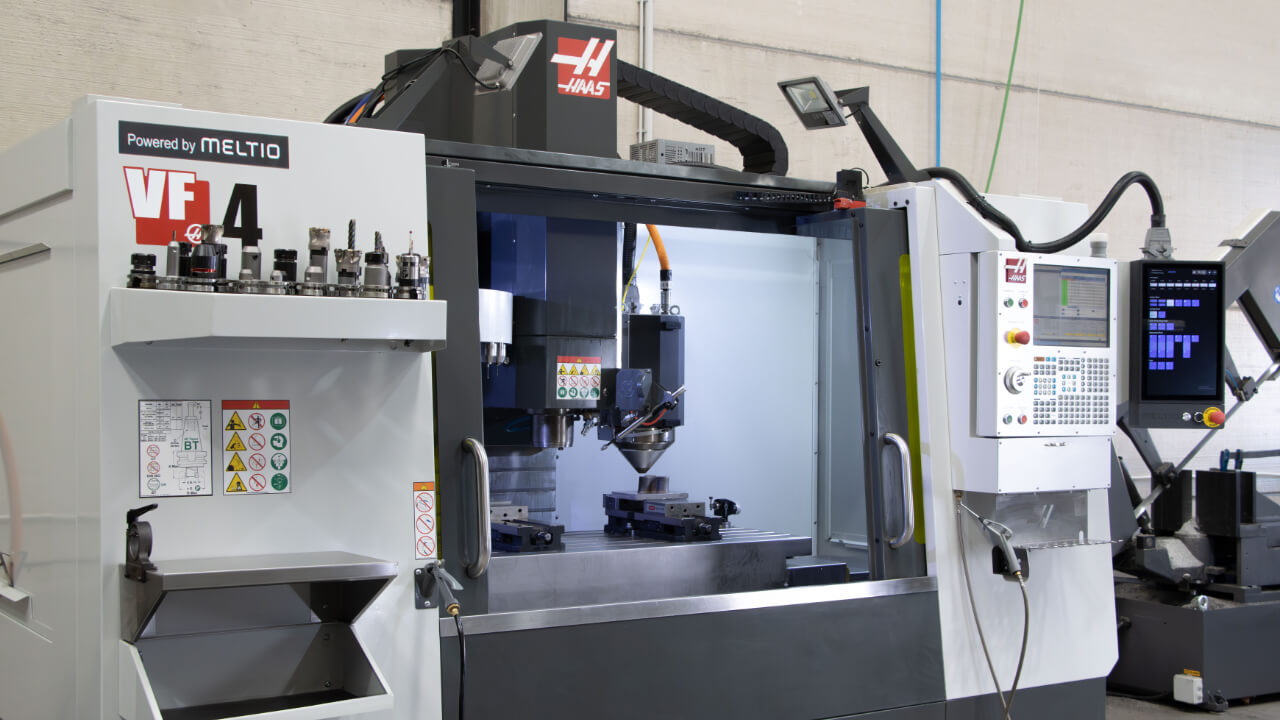
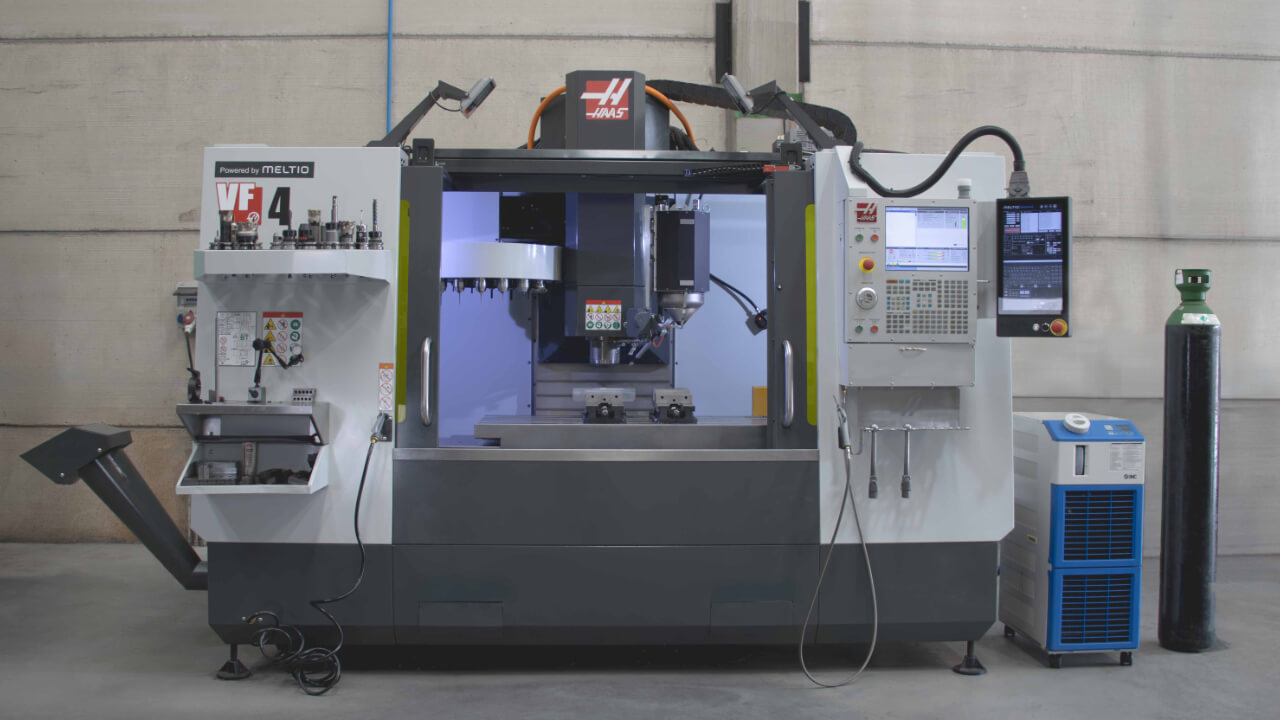
Phillips Corporation is participating in RIMPAC 2026 (Exercise Rim of the Pacific 2026) as part of a distributed advanced manufacturing network led by the Naval Postgraduate School’s Consortium for Advanced Manufacturing Research and Education (CAMRE). As part of CAMRE’s experiment, Phillips Federal is deploying a containerized system integrating a Haas TM-1P CNC platform with Meltio Blue wire-laser metal additive manufacturing technology aboard the USS ESSEX (LHD-2). The system will test metal 3D printing and precision machining in one of the most demanding environments a production system can face: an active naval vessel underway at sea.
RIMPAC 2026, the world’s largest international maritime exercise, runs from June 24 through July 31 around the Hawaiian Islands, bringing together approximately 25,000 personnel, 40 surface ships, five submarines, and 140 aircraft from 31 nations. Several Asian forces are also taking part, including Japan’s Maritime Self-Defense Force, the Republic of Korea Navy, Singapore, the Philippines, Indonesia, and Malaysia. Japan’s Maritime Self-Defense Force holds the role of Vice Commander of the Combined Task Force, while the Republic of Korea Navy serves as Combined Forces Maritime Component Commander.
What Kind of Ship Is the USS ESSEX
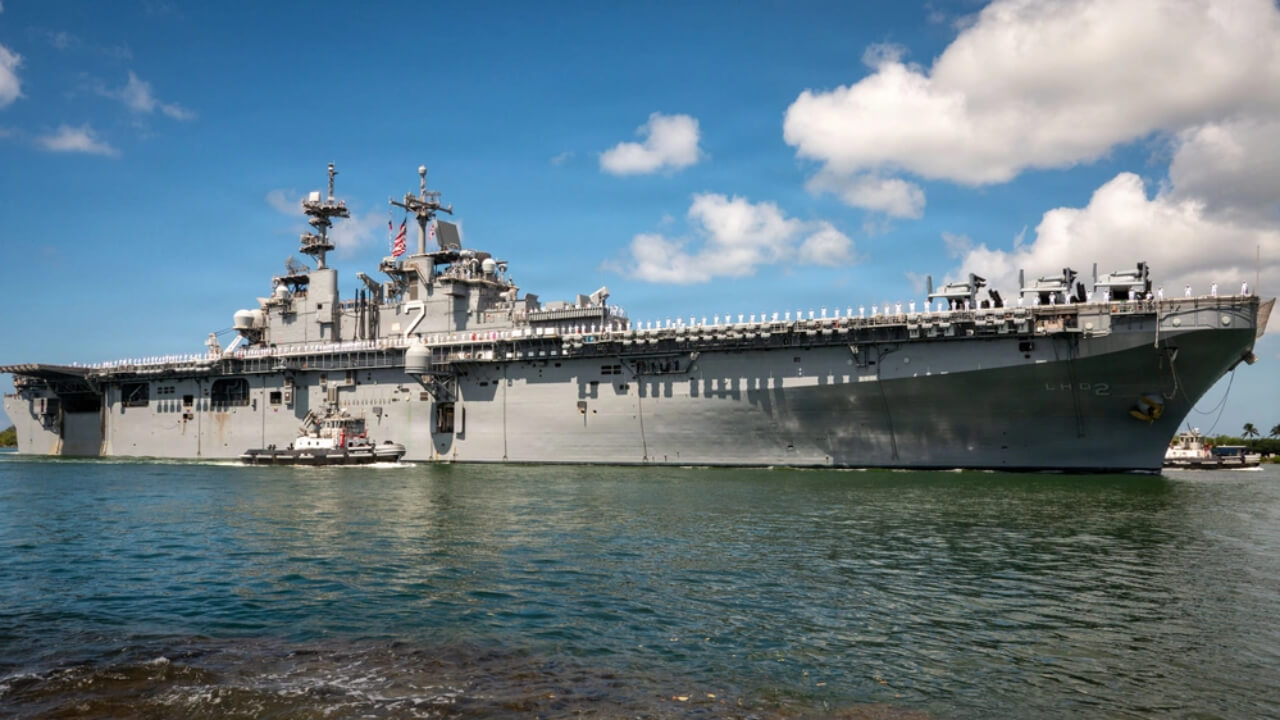
The USS ESSEX (LHD-2) is a U.S. Navy Wasp-class amphibious assault ship. At roughly 257 meters long with a full-load displacement of just over 40,000 tons, its scale is comparable to an aircraft carrier. It carries a flight deck that runs nearly the full length of the ship, capable of launching and recovering F-35Bs, helicopters, and MV-22 Ospreys. The ship can accommodate around 1,100 Navy personnel plus roughly 1,900 Marines, and its well deck, a flooded compartment at the stern, can launch landing craft and hovercraft.
The USS ESSEX arrived at Pearl Harbor, Hawaii on June 21, 2026, to take part in RIMPAC 2026. Homeported in San Diego, the ship has a track record spanning both military operations and humanitarian missions, including disaster relief after the 2011 Tohoku earthquake and tsunami and the 2004 Indonesian tsunami, as well as the first-ever F-35B combat strike, launched from Essex against a target in Afghanistan.
This is not the first time a metal 3D printer has been installed aboard the USS ESSEX. A 3D printer was delivered to the ship during RIMPAC 2022 as well. This year’s deployment goes further, integrating Haas CNC machining with Meltio’s wire-laser technology into a single hybrid system.
What Phillips Corporation and CAMRE Are
Phillips Corporation is a provider of advanced manufacturing solutions to government, defense, education, and commercial industries. Phillips Federal is its defense division, which has worked alongside the U.S. Department of Defense and the Naval Postgraduate School to advance deployable manufacturing solutions.
CAMRE, the Consortium for Advanced Manufacturing Research and Education, is a research and education consortium led by the Naval Postgraduate School. It connects government, industry, and academia, and works to network manufacturing assets across multiple locations to explore new approaches to distributed logistics and maintenance. The RIMPAC demonstration is part of CAMRE’s broader distributed advanced manufacturing experiment. FLEETWERX, a Partnership Intermediary for the Naval Postgraduate School, supports the effort by connecting government, industry, and academia.
Phillips and Meltio are not the only participants in CAMRE’s experiment at this year’s RIMPAC. CAMRE is working to bring together more than 50 advanced manufacturing nodes into an integrated network, aiming to produce readiness parts in days rather than months. On the hardware side, Snowbird Technologies is also participating, showcasing a containerized hybrid manufacturing system designed for seamless transition between maritime and onshore operations. Havoc, which builds autonomous resupply vessels, is contributing a demonstration of autonomous logistics across multiple locations. On the software side, a company called 3YOURMIND is providing a “digital thread” system that manages which unit needs which part, and which node’s equipment should produce it, covering part identification, order management, and production planning. Military officials involved have described the goal as something like “the Uber for manufacturing, delivered at the speed of Amazon.”
In other words, the Phillips and Meltio demonstration represents one node, aboard the USS ESSEX, within this larger distributed manufacturing network that CAMRE is working toward.
Why an Amphibious Assault Ship
The USS ESSEX is not a cargo vessel. It is an amphibious assault ship, designed to carry Marines, aircraft, and landing craft from the sea directly to shore. That distinction is worth noting. While the press release does not specify this, given the characteristics of an amphibious assault ship (LHD), it may be structurally possible for this containerized manufacturing system to be craned ashore and set up as a forward production site on land, not only operated aboard the ship. Whether this is actually tested during this exercise remains unclear, but it echoes how Meltio’s technology was previously deployed with the Republic of Korea Marine Corps, where a container-based metal 3D printer could be relocated by crane or forklift to support field maintenance. The possibility that a sea-based system could also become a land-based production site is worth watching.
CAMRE frames this effort as part of a larger vision. By connecting advanced manufacturing assets across multiple locations into a collaborative network, the consortium says it continues to explore new approaches to distributed logistics and maintenance in contested environments. The USS ESSEX deployment represents one node in that broader network.
What the Ship’s Environment Actually Demands
Some assumptions about operating manufacturing equipment at sea do not hold up to scrutiny. Naval vessels are engineered to protect sensitive equipment from the marine environment. Ventilation intakes are positioned to avoid rain and spray, and interior spaces are kept pressurized with filtered air to prevent salt-laden outside air from reaching internal compartments. Power is not a constraint either. The USS ESSEX generates roughly 52,000 kW of electricity, comparable to the demand of a small city, far more than a CNC machine and a wire-laser deposition system require.
The real test lies elsewhere. Metal deposition can take a considerable amount of time, depending on a part’s size and shape. DED is faster than PBF, but some parts will still require extended run times. Across a five-week exercise spanning the Pacific, the system will almost certainly need to run while the ship is underway. How the Haas CNC and Meltio system perform under the ship’s motion while underway remains an open question, and one this exercise may help answer. Material resupply at sea and the handling of metal fumes generated during laser deposition and machining in a confined space are also factors this experiment is designed to test.
“RIMPAC provides an opportunity to evaluate how advanced manufacturing can help solve real sustainment challenges for the fleet,” said Brian Kristaponis, President of Phillips Additive Manufacturing Solutions. “When critical parts are unavailable through traditional supply channels, the ability to manufacture or repair components closer to the point of need can help improve readiness and keep systems operational.”
Why Combine Wire-Laser Deposition With CNC
Supplying parts in the field is not simply a matter of being able to print something. What is actually needed in the field is a part that can be used.
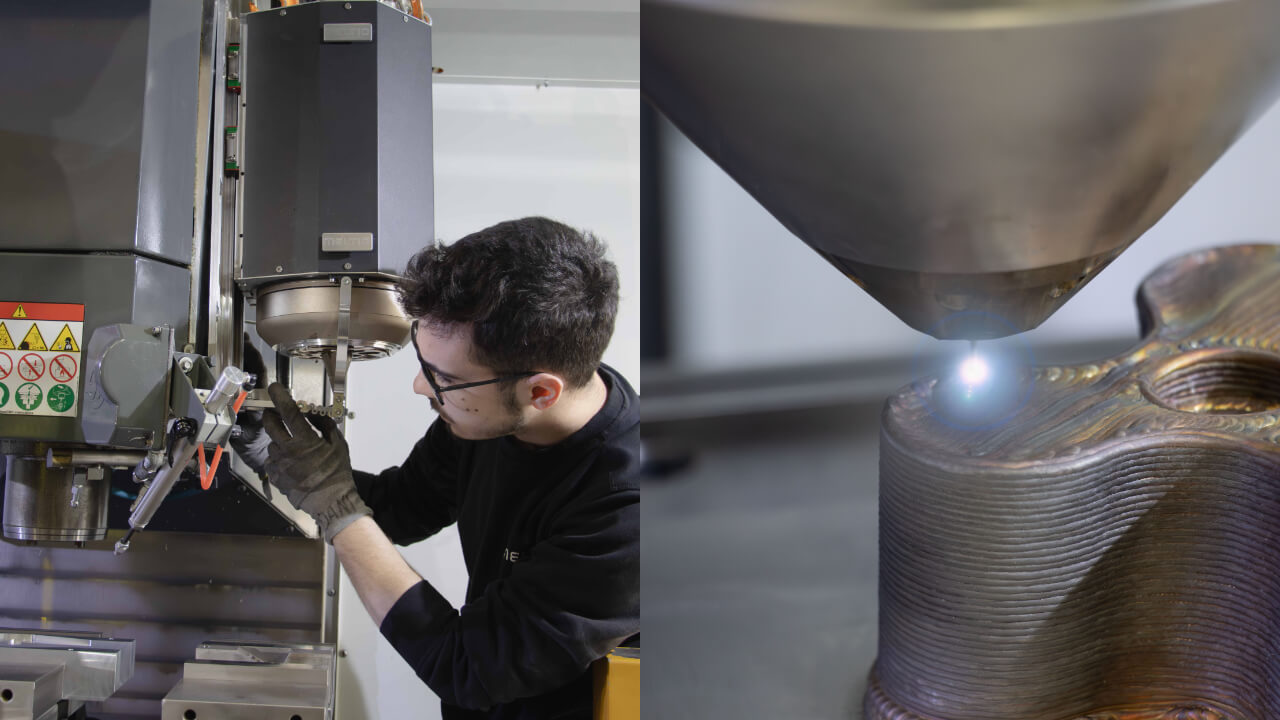
The system builds a part to near-net shape, close to its final form, quickly, and then a CNC finishes only the surfaces that require dimensional precision. Phillips and Meltio have paired these two processes to complete that workflow in a single setup.
What matters here is that Phillips and the U.S. military chose Meltio’s wire-laser process over powder bed fusion (PBF). PBF relies on metal powder, which requires dedicated handling equipment and safety measures and is difficult to manage in confined spaces like a ship’s interior. The powder is also explosive and risks contaminating a CNC machine sharing the same space. Meltio uses standard welding wire instead, which is easier to handle than powder and can be integrated into the same machine as the CNC. Deposition is also faster than PBF, suited to quickly finishing usable parts in the field.
Phillips first achieved this combination in June 2025, becoming Meltio’s first partner worldwide to integrate the Meltio Engine Blue into a Haas CNC machine. The Haas TM-1P deployed at RIMPAC builds on that achievement.
Looking at the actual structure of the Meltio Engine Blue, the deposition head, mounted alongside the spindle on the CNC machine, carries nine 1000W blue (450nm) direct diode lasers and weighs about 80.5 kg. It is air-cooled, and the laser is factory-aligned, requiring little to no adjustment in the field. Wire is fed coaxially into the melt pool, the small pool of molten metal created where the laser melts the metal, along the same axis as the laser itself, resulting in minimal material waste. It supports a wide range of metals, including stainless steel, carbon steel, nickel alloys, titanium, and copper alloys. These characteristics translate into lower maintenance demands when operating in the limited space and with the limited personnel available aboard a ship.
AM Insight Asia Perspective
RIMPAC brings together forces and organizations from 31 Indo-Pacific nations, including Japan’s Self-Defense Forces. The challenge this experiment addresses, supply chains that cannot reach where they are needed, is not only a wartime problem for many participants.
The Asia-Pacific region experiences some of the world’s most frequent and severe natural disasters. When ports, roads, or factories are destroyed, the bottleneck is rarely a shortage of finished goods sitting somewhere else. It is the inability to get replacement parts, pipe fittings, or repair components to the site itself. The USS ESSEX has done this kind of work before, supporting relief operations after the 2011 Tohoku earthquake and tsunami and the 2004 Indonesian tsunami.
This is not just a military trial. It is a test of “sending manufacturing capability” itself, and that is exactly why it matters beyond defense, for disaster response and infrastructure recovery as well. Whether the destination is a contested shoreline or a disaster-struck coastline, the same idea applies: instead of shipping the finished part, ship the ability to make it.
DED (directed energy deposition), machining, and robotic-arm mobility. This combination may be becoming a standard configuration for fields that need to manufacture on-site, whether military or disaster response. It is a single integrated system that can be transported to where it is needed and complete the process from near-net shape to finished part, rather than relying on a fixed factory. The same system can build a part from scratch or repair one that is worn or damaged.
And that points to the scale and potential of the broader DED market.
Source:
・Phillips Corporation Press Release: RIMPAC 2026 Military Exercise (Phillips Corporation)
・Havoc to Demonstrate Autonomous Systems Alongside U.S. and Allied Forces at RIMPAC 2026 (PR Newswire)
・Meltio Engine CNC Integration Kit (Meltio)
・USS Essex (LHD 2) arrives at Pearl Harbor for RIMPAC 2026 (DVIDS, Photo by Petty Officer 1st Class Brandon Roberson, U.S. Navy)