43 Printers, 8 Processes, 19,000 Parts a Year: Asian Automakers’ Race to Insource Additive Manufacturing Heats Up
On August 21, 2026, China’s FAW Group opened its Additive Manufacturing Innovation Center at the “2026 Science and Technology Conference.” The opening came just 16 days after Hyundai Motor and Kia opened their own Additive Manufacturing Solution Center (AMSC) in South Korea on August 5, a sign that the race among Asia’s automotive giants to bring additive manufacturing in-house has entered a new phase.
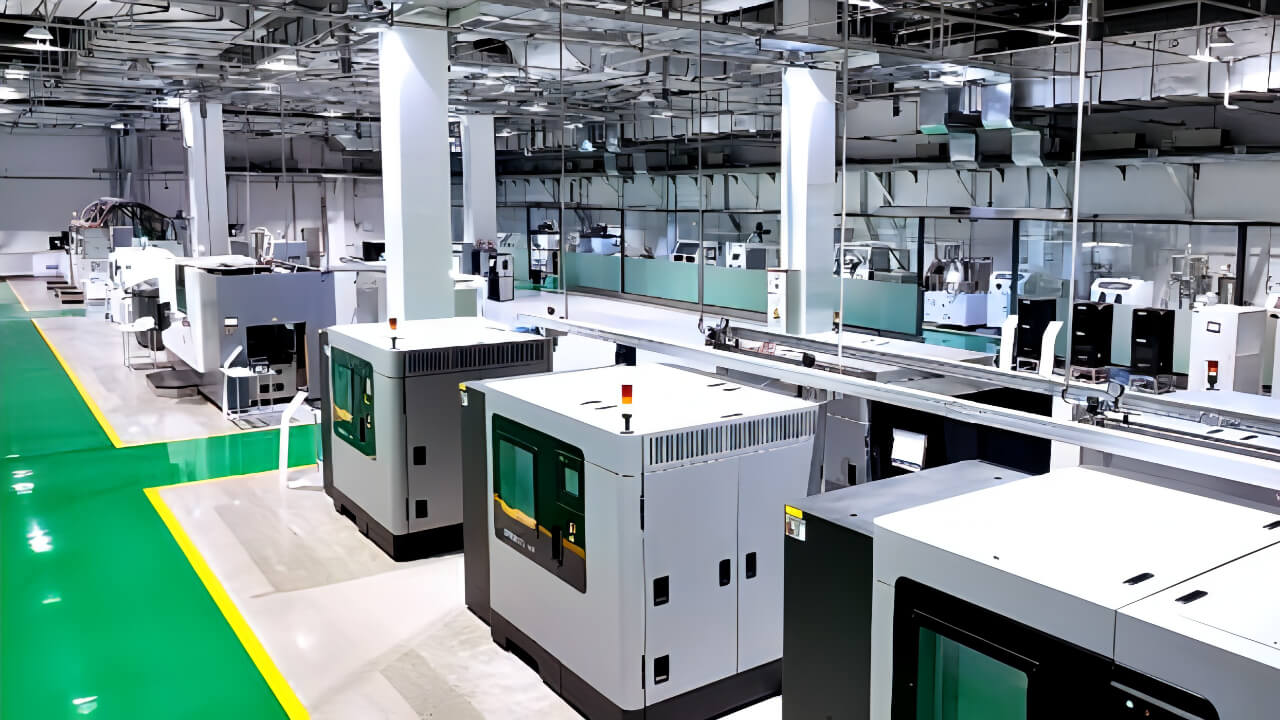
Inside FAW’s New AM Facility: 8 Processes, 43 Machines, 19,000 Parts a Year
FAW posted 3.302 million vehicle sales and revenue of RMB 541.55 billion (roughly $80.7 billion at August 2026 exchange rates) in 2025, ranking fourth among Chinese automakers by domestic sales, behind BYD, SAIC, and Geely. The center it just opened is the country’s first additive manufacturing platform built specifically around automotive applications. Inside FAW, it goes by the nickname “Super Printing Factory.”
The facility runs eight mainstream AM processes across 43 industrial-grade printers, giving it the capacity to produce roughly 19,000 parts a year. Its scope spans the full value chain, from R&D validation and small-batch production to tooling, aftermarket parts, and personalized customization.
FAW frames the value of additive manufacturing around three ideas. Freedom from design constraints opens up topology optimization and biomimetic structures that older manufacturing methods couldn’t achieve. Freedom from waiting on tooling means digital models can drive printing directly, sharply compressing R&D cycles. And structural consolidation, folding multiple parts into a single printed shape, delivers weight savings and manufacturing efficiency that traditional methods can’t match.
The results are already tangible. For interior components on models like the Hongqi Jinkuihua and certain special vehicles, engineers combine 3D printed substrates with genuine leather wrapping and steam treatment to mass-produce parts, cutting costs by a combined RMB 30.59 million (about $4.6 million) compared with traditional methods. Structural components made with selective laser melting (SLM), including single-cylinder engine heads and catalytic converter end cones, now match the mechanical performance of conventionally cast parts, opening the door to replacing cast components in production. The technology has also been used for high-precision reproductions of the Dongfeng Xiaojinlong, China’s first domestically built passenger car from 1958, and classic Hongqi models.
Proven Cost Savings in Mass Production Set FAW Apart from Hyundai and Kia
Major automakers in the West and Japan, including Toyota and Volkswagen, have more than two decades of experience with additive manufacturing. But that experience has been concentrated in prototyping and small-batch parts. FAW’s approach stands out for applying AM directly to mass-produced interior components and putting a concrete number on the savings, an application that remains rare internationally.
FAW’s investment in AM didn’t start with this launch. Trade press reports indicate FAW installed a dual-laser metal AM system, the FS421M-2, from Farsoon Technologies as early as 2021, building internal AM expertise well before this center existed. The new facility consolidates that earlier work into a single site and extends it into mass production.
Hyundai and Kia’s AMSC, located inside the Namyang R&D Center in Hwaseong, South Korea, brings together more than six AM processes under one roof, spanning polymer methods (DLP, SLA, polymer PBF) and metal methods (LPBF and DED, including WAAM). Its technical breadth rivals FAW’s. But its publicly disclosed use cases center on prototyping, tooling, motorsport parts, and reverse-engineered reproductions of legacy vehicles. No cost-savings figures for mass-produced parts have been disclosed.
Both companies share a common vulnerability, too. Some of the metal powders and photopolymer resins that AM depends on are still imported, leaving procurement costs exposed to currency swings even as the facilities themselves move in-house.
AM Insight Asia Perspective
FAW and Hyundai/Kia opening dedicated AM facilities just 16 days apart marks a turning point in how the auto industry treats additive manufacturing, shifting it from scattered prototyping and tooling equipment spread across departments into permanent, centralized infrastructure that now extends to mass production. Using AM for prototypes and tooling is nothing new; Toyota and Volkswagen have done it for more than two decades. What’s changed isn’t whether automakers use the technology, but whether they concentrate that use in one dedicated facility and extend it into mass production. In other words, AM’s status is being upgraded from a convenient tool individual departments reach for to production infrastructure for the entire company.
That shift doesn’t end with insourcing the facility itself. FAW still depends on imported metal powders and photopolymer resins, so bringing the “box” in-house and localizing what goes inside it remain separate problems. Measured against Beijing’s longstanding push for self-sufficient control over supply chains, localizing AM materials looks like the next logical target.
Whether other Chinese manufacturers like BYD and Geely, or Japanese manufacturers like Toyota and Nissan, follow FAW and Hyundai/Kia into dedicated AM facilities is worth watching next. Whether owning a dedicated AM facility becomes standard equipment for Asian automakers, or stays a bet only a handful of early movers make, will likely become clear over the next few years.
About the Company
China FAW Group Co., Ltd. (中国第一汽车集团有限公司), commonly known as FAW, is a state-owned automaker headquartered in Changchun, Jilin Province. Construction of its predecessor, the No. 1 Automobile Manufacturing Plant, began in 1953. FAW produced China’s first domestically built truck under the Jiefang brand in 1956, followed in 1958 by the country’s first domestically built passenger car under the Dongfeng brand and its first luxury car under the Hongqi brand. Today the group operates its own brands, including Hongqi, Jiefang, and Bestune, alongside joint ventures such as FAW-Volkswagen, FAW-Audi, and FAW Toyota. It ranks among China’s four major state-owned automakers.
Source
- 国内首个以汽车应用为核心的增材制造创新平台揭牌 (via State-owned Assets Supervision and Administration Commission of the State Council, August 26, 2026)
- Inside HMG’s Digital R&D Revolution ③: 3D Printing (via Hyundai Newsroom, July 31, 2026)
- An inside perspective on China’s thriving metal additive manufacturing industry (via Metal AM magazine, January 2025)
- 一汽定调2026:销量354.6万,营收5700.4亿 (via Auto Daily, January 14, 2026)