A mold-free production infrastructure built to keep pace with the fast-moving Physical AI race
On August 5, Hyundai Motor and Kia unveiled their first dedicated 3D printing facility, the Additive Manufacturing Solution Center (AMSC), at the Namyang Research and Development Center. Nearly three decades after installing their first industrial 3D printer in 1996, mold-free manufacturing finally has a purpose-built home.
Inside AMSC: Production Infrastructure Without Molds
AMSC occupies a newly built facility within the Advanced Mobility Solutions building at the Namyang R&D Center. It’s the first site Hyundai and Kia have built specifically for additive manufacturing (AM) research and production.
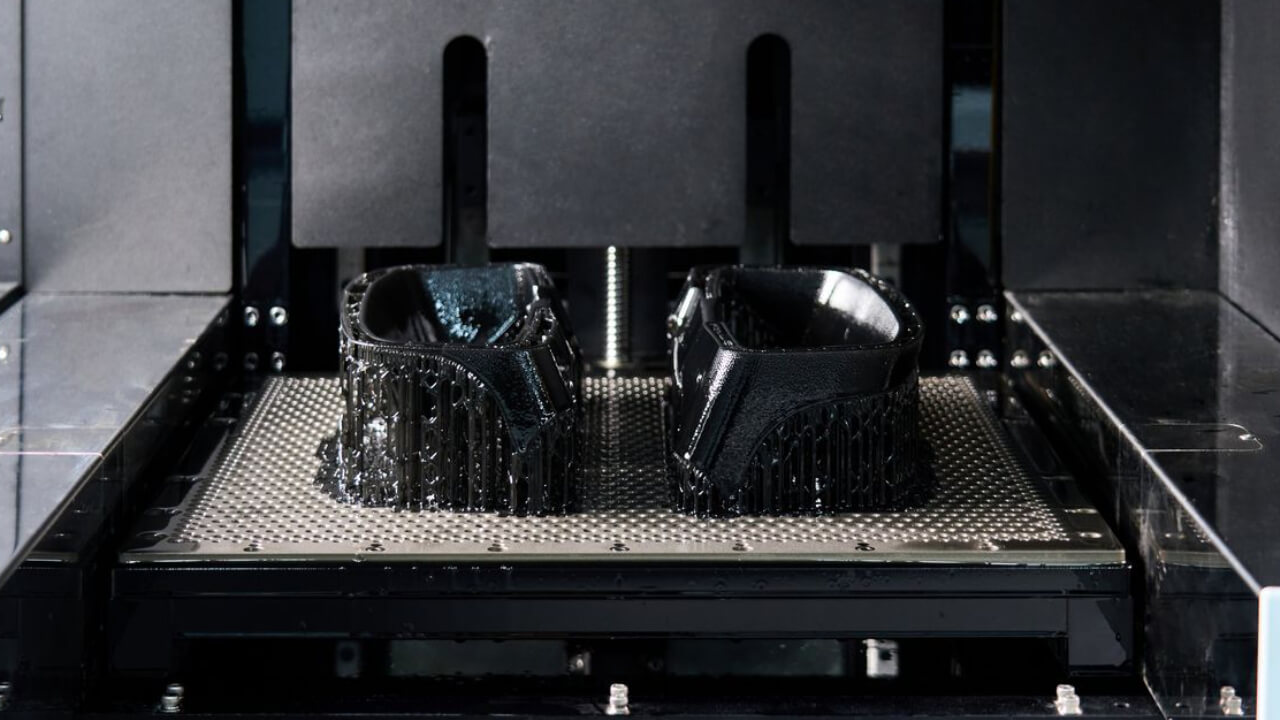
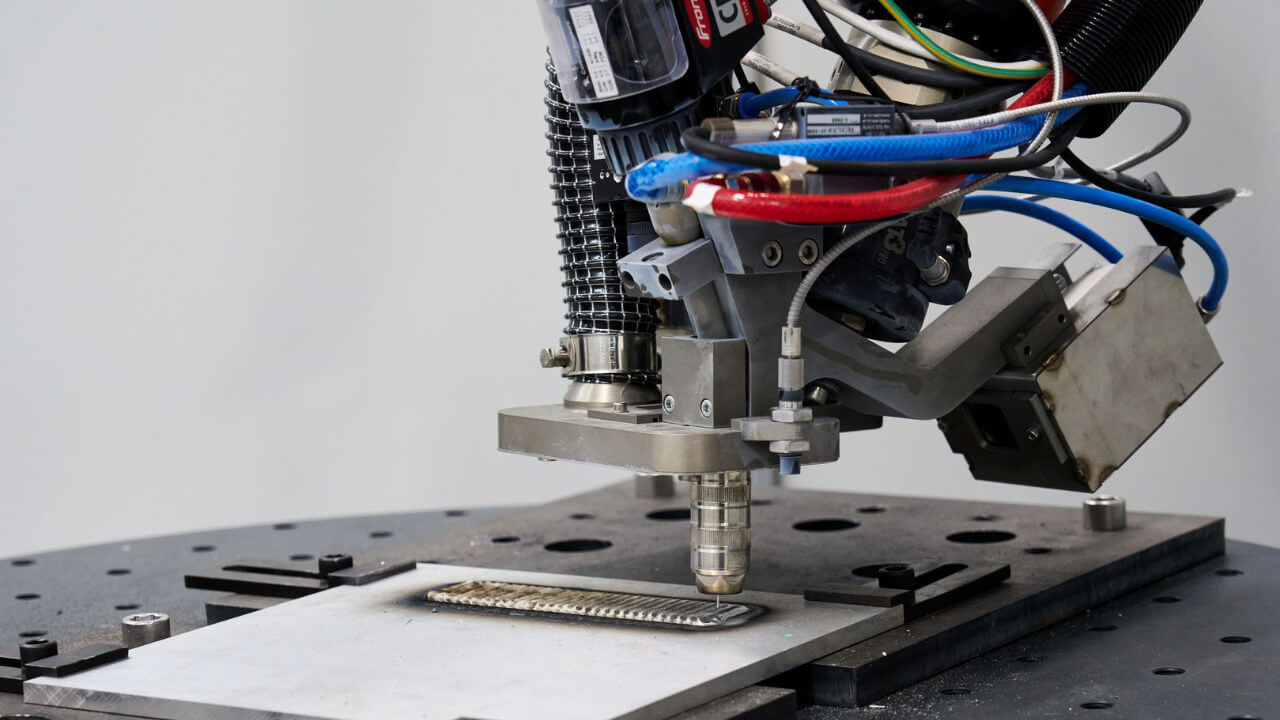
The center runs multiple printing processes spanning both polymer and metal: vat photopolymerization (DLP, SLA) cures resin with light for precision parts, Polymer PBF fuses powdered polymer layer by layer, and Metal PBF and DED-WAAM handle metal components. Depending on the application, it covers everything from dimensionally precise prototypes to large structural parts that would be difficult to cast or machine as a single piece.
Beyond running the hardware, AMSC is also building out Design for Additive Manufacturing (DfAM) capabilities, consolidating parts and using lattice structures to cut weight.
Every printed part passes through a quality-verification stage called the Quality Inspection Cell, where dimensions, tensile strength, bending stiffness, and impact resistance are checked against production-grade standards. In-house material verification and metallurgical analysis back up that testing, ensuring printed parts meet the same quality bar as conventionally manufactured ones.
Applications span the full range of vehicle development: prototypes, development parts, manufacturing jigs and fixtures, and service parts for discontinued models or urgent replacements, exactly the territory where conventional tooling struggles. Heritage restoration is one example, illustrated by a Hyundai Pony side-sill component that engineers reconstructed through 3D scanning and reverse engineering, right down to the original surface finish.
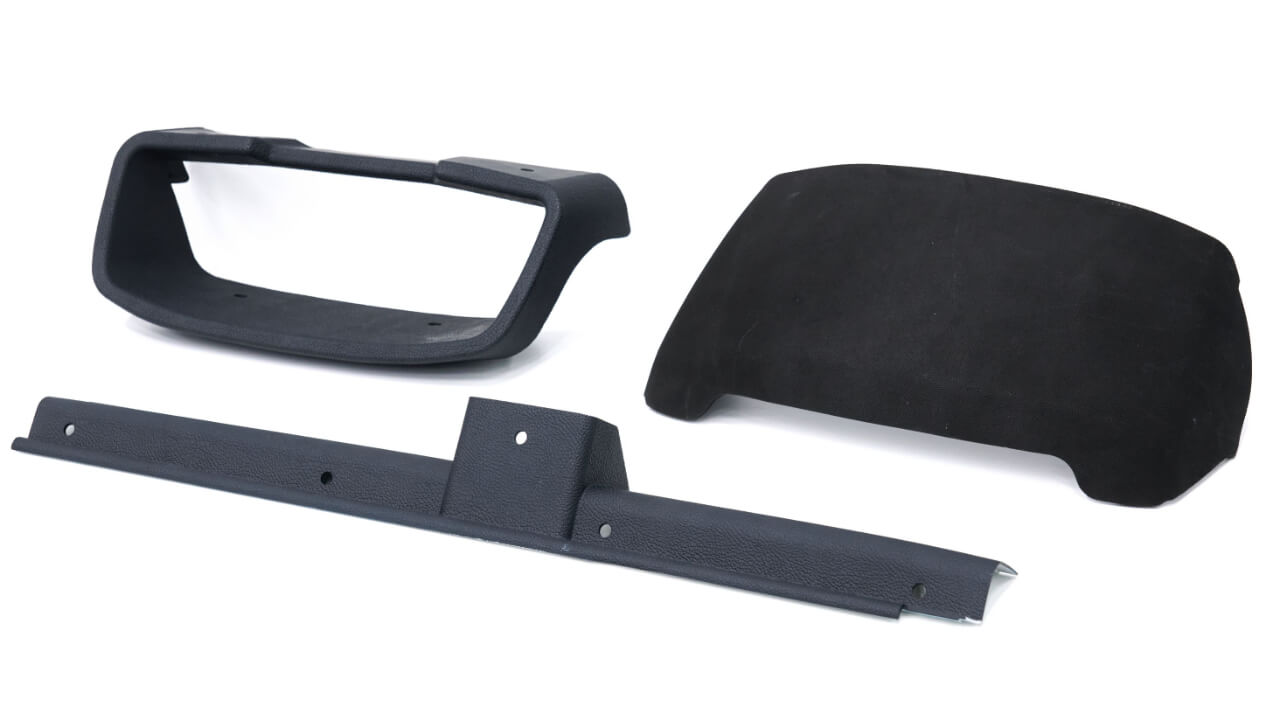
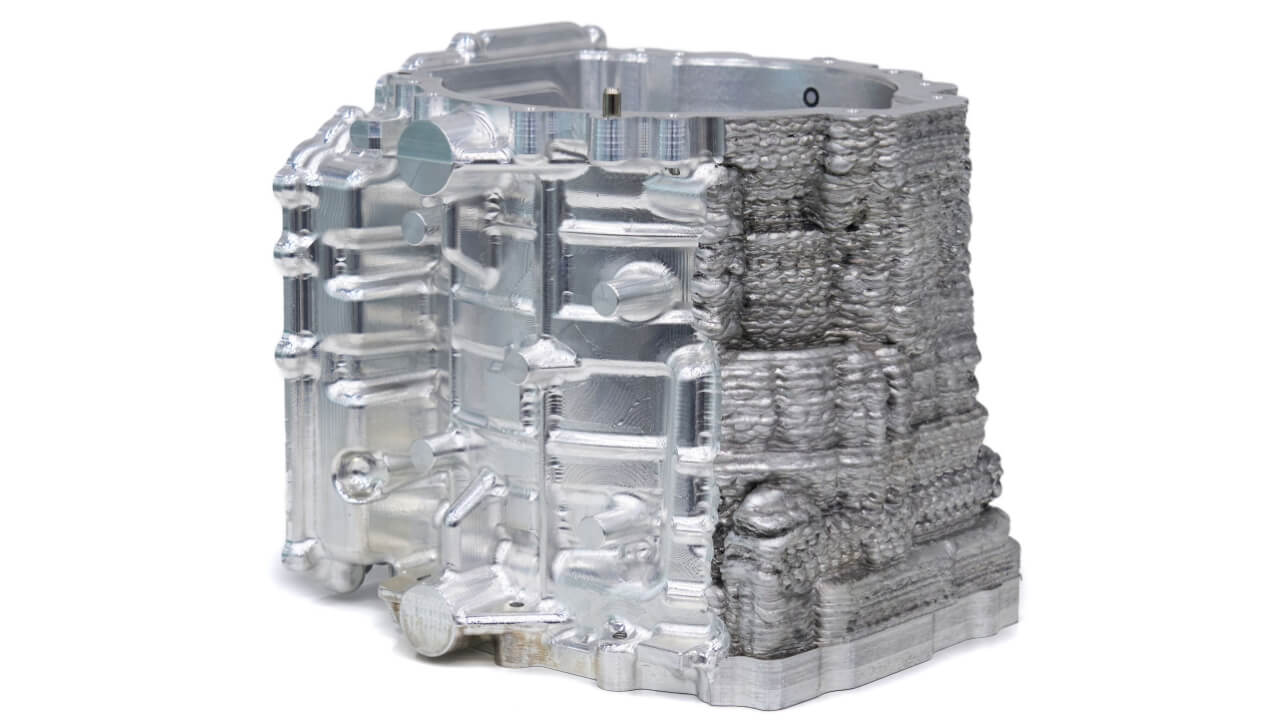
In motorsports, the center produces parts such as anti-roll bar blades, damper brackets, and brake duct rails, where the balance between light weight and rigidity matters most. One motor housing was displayed twice: once as-printed via WAAM, and once finished by CNC machining, illustrating the full workflow from printing to post-processing.
“We are rapidly internalizing additive manufacturing technologies through a growing range of applications across the Group,” said Hanwoo On, Senior Manager of the Additive Manufacturing Solutions Team. “Beyond vehicle components, we are expanding their use in high-value applications such as equipment consumables and manufacturing tools.”
This is the third installment in a four-part series in which Hyundai Motor Group profiles the digital R&D infrastructure at its Namyang center, covering the Driving Simulator, the Digital Measuring Center, AMSC, and NOVA Lab.
From Outsourced Service to In-House Infrastructure, Three Decades in the Making
The roughly three decades between that first printer and this dedicated facility doesn’t mean Hyundai was slow to act. It more likely reflects how long it took to build a quality-assurance system, both technically and procedurally, robust enough for AM parts to be trusted in production. The dimensional, strength, and metallurgical checks handled by the Quality Inspection Cell answer AM’s long-standing question: printing a part is one thing, but can you certify it for production? Building that verification capability was arguably the real precondition for opening a dedicated center at all.
The other shift is in how additive manufacturing itself is positioned. Rather than farming out each one-off prototype to an outside print bureau, AMSC keeps design, printing, post-processing, and verification entirely in-house. It’s built to catch exactly the demand that outsourcing tends to handle poorly: low-volume, high-mix work like motorsport parts or spares for discontinued models.
AM Insight Asia Perspective
In AMIA’s view, the timing of AMSC’s unveiling is not a PR coincidence. It reflects a substantive alignment: the infrastructure Hyundai Motor Group needs is falling into place just as it moves to build out its Physical AI business in earnest.
Physical AI is evolving at a pace that outstrips even other fast-moving corners of AI. A robot’s joint structure, a self-driving car’s sensor layout, the weight of an actuator: none of that gets solved on a whiteboard. It gets solved by building hardware, running it, breaking it, and rebuilding it again. That iteration speed is what actually decides who wins. Boston Dynamics, which Hyundai has placed at the center of its robotics strategy, has been answering exactly this problem with 3D printing for years. The latest generation of its Atlas humanoid uses titanium and aluminum printed actuators with hydraulic lines built directly into the structure, cutting weight while holding strength. Because AM skips the mold entirely, each new design generation can go into production without a new tooling investment or the lead time that comes with it.
And for Hyundai, Physical AI isn’t just about humanoid robots. At the San Francisco AI Summit, Executive Chair Euisun Chung laid out a vision that starts with “intelligent devices” such as vehicles and robots, expands to “intelligent spaces” like AI factories, and ultimately reaches a “city-level integrated intelligence” where urban infrastructure operates as one connected system. In AMIA’s reading, cars and robots sit in the same category here not because a car has AI bolted onto it, but because a car may be a robot that happens to be shaped like one. If that’s the right way to read it, the order flips: what Hyundai is looking at isn’t “a car with AI inside” but “a robot that happens to be car-shaped,” treating both as AI with a hardware body.
Seen this way, AMSC outgrows its role as a parts factory for cars. If the robot’s body just happens to be shaped like a car, then the ability to prototype and revise that body quickly, without a mold, becomes infrastructure for the entire fast-moving Physical AI race. Hyundai’s own AMSC writeup never mentions robotics or Physical AI directly. But if a car is read as “a robot shaped like a car” rather than “a vehicle with AI inside,” the AM capability built for automotive parts can double as infrastructure for Hyundai’s broader Physical AI ambitions, in AMIA’s view.
About the Company
Hyundai Motor Company, headquartered in Seoul, South Korea, is the core automaker of Hyundai Motor Group. The company has expanded into robotics and Physical AI in recent years, placing Boston Dynamics at the center of its robotics strategy as part of a push beyond traditional automotive manufacturing.
Kia Corporation, also headquartered in Seoul, is a Hyundai Motor Group automaker and sister company to Hyundai Motor, sharing development sites such as the Namyang R&D Center.
Source
- [Inside HMG’s Digital R&D Revolution ③] 3D Printing: How Hyundai Motor and Kia Accelerate Product Development Through Additive Manufacturing (via Hyundai Motor Group Newsroom, Aug 5, 2026)
- Hyundai Motor Group Executive Chair Euisun Chung Announces Physical AI Vision at San Francisco AI Summit (via Hyundai Motor Group Newsroom, Jul 24, 2026)
- Atlas 2024 – Robot Details, Use Case and Specifications (via Aparobot)