
Orthotics and Prosthetics Go Digital as Medical AM Takes Root Across Asia
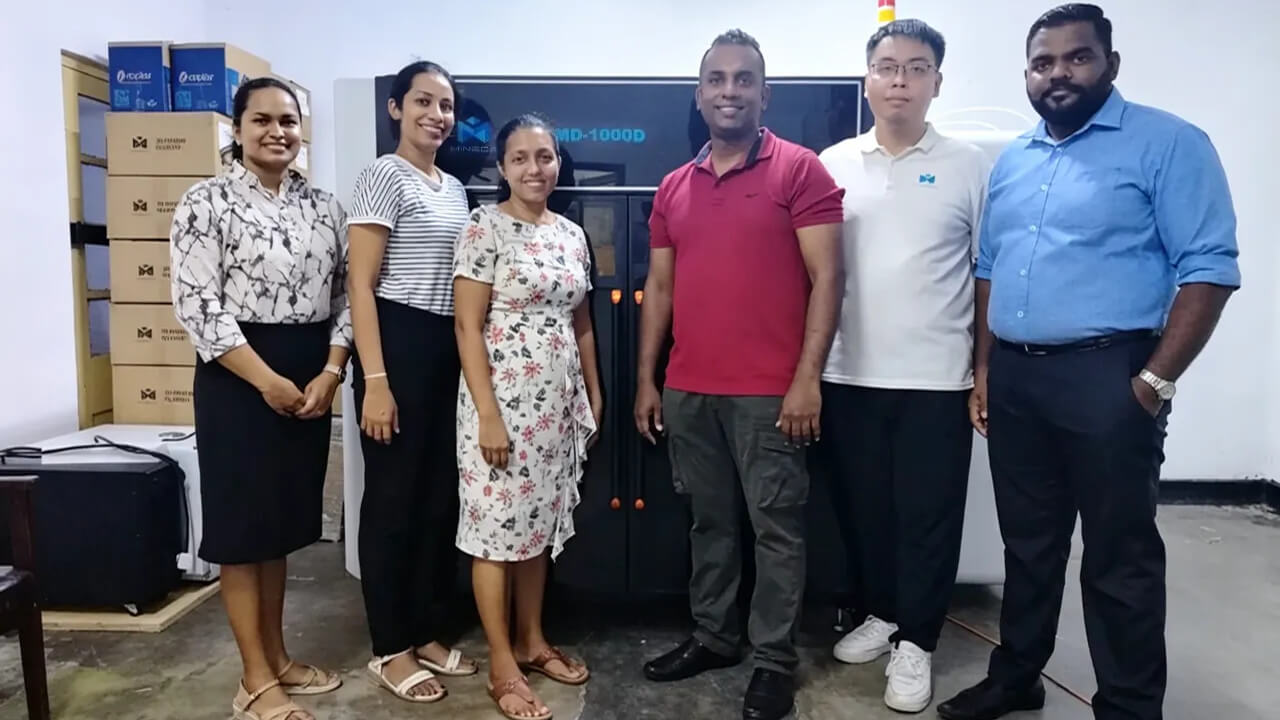
In June 2026, Chinese industrial 3D printer manufacturer MINGDA entered into a strategic partnership with the National Hospital of Sri Lanka (NHSL) and delivered its FDM-based industrial 3D printer, the MD-1000D. The hospital has begun using medical 3D printing to fabricate orthotic devices and prosthetic components, marking a shift away from the manual, plaster-cast-dependent processes that have long defined rehabilitation care in the country.
The Reality Facing Sri Lanka’s Healthcare System
Sri Lanka is a South Asian island nation of approximately 22 million people, with a per capita GDP of around USD 4,200 (2024). In 2022, the country was struck by a severe economic crisis — a shortage of foreign currency left hospitals struggling to import medicines and medical equipment. Although the economy has since recovered, posting 5.0% real GDP growth in 2024, the damage to the country’s healthcare system runs deep.
Sri Lanka operates a universal public healthcare system in which consultations at government hospitals are provided free of charge. While this guarantees access for all citizens, rehabilitation medicine — orthotics and prosthetics in particular — has been severely underdeveloped. High-quality imported devices are prohibitively expensive. Local fabrication capacity, both in terms of skilled technicians and equipment, is insufficient. The patients who need these devices exist. The means to reach them have not. That has been the reality of Sri Lanka’s medical frontline.
The Limits of Plaster Casts and Manual Labor
The National Hospital of Sri Lanka is the country’s oldest, largest, and most comprehensive public hospital. It serves as the central hub of the national healthcare system, handling critical care, complex disease treatment, medical training, and public health services for patients across Sri Lanka and neighboring regions.
For decades, the fabrication of orthotic devices and prosthetics has depended on plaster casting, manual shaping, and repeated fitting adjustments — a process that routinely takes seven to fourteen days. The resulting devices are often heavy, poorly ventilated, and imprecise in fit. For adolescent scoliosis patients and amputees in particular, the quality of fit directly determines rehabilitation outcomes and quality of life.
Four Clinical Applications Transformed by Medical 3D Printing
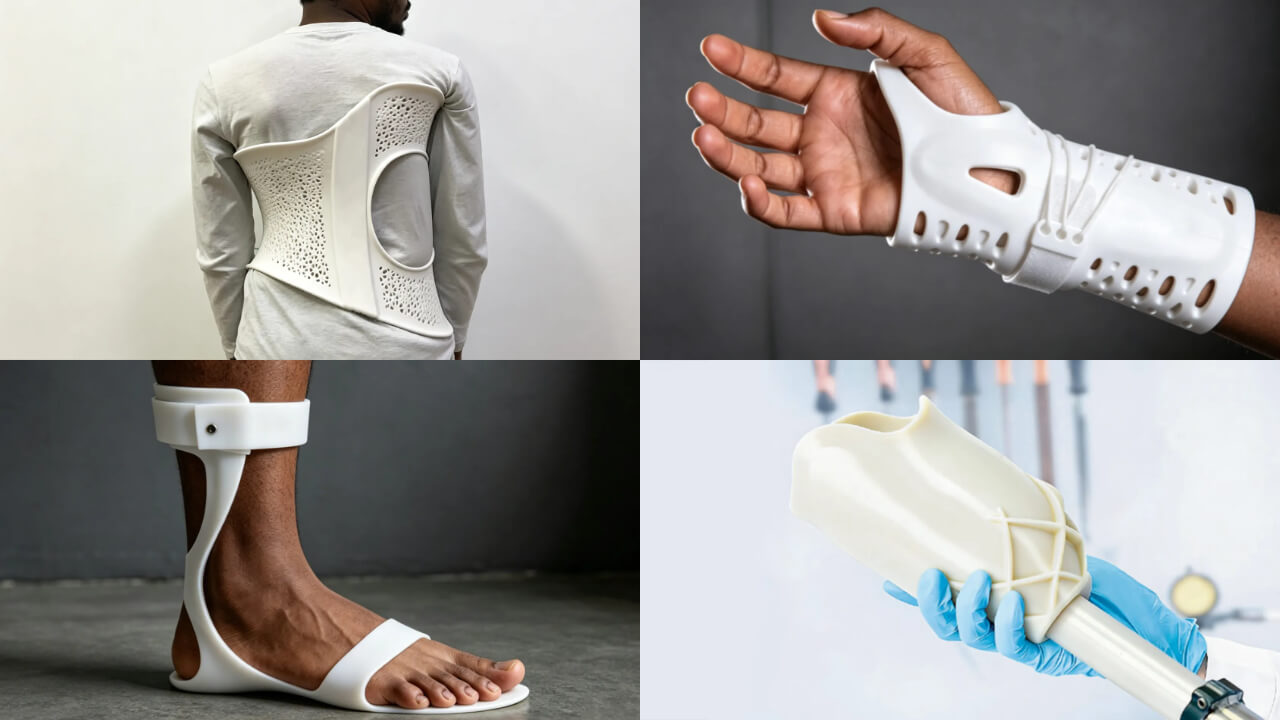
The hospital’s deployment targets four clinical areas.
Scoliosis orthoses: Precisely modeled to match spinal curvature and torso contours, combining uniform mechanical support with lightweight, breathable construction. The result is improved wearing compliance and stronger support for early conservative treatment.
Hand functional orthoses: Designed for fracture fixation, post-stroke spasticity correction, and nerve injury rehabilitation. The devices support wrist and finger joints with a balance of stability and mobility to accelerate functional recovery.
Foot orthoses: Addressing flat feet, foot drop, ankle injuries, and pediatric foot development disorders. Optimized plantar pressure distribution corrects deformity and improves walking stability.
Prosthetic sockets: High-precision sockets printed to match individual residual limbs. Reduced friction and pressure sore risk help amputees regain mobility and independence more quickly.
MINGDA: An Industrial 3D Printer Maker Reaching 180 Countries from Shenzhen
Founded in Shenzhen, China in 2012, MINGDA is an industrial 3D printer manufacturer with FDM technology at its core. The company produces over 10,000 units per month and holds major international certifications including CE (European safety standards), FCC (US radio frequency authorization), and ROHS (hazardous substance regulations). Its products are now exported to more than 180 countries.
MINGDA’s flagship lineup centers on large-format industrial machines with build volumes ranging from 600mm to 1,000mm per side, serving customers in medical, aerospace, automotive, marine, and education sectors. The MD-1000D delivered to NHSL sits at the upper end of that range.
Behind MINGDA’s global reach is an aggressive distributor and reseller strategy. The company has built a network of local partners worldwide and offers OEM and ODM programs that allow regional partners to deploy products under their own branding. This approach — reaching markets through locally embedded partners rather than direct sales — is what enables MINGDA to enter markets where the major Western players have never set foot.
Medical AM Is Taking Root Across Asia
This deployment is evidence that medical AM adoption is no longer confined to large hospitals and research institutions in the West or major Asian economies. Across South and Southeast Asia — India included — installations at the public hospital level are quietly accumulating.
What deserves attention is that this movement is not being led by the major Western AM companies. In conversations with AM players from Europe and North America, the word “Sri Lanka” simply does not come up. It is not on their target list. The space they are leaving behind is being filled, strategically, by Chinese manufacturers.
What Sri Lanka’s frontline needed was technology that could be operated locally, purchased within a local budget, and reliably deliver value to patients. MINGDA’s solution met those conditions. Viewed not through the lens of technical specifications but through the question of who it serves and where, this deployment has clear and compelling logic.
AM Insight Asia Perspective
In the popular narrative, China’s 3D printing industry is defined by the consumer market — the rise of Bambu Lab and its peers, whose products have captured an overwhelming share of the desktop segment. But behind that story, industrial manufacturers like MINGDA are quietly entering healthcare settings in emerging markets that the major international media rarely cover.
This pattern is not unique to 3D printing. Telecoms, consumer electronics, infrastructure. Chinese companies have expanded through the same playbook, again and again — threading through the gaps left by competitors focused on large markets, establishing footholds in emerging economies, building track records one deployment at a time. The same thing is now happening in AM.
The difference between China and Western or Japanese players comes down to strategy and patience. Western and Japanese companies look at market size and move on efficiency. If the return is not visible, they do not move. China operates differently. With a long-term strategic view, Chinese companies build businesses step by step, without cutting corners on effort — and in doing so, they create the market itself. By the time anyone notices, they have put down roots.
Delivering a single industrial 3D printer to one hospital in Sri Lanka, then providing installation, training, and ongoing after-sales support — that level of commitment is, frankly, something to admire.
The Belt and Road Initiative is most often discussed in terms of infrastructure investment. But infrastructure is not the destination — it is the mechanism. Ports are built and roads are laid, and then Chinese goods flow through them. Infrastructure was always a sales channel. Sri Lanka is a country where Chinese companies have been deeply involved in port development as a BRI anchor. MINGDA’s deployment here is unlikely to be unrelated to the presence Chinese business has built over years in this country.
The major international media will not cover this story. But deployments like this one, accumulating hospital by hospital, are quietly redrawing the global map of medical AM adoption. AMIA will keep recording what is happening on the ground.