A Sound Business Decision — With a Message Behind It
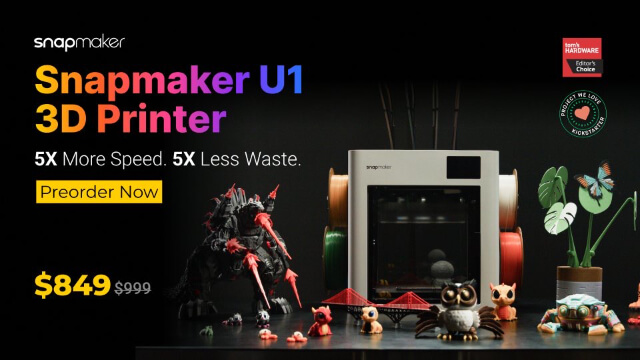
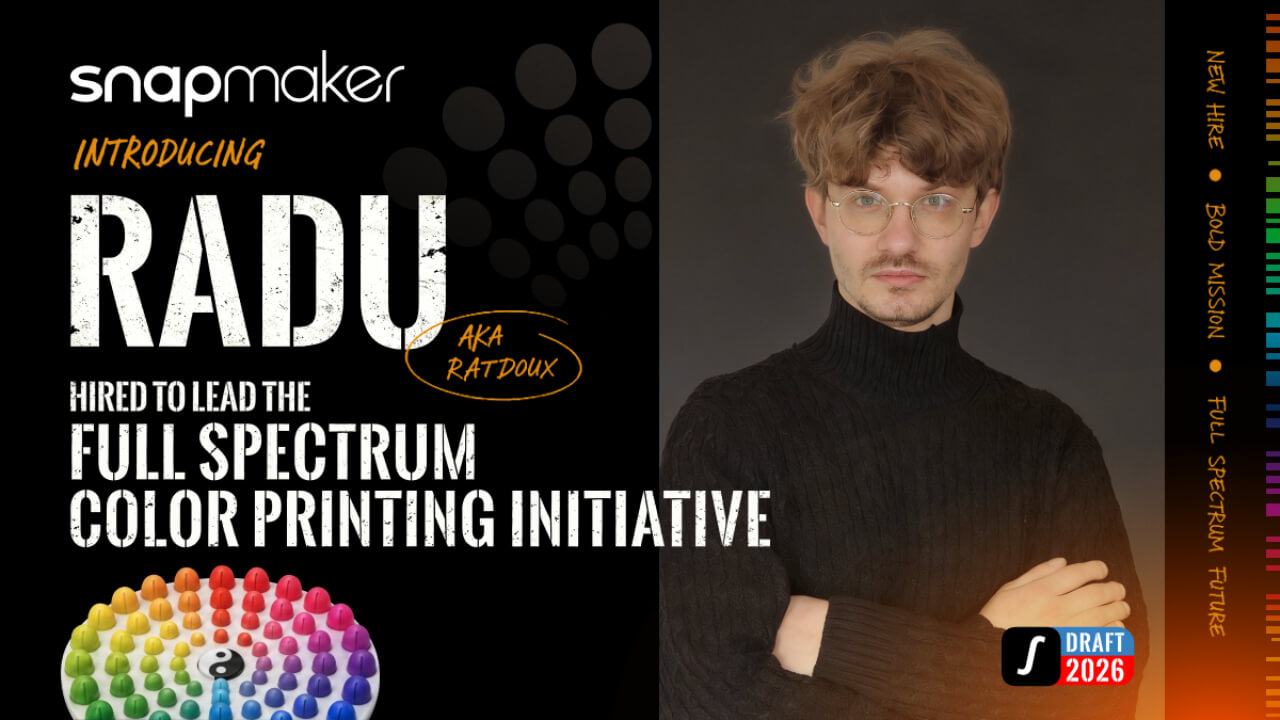
In May 2026, Snapmaker announced the hiring of community developer Radu, known by his handle Ratdoux, to officially integrate his experimental multicolor 3D printing slicer, Full Spectrum, into the company’s software platform, Snapmaker Orca. It is a sound business decision. But behind it, there may be a message that goes beyond simply acquiring talent.
What Is Full Spectrum, and Who Is Ratdoux?
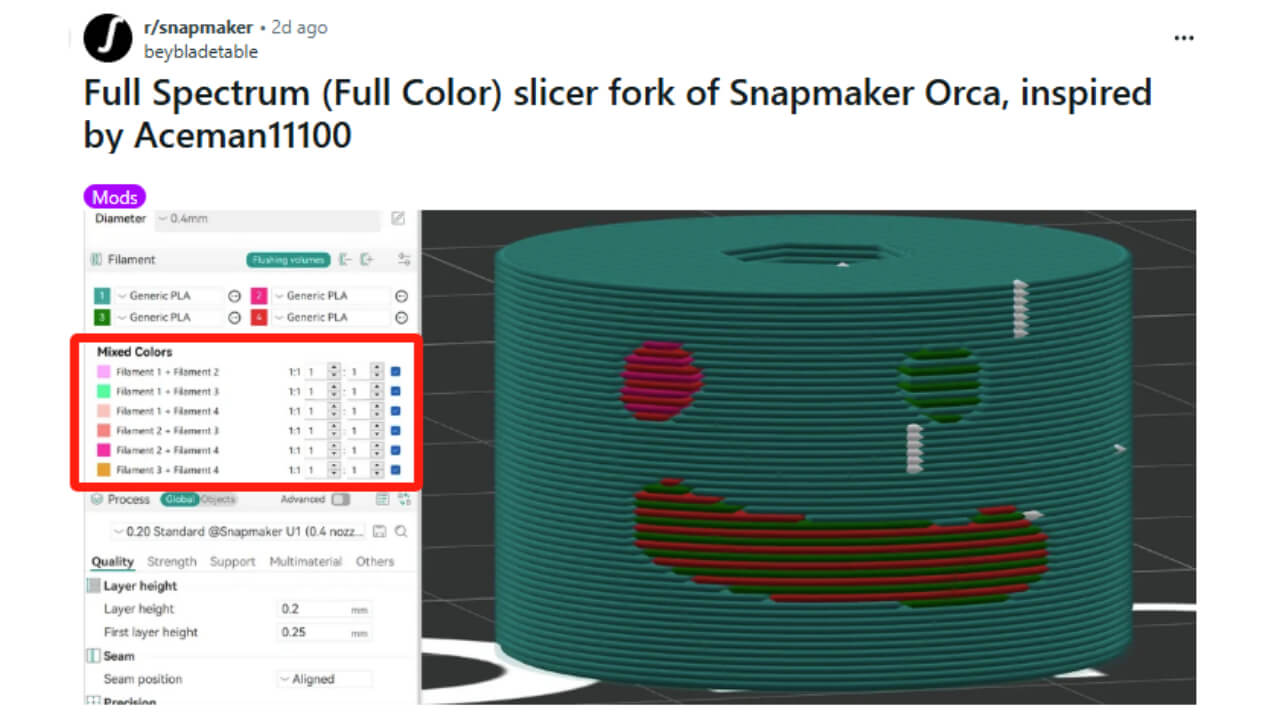
Full Spectrum is an experimental slicer developed as an open-source fork of Snapmaker Orca. Conventional multicolor 3D printing requires a purge process every time filaments are switched between colors, resulting in significant material waste.
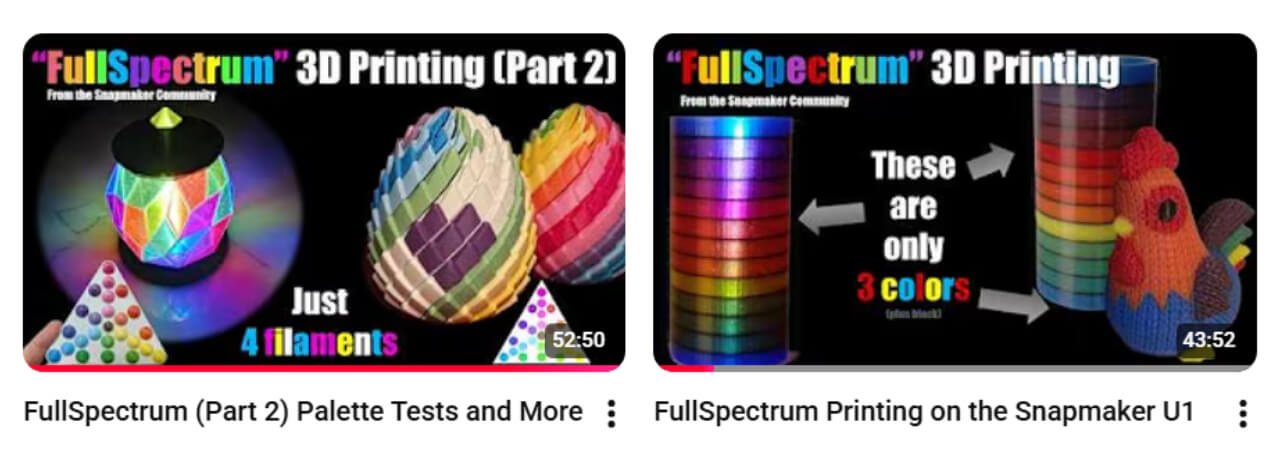
Full Spectrum takes a different approach. By stacking alternating layers of filament and leveraging light transmission and visual blending effects, the software achieves color expression beyond the physical number of filaments available. With just three filaments, a surprisingly wide palette can be generated. That said, this remains visual pseudo-mixing — not true full-color printing in the way that physically blending inks would be.
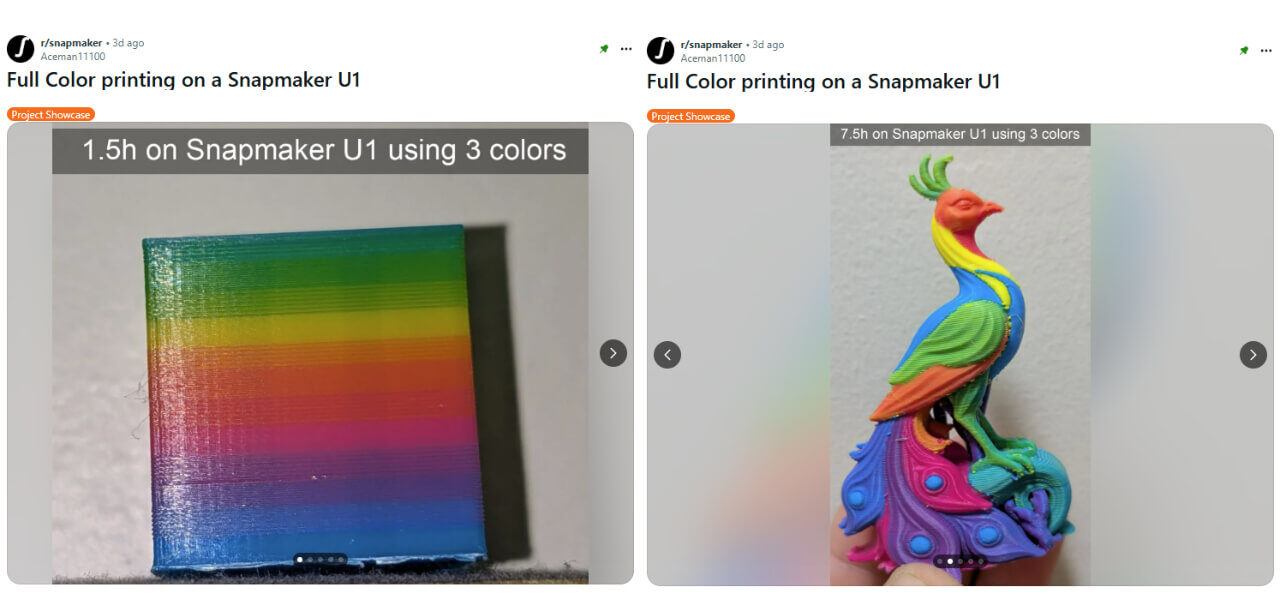
Ratdoux drew inspiration from watching Reddit user Aceman11100 experiment with color mixing in Blender. The question that started it all: why not do this directly in the slicer? The Snapmaker U1’s toolchanger architecture, he says, was the only machine fast enough to make the idea work in practice. The response from the community exceeded expectations, and from there, a collaboration with Snapmaker took shape.
In the release, Snapmaker acknowledged the broader community: “Snapmaker also thanked community contributors including WombleyWonders (YouTube), wildtang3nt (Discord), Hunter Cook, Silent, cheeky_b52 (Discord), Bookledge (YouTube), @neotko, Steve Lavedas from HueForge, and many more.”
Full Spectrum will continue to be developed openly under the AGPL-3.0 license.
Why Snapmaker? The Story of Daniel Chen
It is difficult to see this move as coincidence.
Snapmaker CEO Daniel Chen is an engineer who came from Makeblock — a Shenzhen-based company that develops open-source Arduino-based educational robotics platforms, positioned squarely at the heart of the open-source maker community. Chen built his career there.
On June 1, 2016 — International Children’s Day — Chen founded Snapmaker. He chose that date as a personal reminder to stay curious and follow where his instincts lead. Since its founding, Snapmaker has consistently maintained a policy of combining open-source foundations with its own proprietary development.
This kind of move is not without precedent. Just as Ultimaker once hired Cura developer David Braam, the model of a company bringing a community developer in-house is not new.
But this moment cannot be placed on the same level as the Ultimaker era. At a time when the relationship between some companies and the community has begun to fray, the weight of this move is different. Snapmaker announced Ratdoux’s hiring and its commitment to AGPL-3.0 continuity at the same time. And Daniel Chen stated in his official comment: “We believe the most important innovations in the maker community come from the maker community.”
AM Insight Asia Perspective
Snapmaker’s decision to hire Ratdoux is rational from a business standpoint. The company acquired proven technology and a developer who carries the trust of the community — at the same time.
But the simultaneous declaration of AGPL-3.0 continuity, Daniel Chen’s public statement, and the timing of all this suggest that something beyond talent acquisition may be at work. A message may be written between the lines.
The free thinking and passion of community developers, unconstrained by established assumptions, have driven meaningful technological breakthroughs time and again. Ideas that are unlikely to emerge from a company roadmap can come to life within a community. That is because the motivation is simple and powerful: not calculation, but genuine curiosity — doing something because you love it and want to see if it works.
Communities and companies do not need to be in opposition. They can build something better together. AM Insight Asia fully supports this direction.
Source:
・Snapmaker Newsletter (May 2026)